
Located in the Hawkesbury town of Wilberforce, near Windsor, is the Australiana Pioneer Village. Originally established in 1969-1970 as a commercial enterprise to highlight the historical legacy of the Hawkesbury district and its pioneering achievements, the village is now managed by the committee of The Friends of the Australiana Pioneer Village Society. It is about 60 km north east of Sydney, and the Dharug are the First Peoples and Traditional Custodians of the lands and waters.
The village is home to a large number of historic buildings which were relocated to the site. This involved keeping the buildings structurally intact whilst they were moved to the location. This was the vision of founder Bill McLachlan, who wanted to preserve these unique structures and create a place where this history could be retained and discovered by future generations. You can read more about the history and vision behind the village here. The open air museum is located on 28 acres, with some of the buildings offering demonstrations of traditional crafts and selling food, drinks and gifts. Below are a handful of the different buildings and experiences available along the 19th century streetscape.

St Matthews Church, circa 1890s, was originally located at the Upper Macdonald River Valley. Churches played an important role in the life of pioneers, providing a place to worship, socialise and hear the local news.
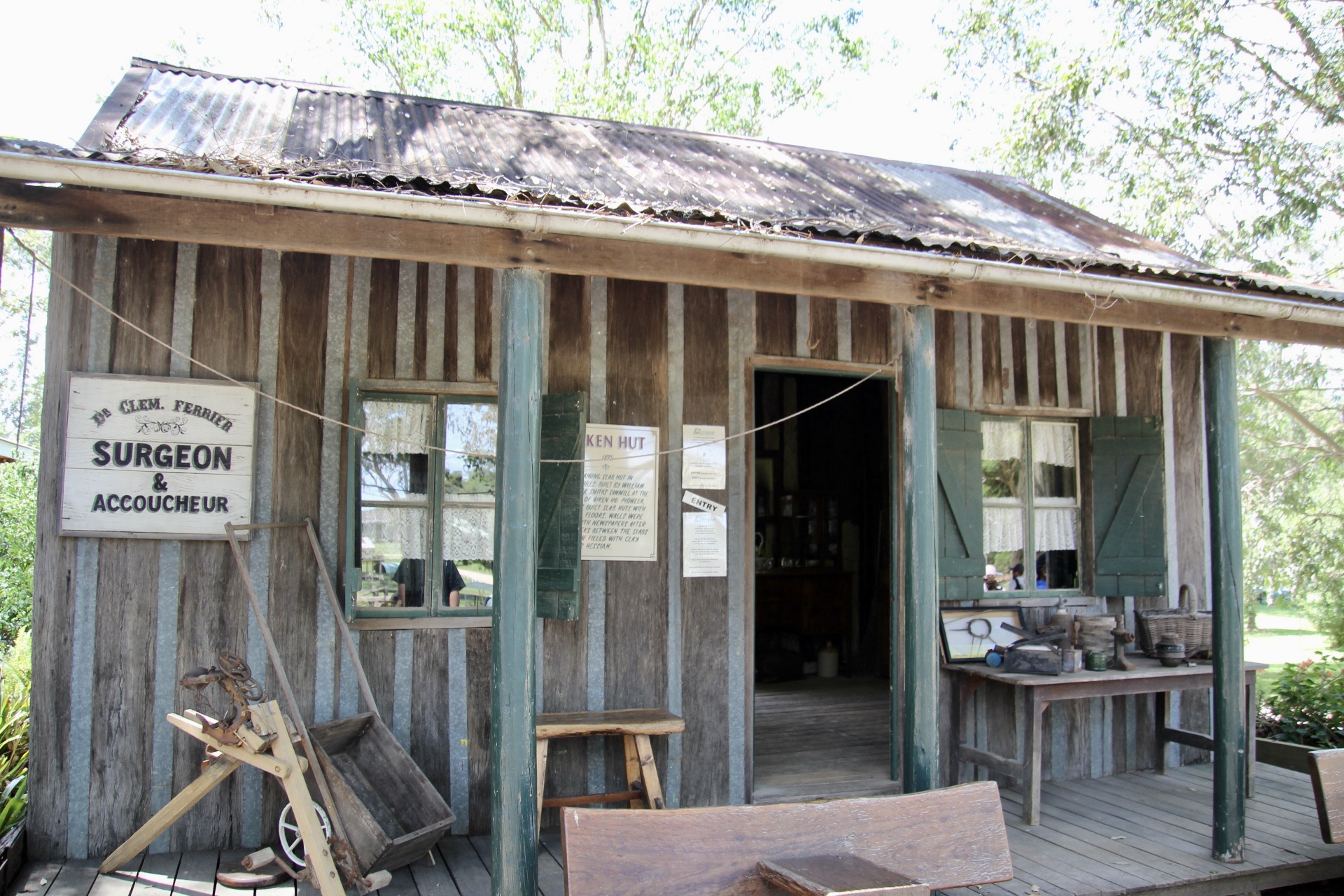
One of the last buildings to be relocated to the village was the Aiken Hut. Built in 1875, it was the last remaining slab hut in Pennant Hills. This was built by William Aiken near Smith’s Sawmill at the lower end of Aiken Road. Slab huts with earthen floors were common.
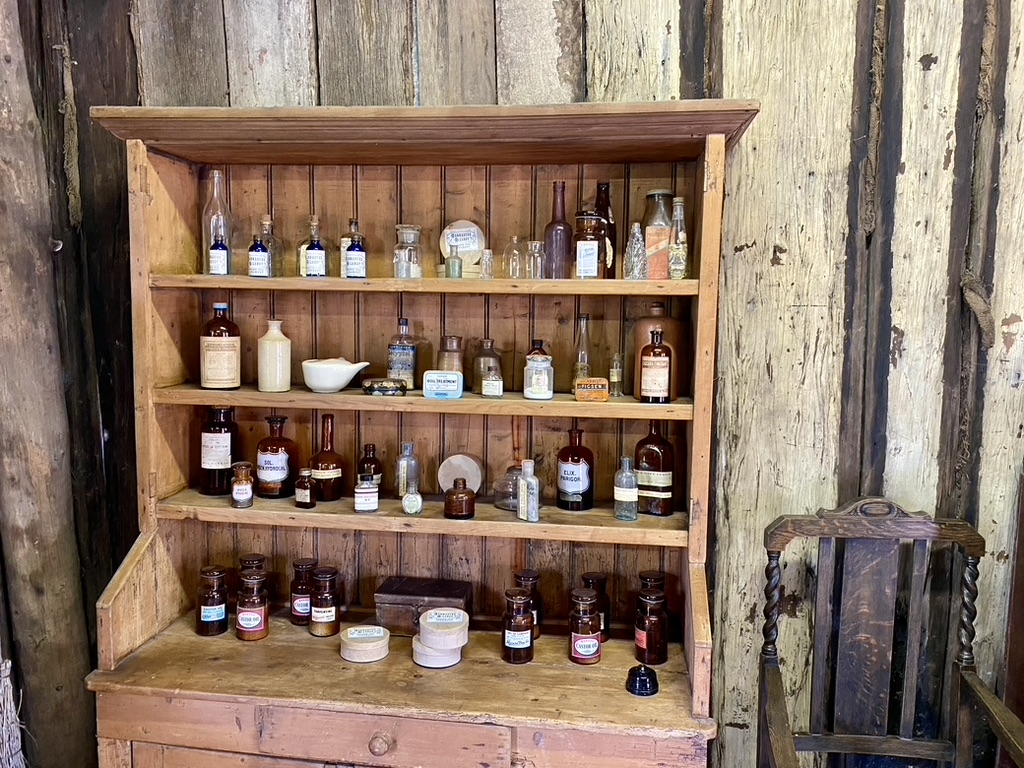
Inside Aiken’s hut is a collection of medical paraphernalia, including this array of old medicine bottles. Many of the buildings contain displays which provide insights into different occupations and ways of living. Panels provide additional information and context into life in a very different time.
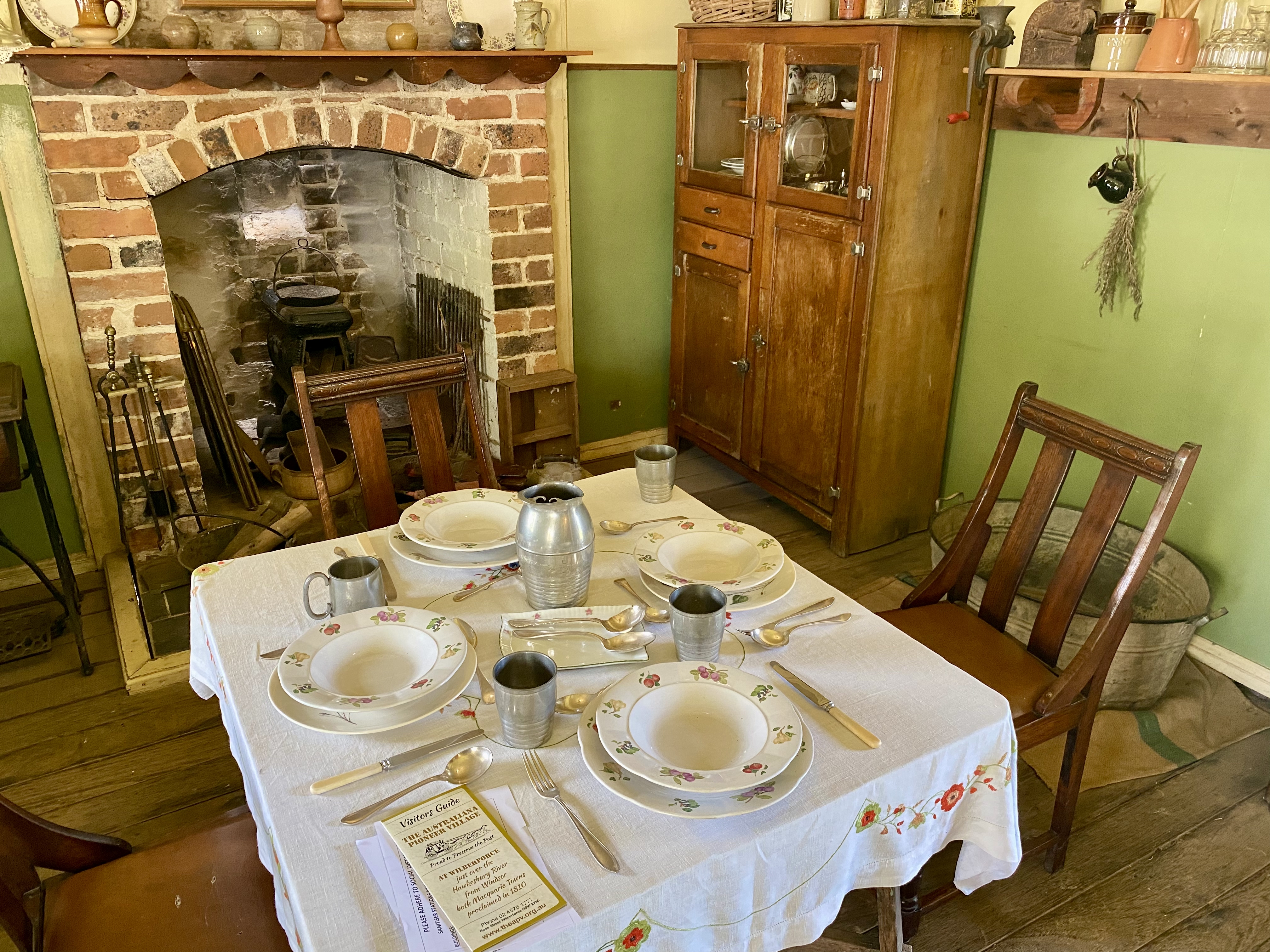
Rose Cottage is one of the oldest timber buildings in the country, and was home to the Rose family for 150 years. An inspection of the cottage offers glimpses into family life on the Hawkesbury across several generations.
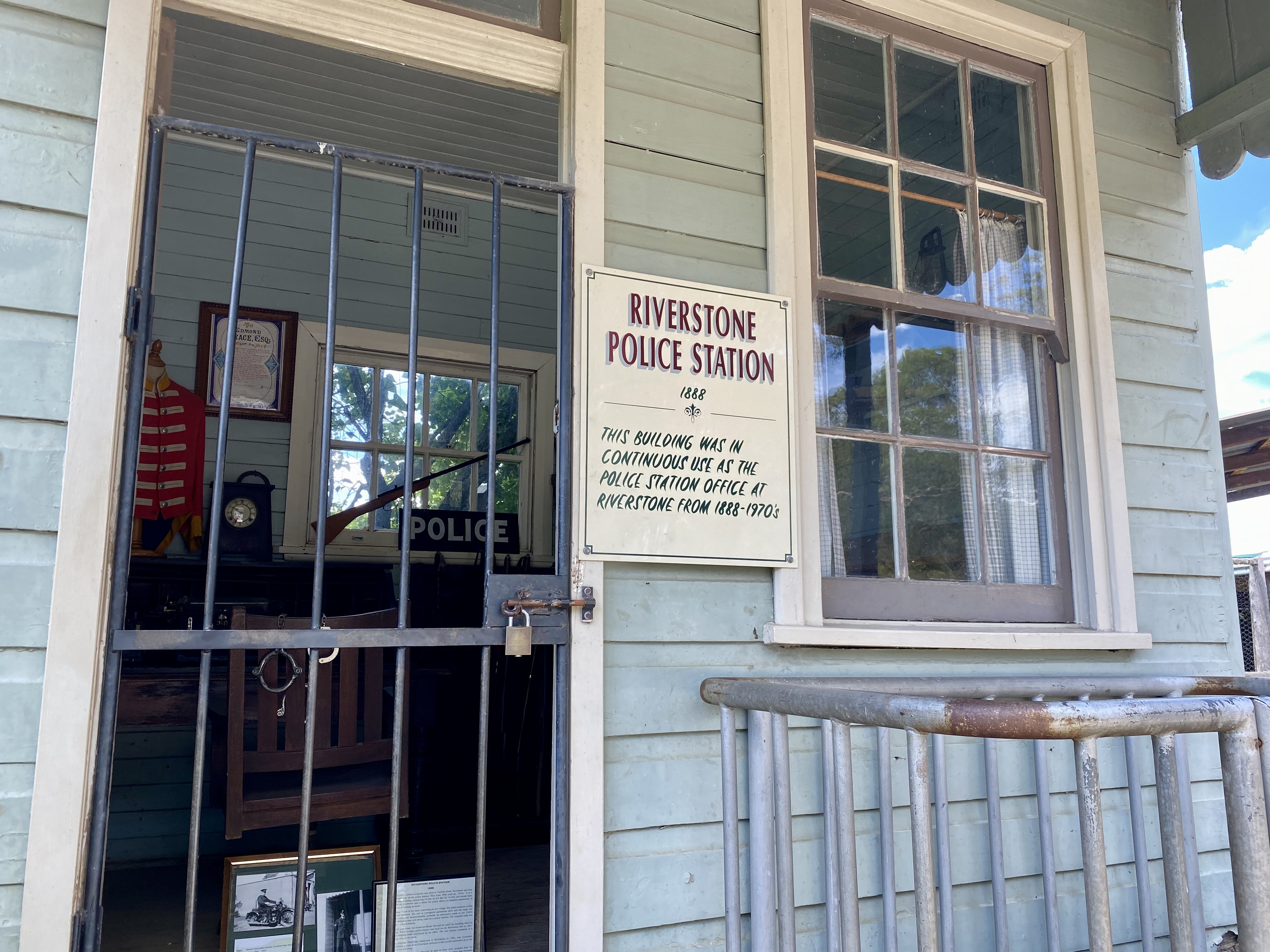
Law and order is represented in the village by the Riverstone Police Station. Built in 1888, it was in continuous use until the 1970s.
You can find out more about the Australiana Pioneer Village on their website. There is a link here to a short video with footage of the village, highlighting some of the buildings and the grounds.
Have you travelled back in time to the Australiana Pioneer Village?
Photo: view of the Australiana Pioneer Village main street



 jml297
Leave a comment