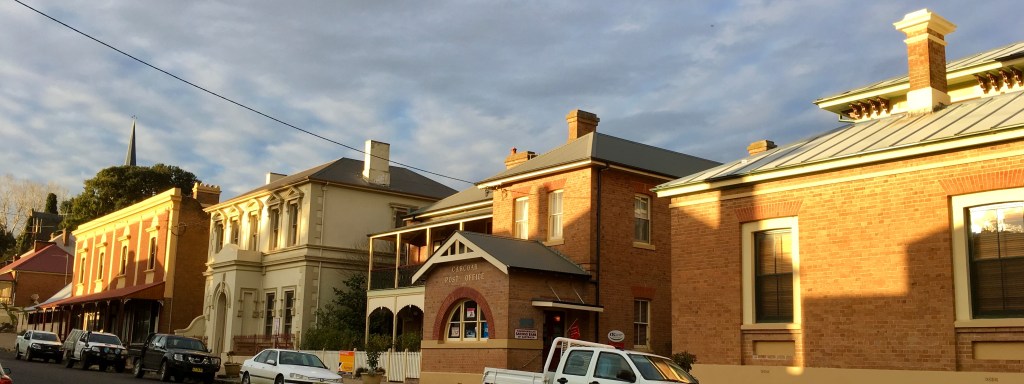
Carcoar is located on the Mid Western Highway, about 260 km west of Sydney, and approximately 50 km from Bathurst. The Wiradjuri are the First Peoples and Traditional Custodians of the lands and waters of the area, and ‘carcoar’ is believed to mean either frog or kookaburra. Carcoar is the third-oldest settlement west of the Blue Mountains.
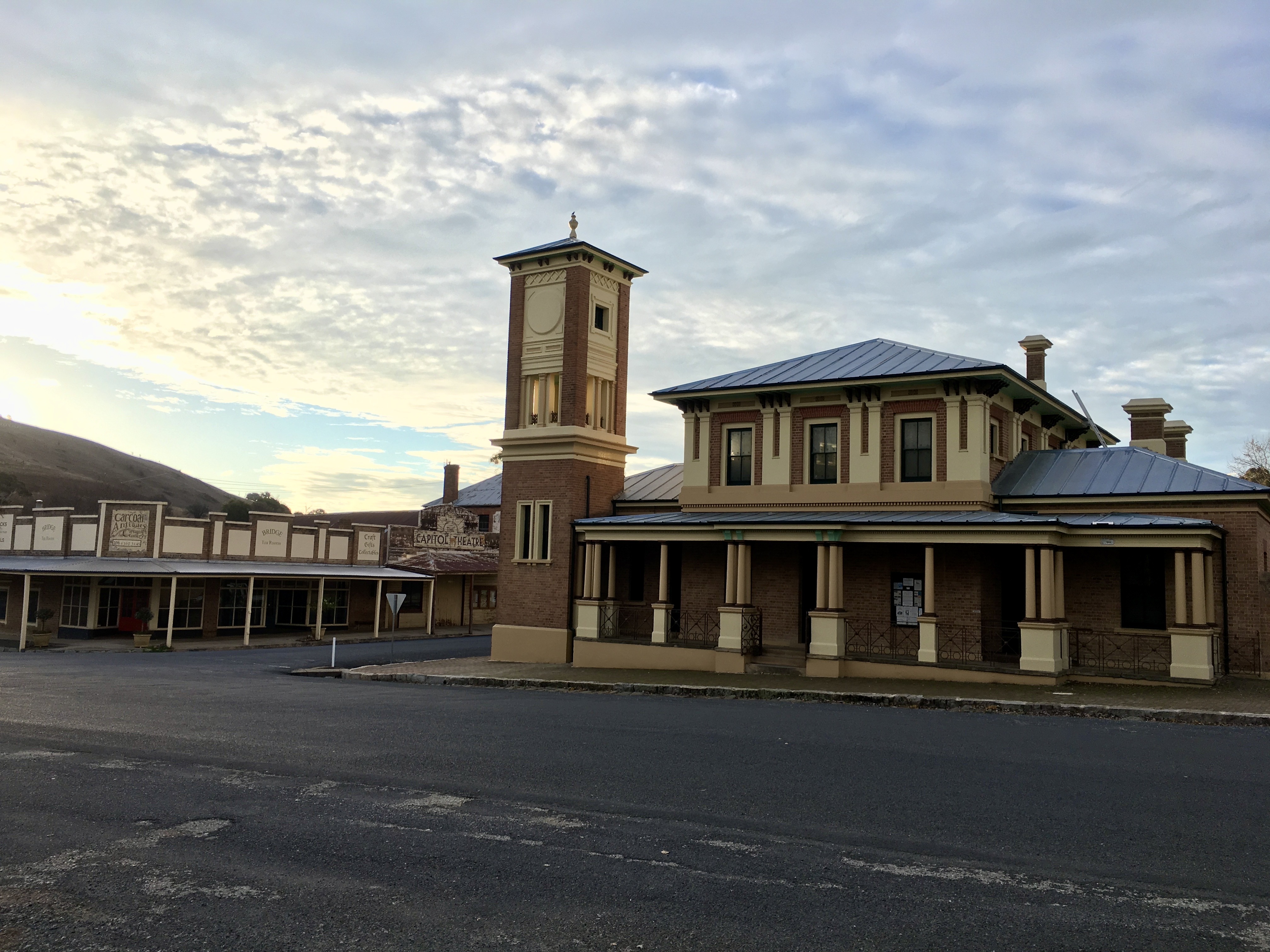
Carcoar is worth a small detour off the highway to see a town with a remarkably intact streetscape from the late 1800s. It was an important administrative and government hub, and this is evident in the public buildings, including the court house. This was the second court house for Carcoar, and was built from 1879 to 1882, to a design by the Colonial Architect James Barnet. It was in use until the 1950s.

The historic prosperity of the town can be glimpsed in civic buildings and churches, and there are wonderful old shopfronts that offer insights into a different time. Like other towns in the central west of NSW, nearby gold and mineral discoveries in the 1850s provided a boom in population and wealth, and the streetscape includes old bank buildings and a post office. The former Commercial Bank was the location of an attempted daylight armed robbery by members of the Ben Hall gang in 1863. The former City Bank was the scene of the infamous axe murders in 1893.

The town is located in the bottom of a valley, and this made it a challenge for the arrival of the railway. Nearby Blayney was connected by rail in 1874, but there wasn’t a line at Carcoar until 1888. The photo above was taken from the heritage railway station, looking towards the town.
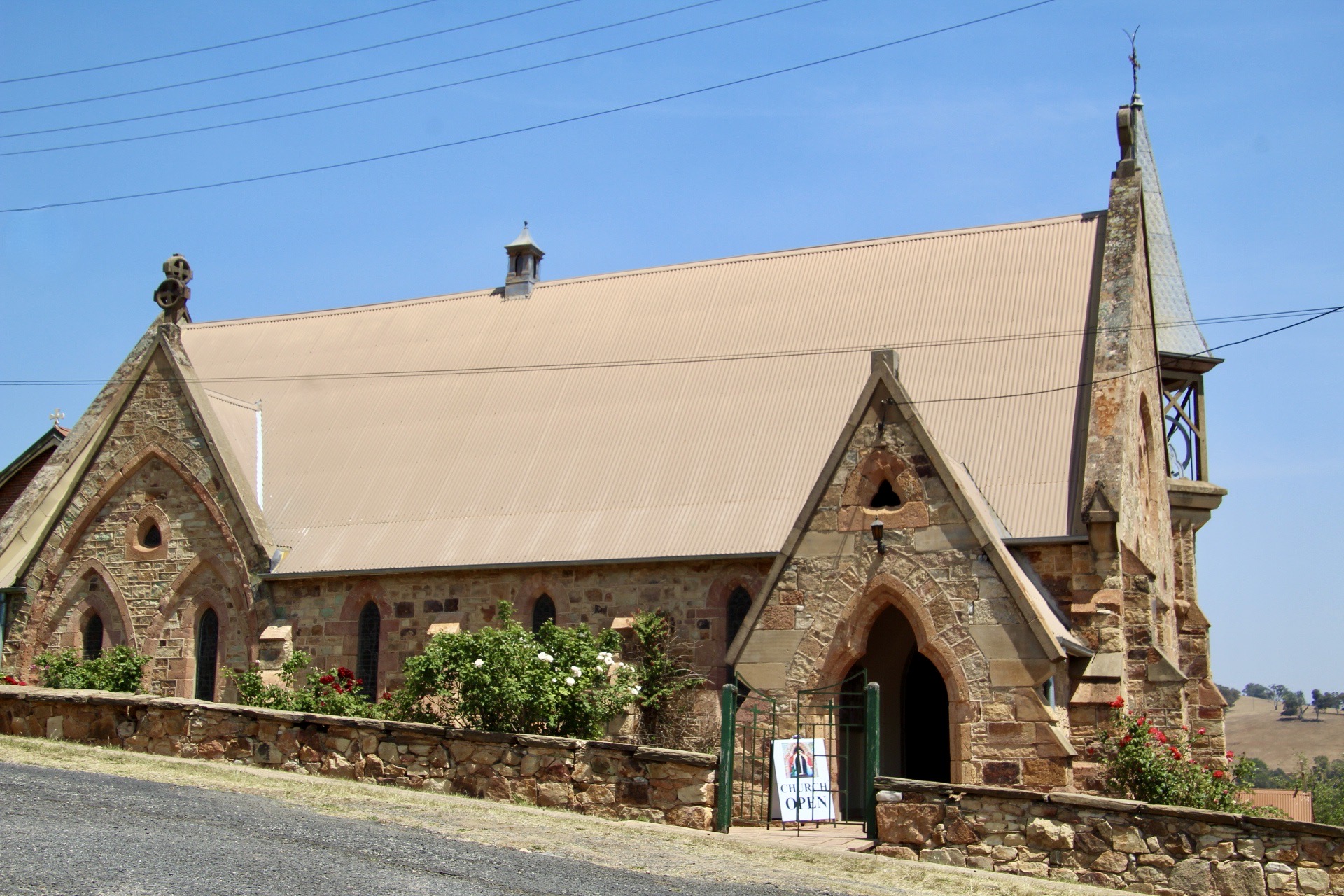
There are three churches in Carcoar. St Paul’s Anglican Church was established in the 1840s, and there is an overview of the history of the church here. The Roman Catholic Church of Immaculate Conception, shown above, was built in 1870 with a convent built alongside in 1874. The former St James Presbyterian Church was built in 1861, and was in use until 2018. It is now privately owned.
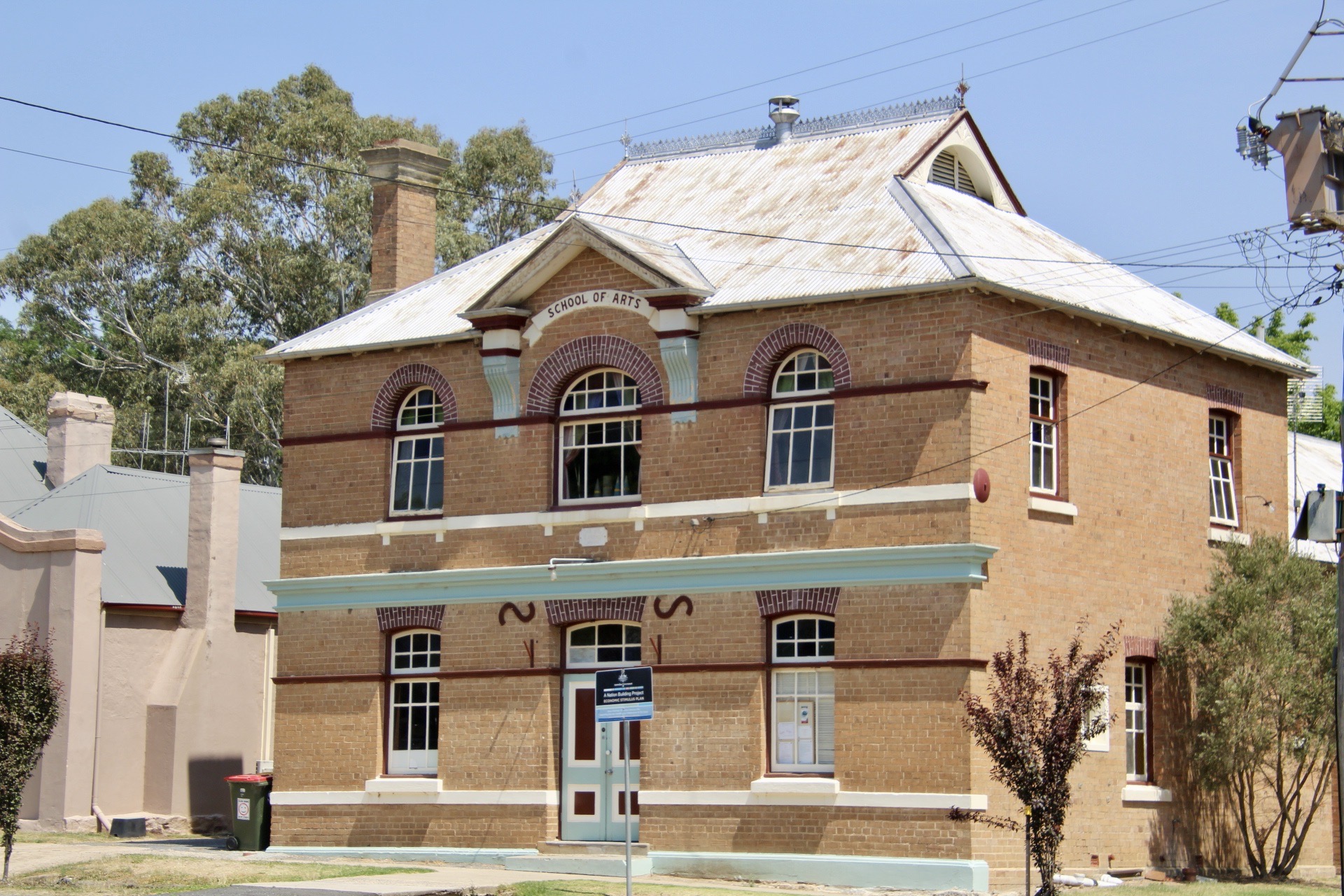
The Carcoar School of Arts building has been used for different purposes over the decades. It was the Municipal Council Chambers and a community centre, and can hold functions for up to 180 people. There is an interesting overview of the School of Arts and Mechanics’ Institute movement here. Whilst it focuses on the movement and its impact in Sydney, School of Arts and Mechanics’ Institute buildings can be found in many regional towns.
Although the town of Carcoar was declining from the 1880s, the continued preservation of the homes and civic buildings has resulted in its classification by the National Trust for its 19th century heritage. Tourist highlights can be found here, and there are some nice interior shots of museums and churches in the town on the All Around Oz site here.
Have you had a chance to discover Carcoar?
Photo: Belubula Street in the golden light of winter


 jml297
Leave a comment