Gunning is a small country town on the stretch between Goulburn and Yass, located about 240 km south of Sydney. The Gundungurra and Ngunnawal are the First Peoples and Traditional Custodians of the lands and waters of the area, and ‘Gunning’ is believed to mean swamp mahogany.
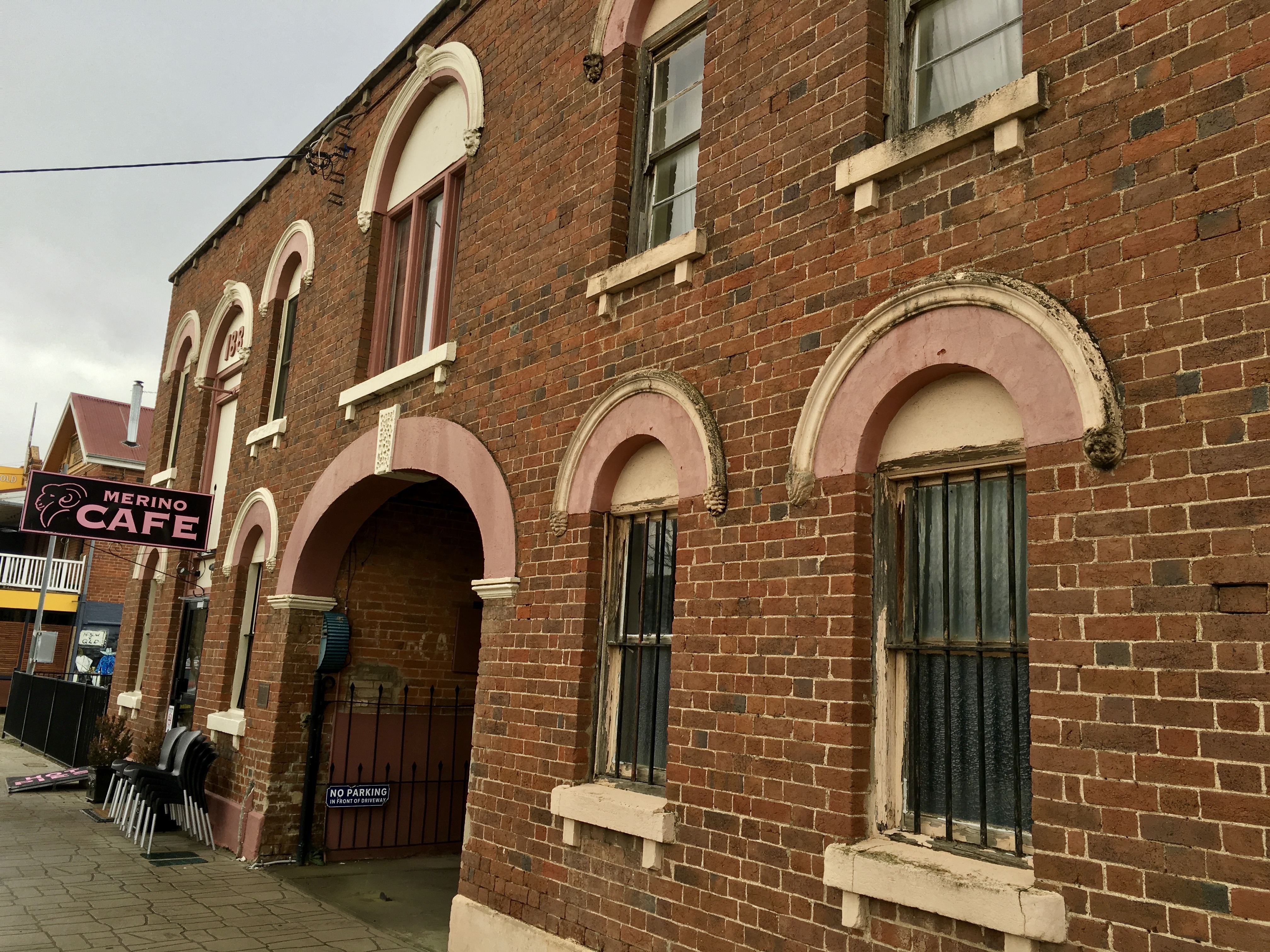
One of my old reference books, The Illustrated A-Z of Australian Towns & Cities by Robert Wilson, describes Gunning as a “pretty little town in a dip in the hills and astride the Hume Highway”. It’s a fair description, and it is worth taking a detour off the highway to spend a bit of time exploring Gunning. I’ve called in a few times over the years, and it usually seems chilly enough to justify a break in a café with a roaring fire. The Merino Cafe is located in London House, which was built in 1881, and was the main general store in Gunning for several years. The area was known for merino sheep, and this remains an important local industry.
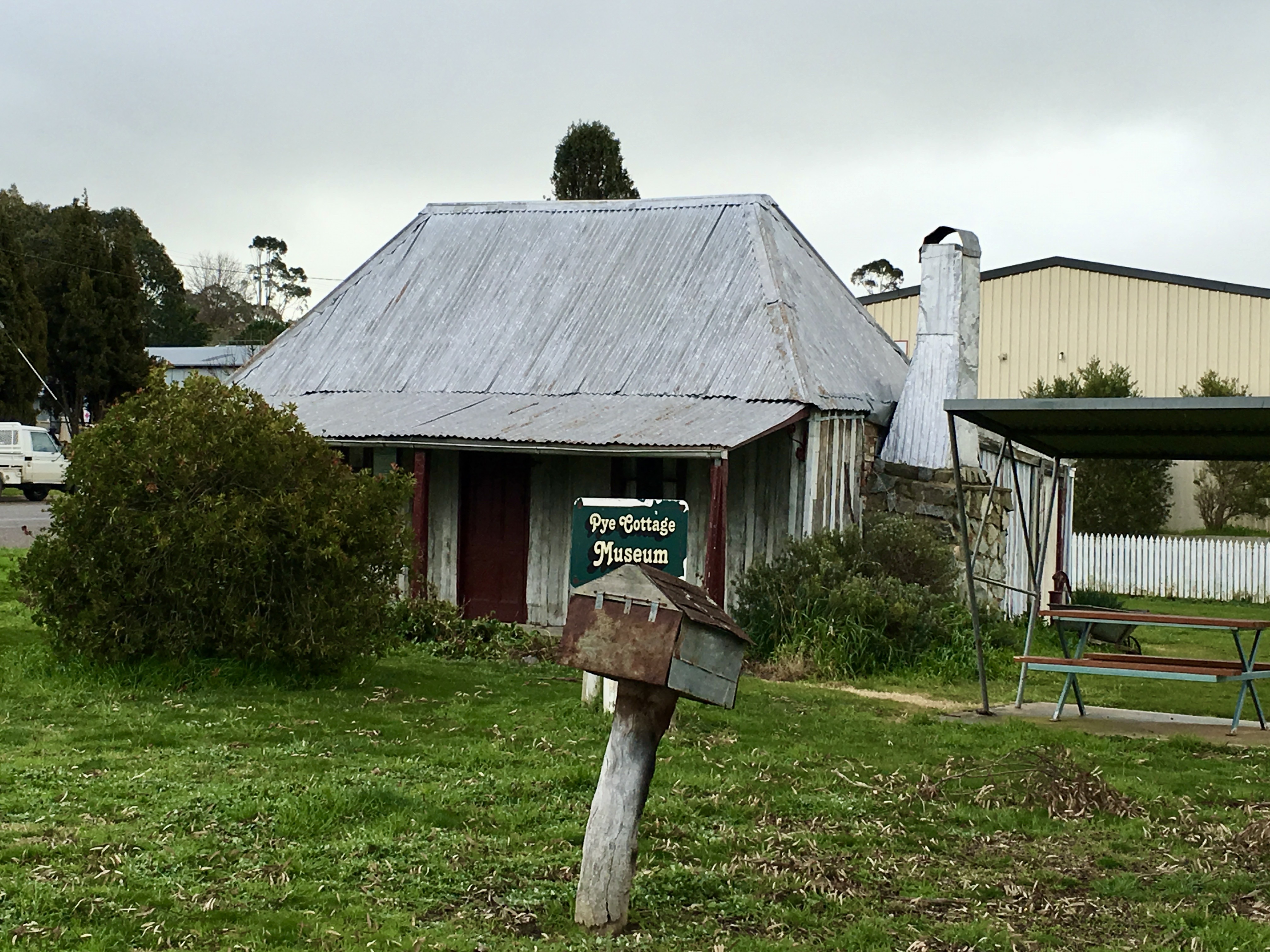
The Hume Highway used to run through the centre of the town, with all Sydney-Melbourne traffic passing through, but after a highway bypass took effect from 1993, the town has reverted to a quieter pace of life. There are various historic buildings which illustrate the town’s development, particularly from the 1870s onwards. Pye Cottage, shown above, was built in 1860 at Dalton, which is about 10 km north-west of Gunning. It was moved to Gunning in 1979 and is a local museum.

The importance of the coming of the railways is a common theme in the history of the development of country towns. For Gunning, it was late 1875 when the railway line from Goulburn to Yass arrived. The travel time from Sydney in the late 1800s was about 8 hours. The station buildings followed in time, with construction taking place over the following decades. Similar to the railway station buildings at Blayney, there are plans to redevelop the site as a community hub. The interior of the station buildings had not been used for about 30 years, and the restoration project used period features from the original 1875 plans. Station gardens include timbers recovered from the Sydney Harbour Bridge railway tracks.

The Court House was looking freshly painted and still bedecked with bunting as part of the 200-year celebrations. These had been planned for 2021, but had been delayed due to COVID-19. The court house, designed by Colonial Architect James Barnet, was built in 1879, and incorporated the lock-up keeper’s residence which had been built seven years earlier. It was in use until the 1970s, and is now included as one of the cultural hub venues in town.
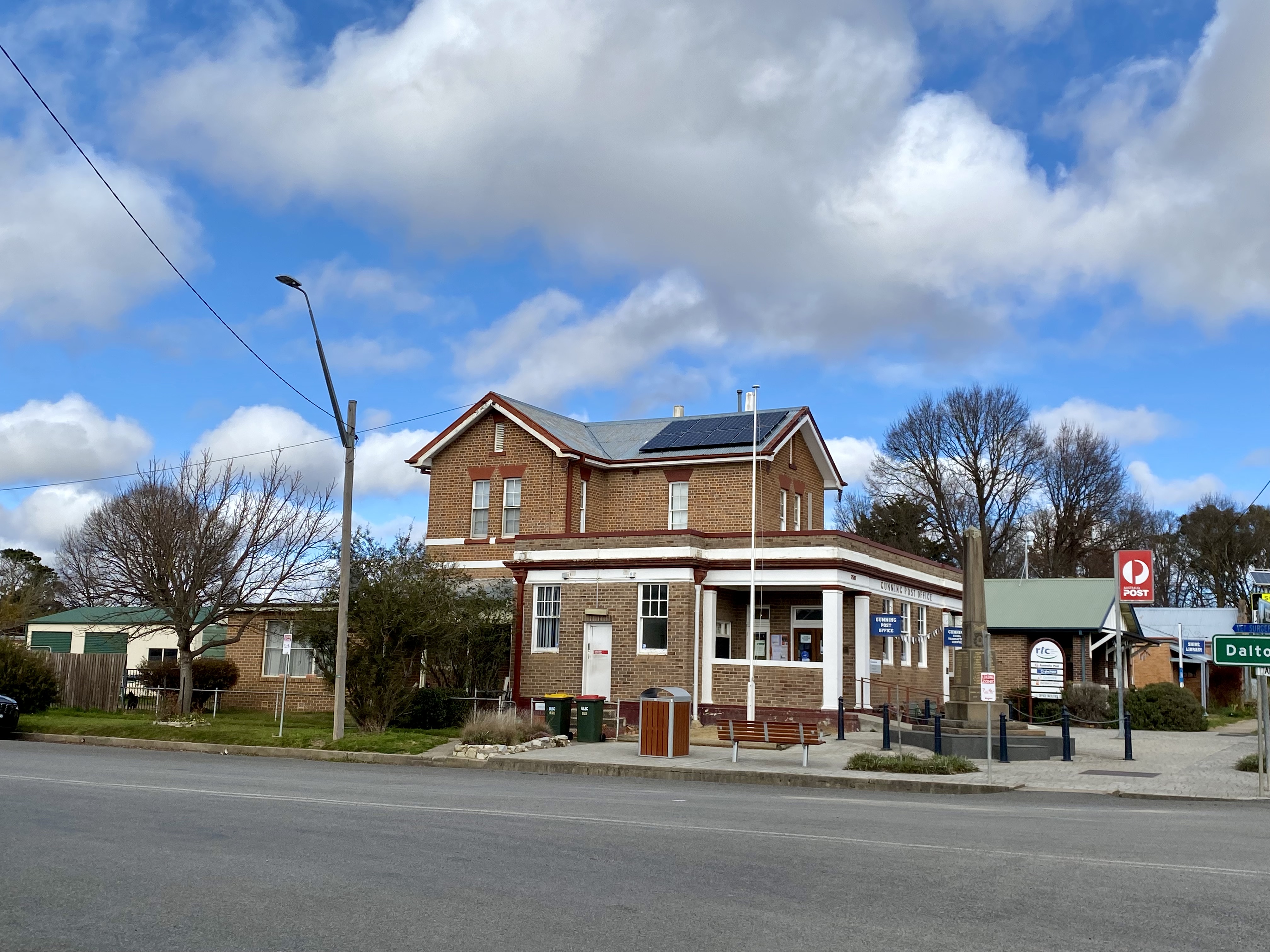
Another important civic building is the post office. This was built in 1881, with further extensions in 1908 when the public telephone was installed. In the right-hand corner of the photo is the Gunning District Soldiers Memorial; the foundation stone was laid on 29 September 1922.
Have you had a wander around Gunning?
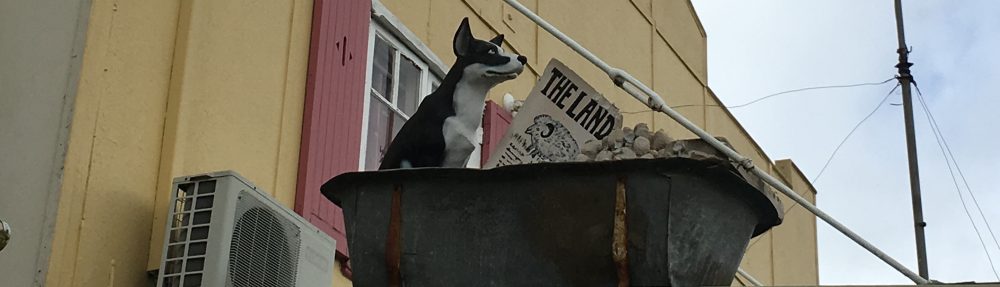
Photo: Dog reading The Land newspaper, shop awning, Gunning


 jml297
Leave a comment