Introduction to Classical Music Concerts
It is widely accepted that there is no minimum age requirement to attend a classical music concert. Some local orchestras cater directly for young families with performances designed for toddlers, and aspiring musicians are included in some concerts which encourage a more interactive approach.
For many concert-goers, the understanding of the etiquette of classical music concerts is acquired over repeated visits to the venues, which provide regular opportunities for the masses to experience and expand their knowledge of this art form. As with many other artistic endeavours (refer to entries on art appreciation and literature critiquing), there are various books and reference guides available. But it is challenging to absorb the myriad of conventions that still apply in this well-established art form. Similar to the symphonic form, the key expectations can be viewed in four movements.
Arrival
Punctuality is key. Concert tickets are issued with firm directives regarding arriving with sufficient time before a performance to locate seats in the venue. There are disclosures around late arrivals not being able to access the booked seats once the performance starts. Excuses relating to difficulty in parking etc will have no impact
Pre-Performance
Having located one’s seat, it is a requirement to mute all electronic devices. In many venues, a verbal reminder is provided before the commencement of the concert. Anyone who fails to follow this simple directive is subject to the wrath of other concert-goers if the banal bleating of a mobile phone disrupts the performance. Refer to Murphy’s Law entry for context around the likelihood of this happening at a critical moment.
Performance
Basic courtesies are assumed during the performance. Audience attention should be placed firmly on the stage, with minimal diversions such as conversations with others. The consumption of food or beverages is largely frowned upon: there should be adequate time for this in pre-concert and interval times. The exception to this would be an outside concert with picnic blankets.
In an environment where there is the potential for considerable noise and quiet, depending on the program, where possible the need to sniff, cough and clear one’s throat should be kept for the moments between movements, or preferably covered by applause. Applause should only be at the end of a piece, not the end of a movement, signified by the raising of bows aloft. Occasionally, applause may be spontaneous upon the end of a particularly challenging and well-performed movement.
Post-Performance
As noted, once a piece has concluded, and the orchestra has demonstrated that they have finished playing, audience appreciation can be demonstrated by clapping. When deserved, this clapping will extend throughout the conductor’s acknowledgement of the orchestra, and of key players in the piece. When the performance has been of a stellar quality, clapping will often continue until an encore is performed, extending the pleasure of the performance for all present.
This piece was written to a prompt on the Writer’s Digest website. The Obscure Article: write a faux Wikipedia article.
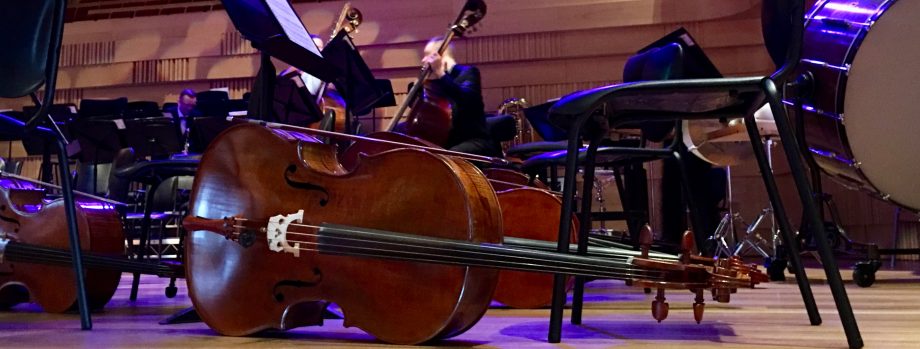
Photo: a glimpse of some of the instruments of the Willoughby Symphony Orchestra



 jml297
Leave a comment