
The Laughing Kookaburra (Dacelo novaeguineae) is a quintessential bird of the Australian landscape, and one that holds a special place in my heart. Their distinctive call makes them instantly recognisable, and they are referenced in books, songs and elsewhere. Kookaburras belong to the kingfisher family, and are often found in small family groups.
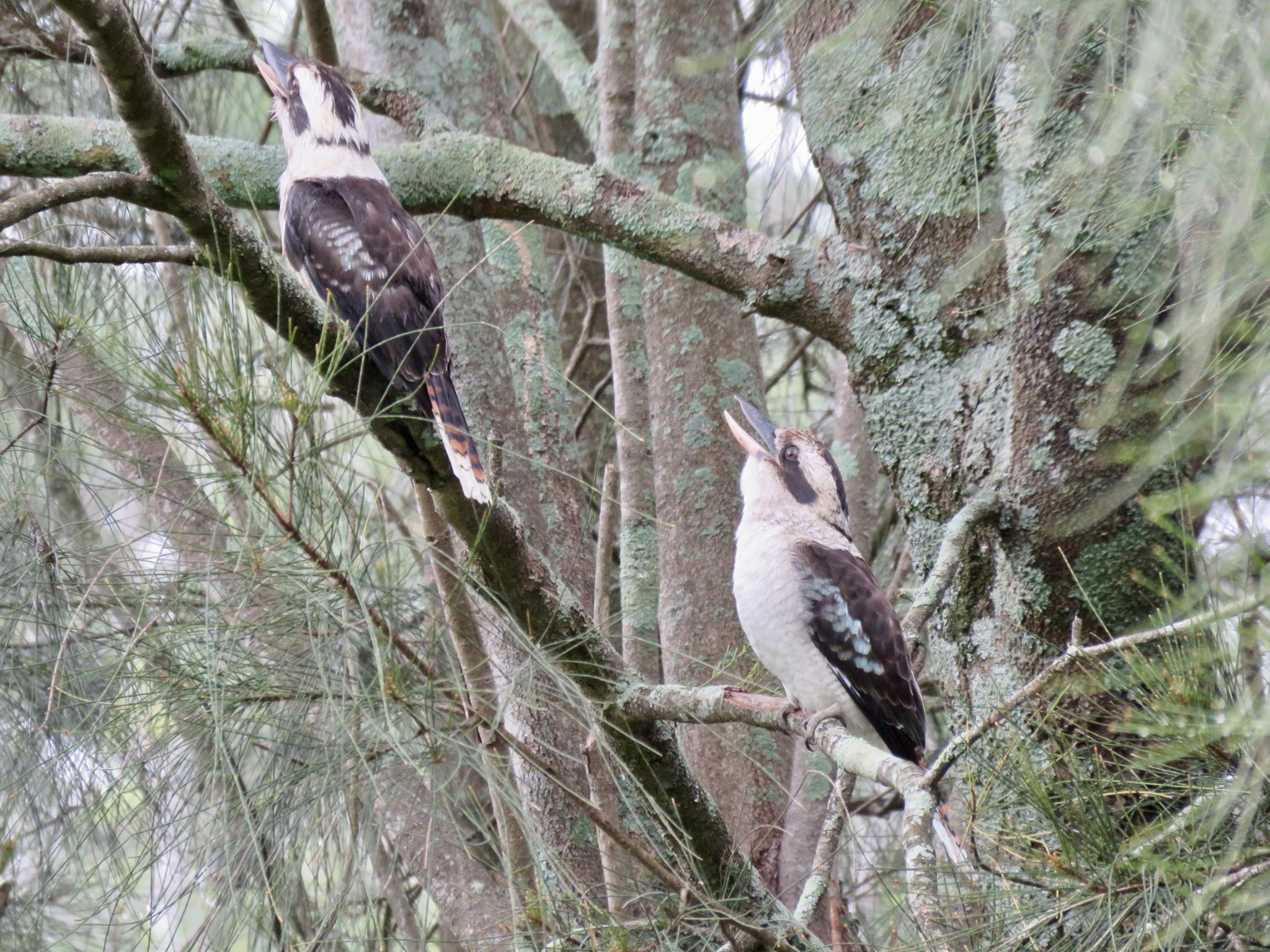
My Dad spoke about a kookaburra who swooped down and stole a sausage from a pan over a campfire during a bush walk. In a similar vein, I was having lunch with my Mum at a garden café last year when a kookaburra managed to grab some fish from my plate as it flew past. It startled me, and a woman nearby told us that we weren’t the first ‘victim’ that day. A couple of kookaburras were strategically positioned on the top of posts, alert to any opportunity to supplement their usual diet.
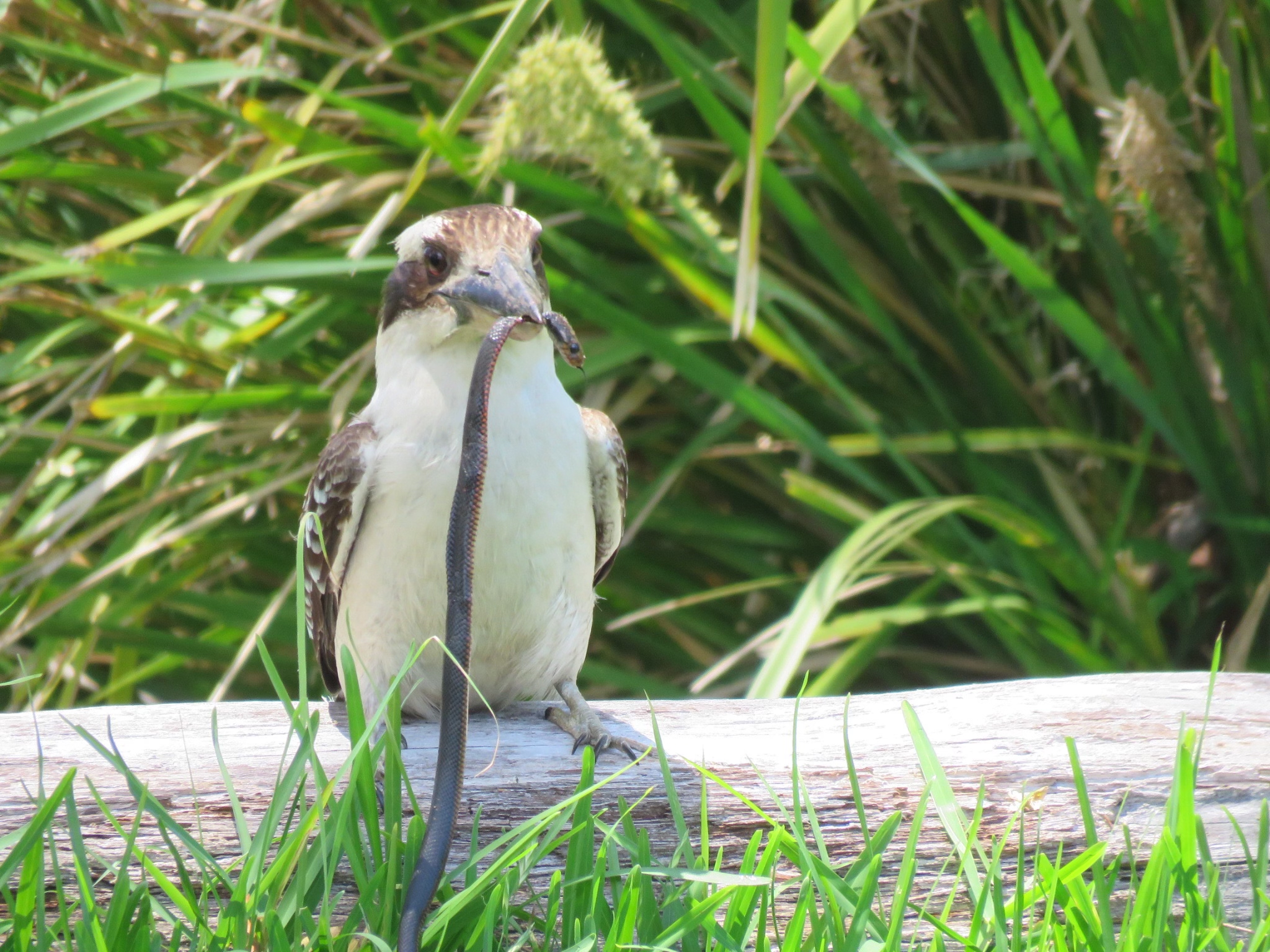
Lately, I’ve had a kookaburra or two visit my garden. I’ve nicknamed one of them Henry, and Henry appears most days on a branch near a window where I sit when I work from home. They can be motionless when watching the ground for potential food sources, but have extraordinary eyesight which enables them to track the food source before pouncing with accuracy. It is a kind of binocular vision which enables good distance perception, and is a kingfisher trait.
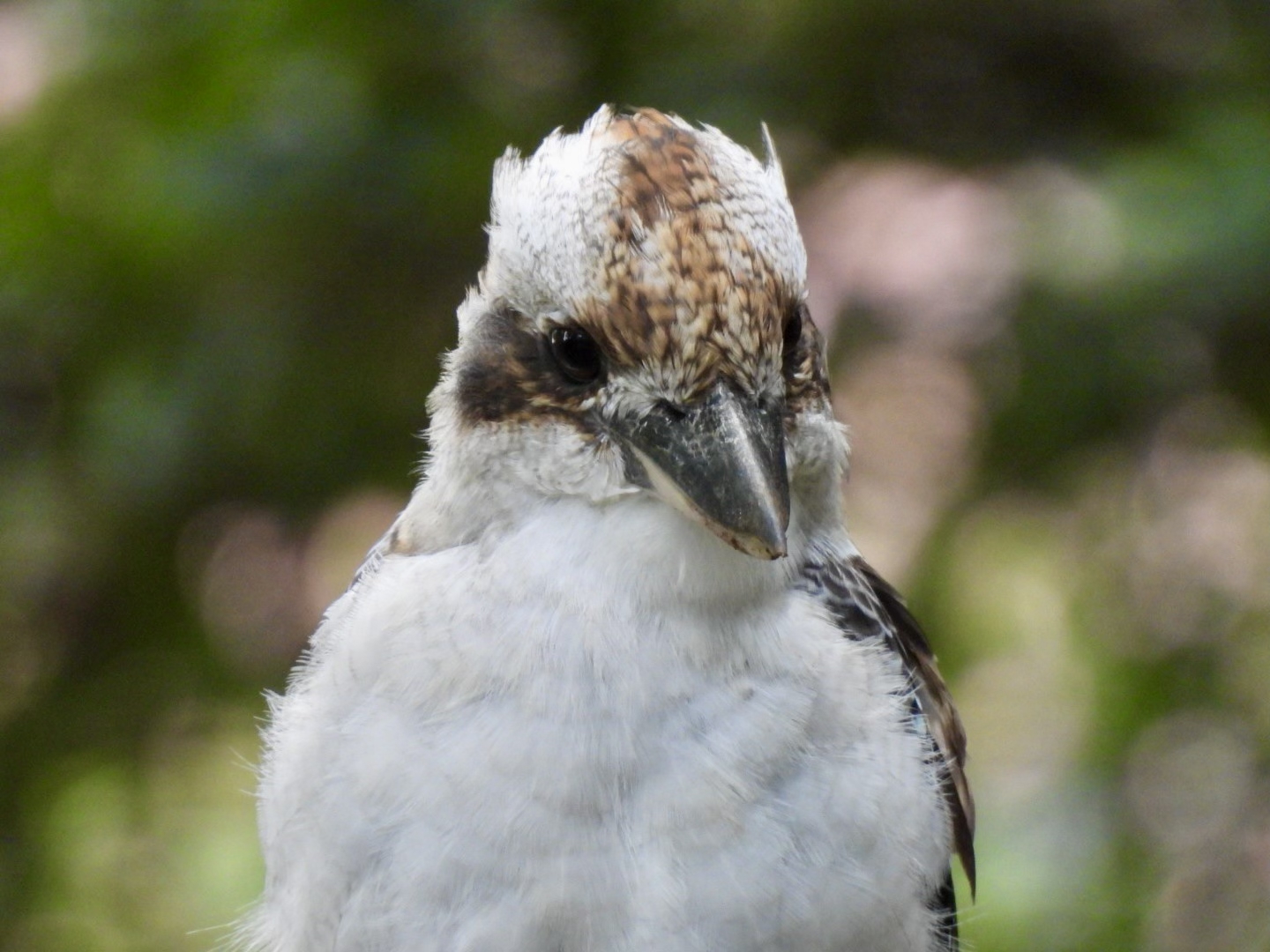
I’m often surprised by the size of their legs, which seem almost stubby when considering their size. Their beak is large with a curved underside, and the upper half is a grey-brown colour, with a lighter coloured lower half. Chestnut brown feathers on their head, cheeks, back and wings contrast with their whist underbelly. There are blue scallop patterns on their wings. The tail is barred with dark horizontal bands. Younger kookaburras have darker colouring, and their tails take some time to grow to full length.

Kookaburras can be found in the bush, but also in more urban areas including parks and open spaces. They eat reptiles, including snakes and lizards, fish, grubs and larger insects. Their laughing call, typically a family effort, is a territorial warning call to other birds.

There’s a link to a short video featuring a couple of kookaburras having a laugh here. Have you seen, or heard, a kookaburra lately?
Photo: Laughing kookaburra on my fence


 jml297
Leave a comment