
I’ve been to Canberra several times in the last couple of years, but it was only on my recent visit that I ventured out to the National Arboretum. Most of the site had previously been a pine plantation which was seriously damaged by bushfires in 2003. There had been an arboretum on the original plan for Canberra as designed by Walter Burley Griffin, and a national design ideas competition was launched when it was decided to establish an arboretum in the national capital.
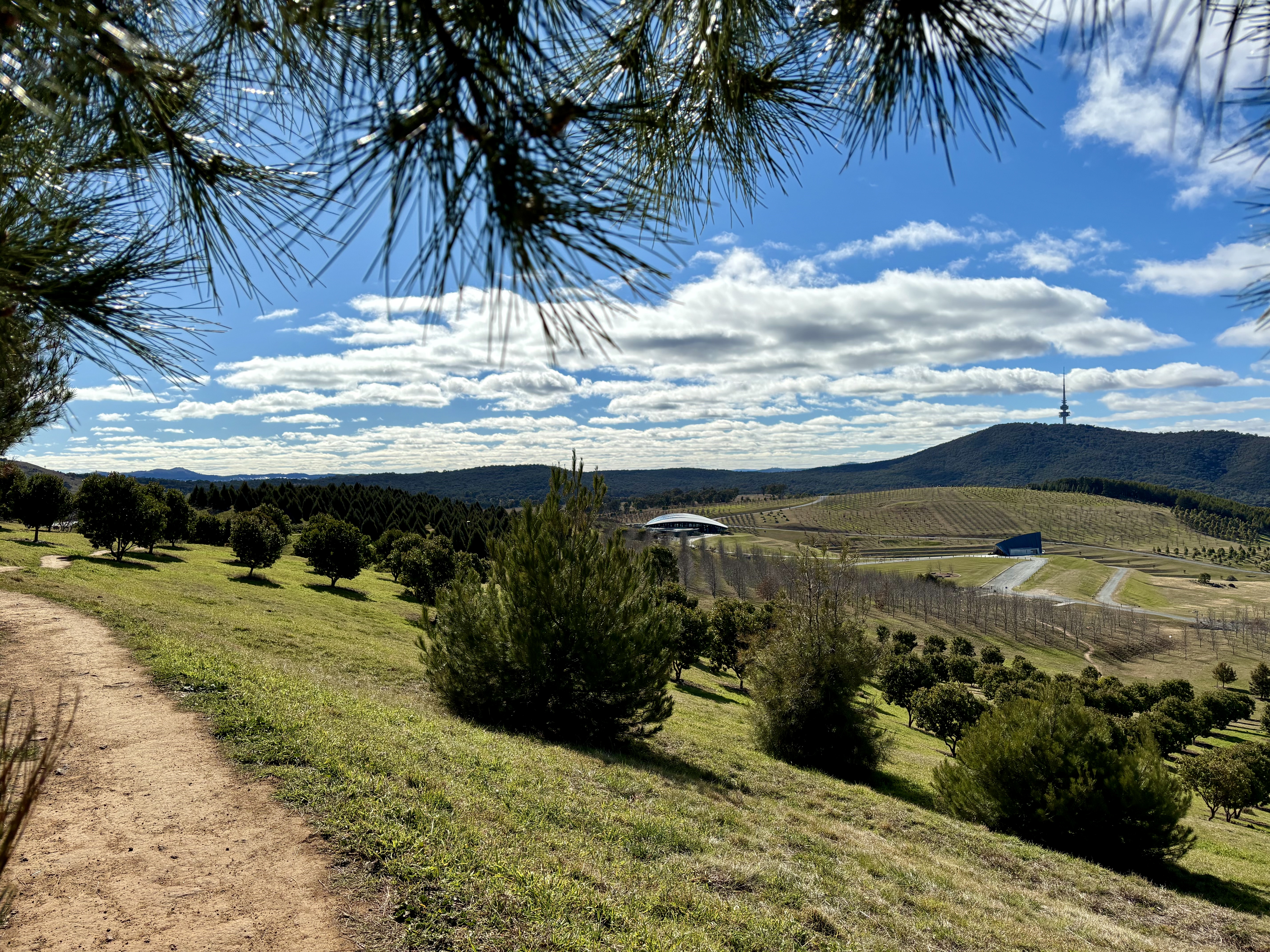
The winning entry was titled ‘100 Forests and 100 Gardens’, with the concept of 100 monoculture (single species) forests of rare, threatened and symbolic trees from Australia and around the world to be planted. Work on the arboretum commenced in 2005, which included the terraced Central Valley near the Village Centre. This was the largest sculpted Australian earthwork since the Sydney Olympics.
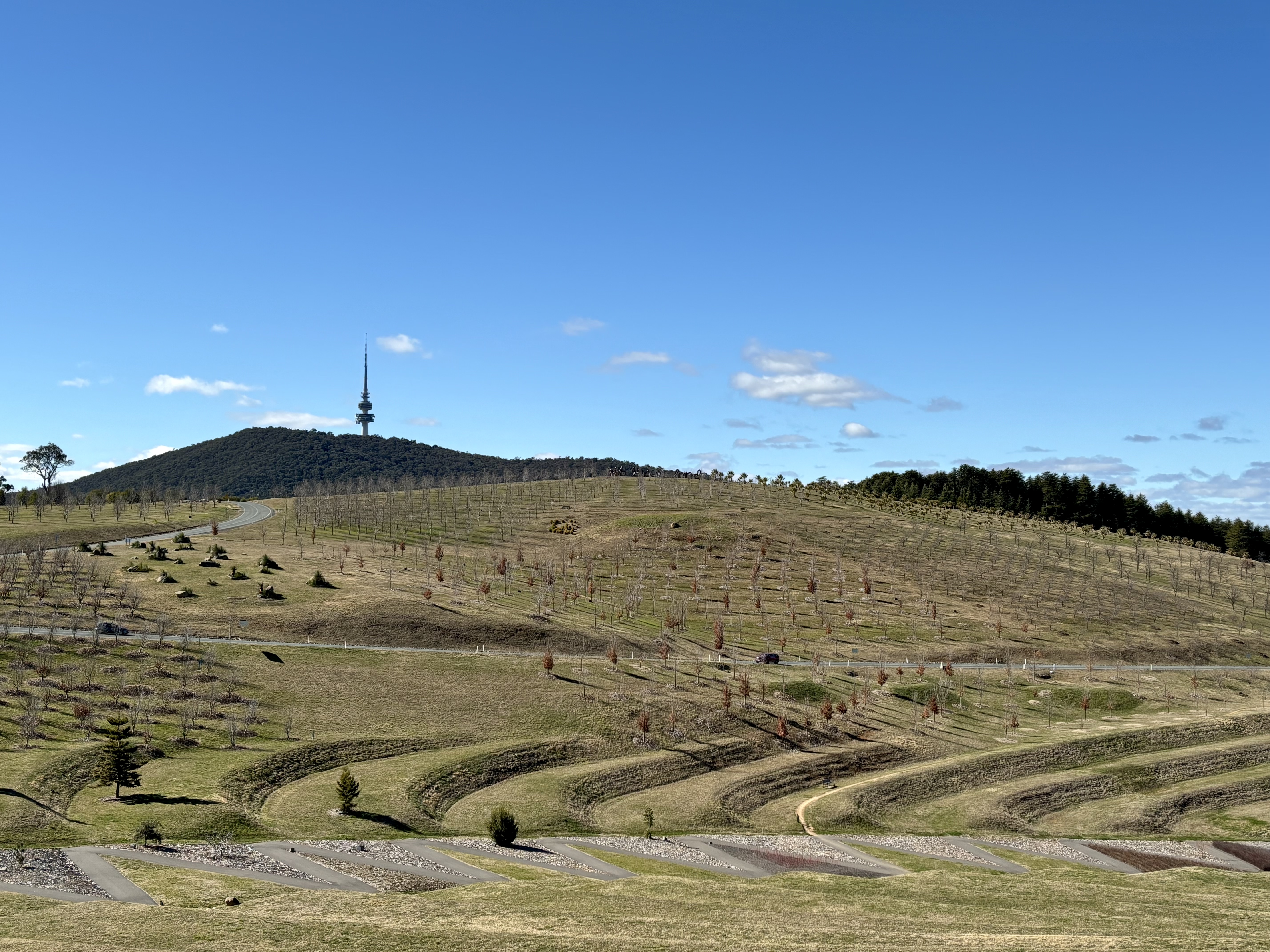
In 2013, the arboretum was opened to the public. Since then, over 6 million visitors have been welcomed to the 250 hectare site. It serves multiple purposes: a place of beauty, conservation, science research, education, tourism, and recreation. There are walking trails, function areas, specialised gardens, a café, gift shop, along with picnic and play areas.
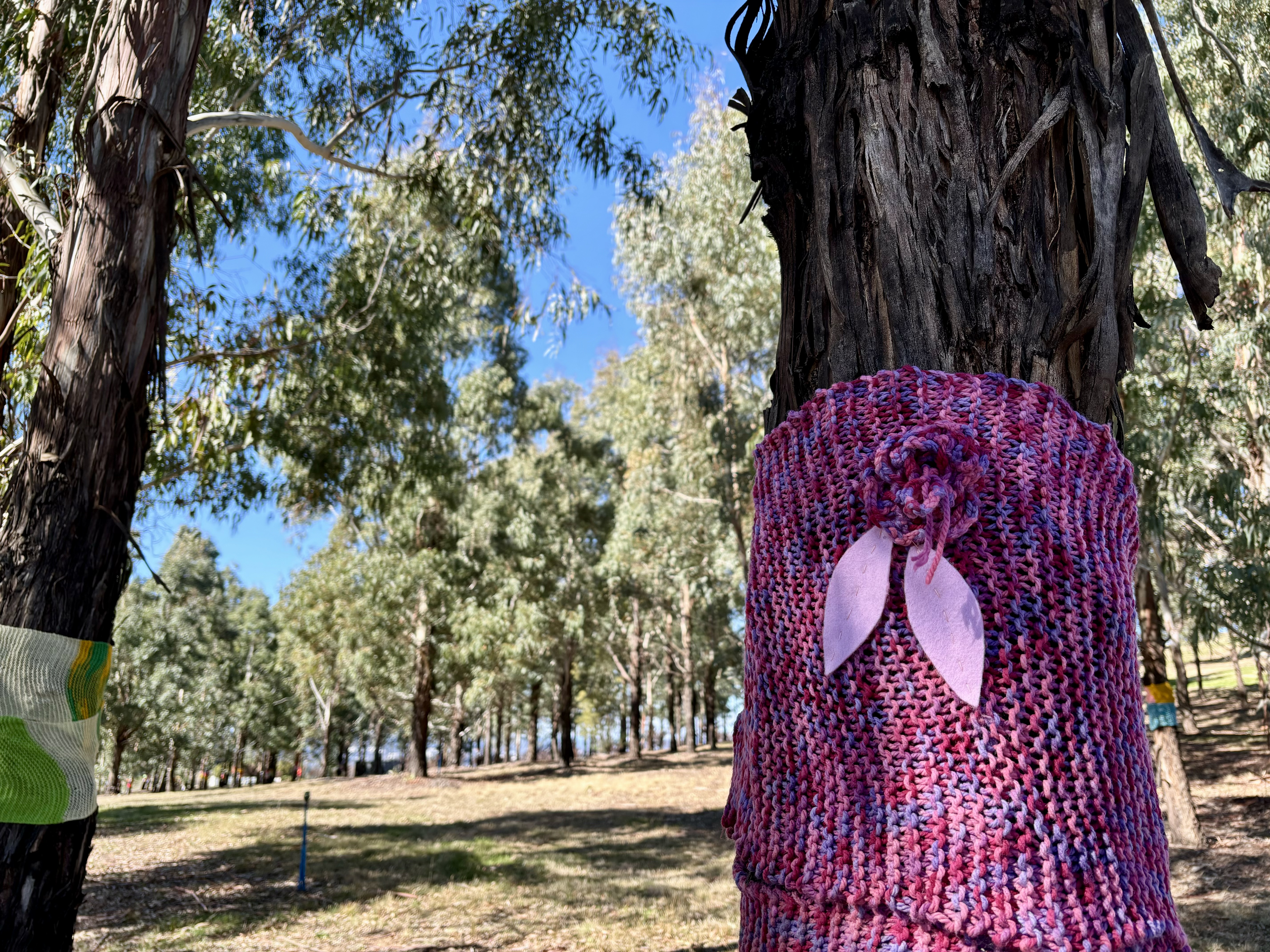
And of course, there are the trees. There are over 44,000 trees, with selection criteria including rare or threatened species, seasonal colour and cultural significance. You can find a map here which shows the many tree plantings and walking trails.
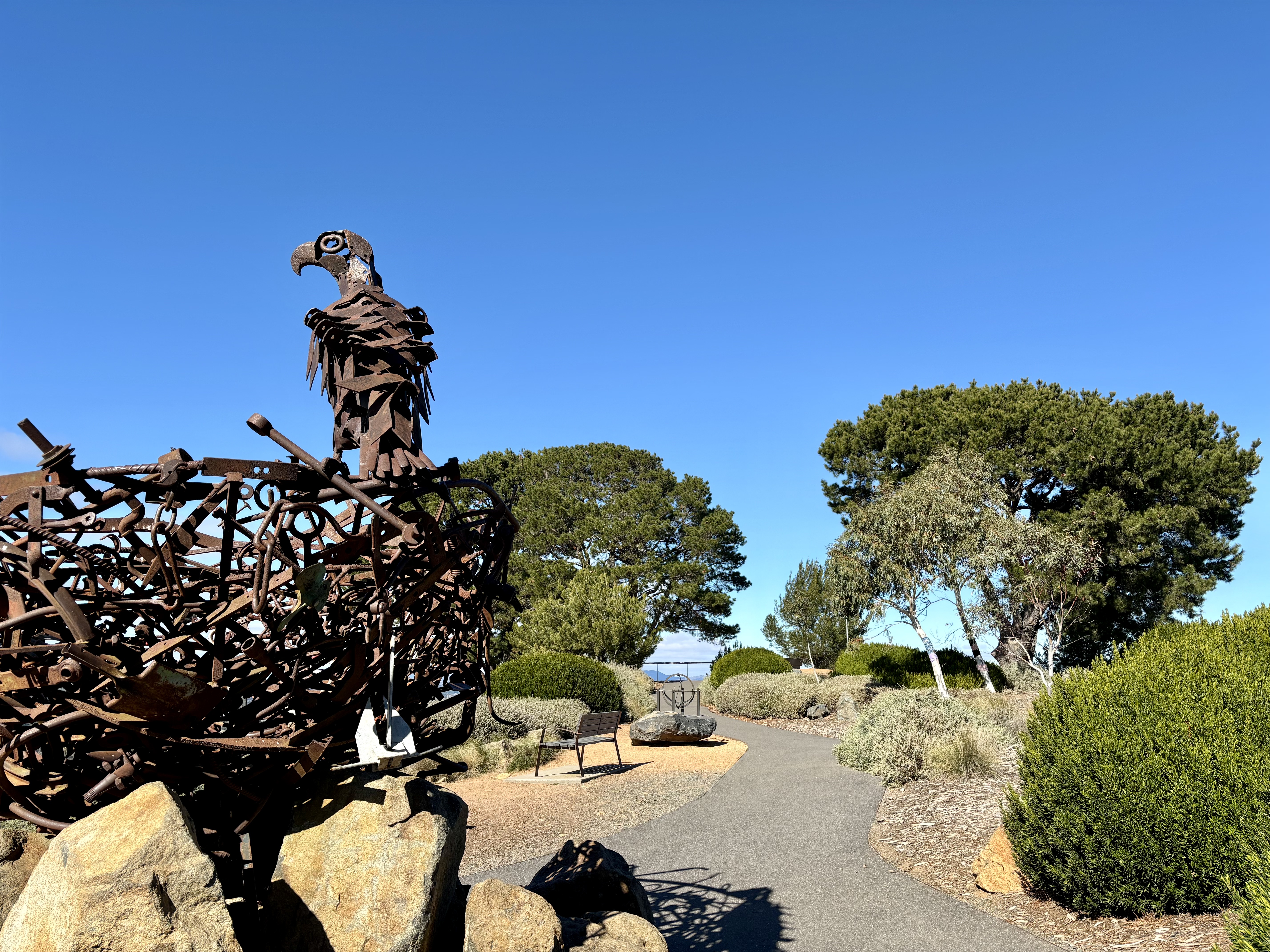
On the day I went for a wander, there were groups of school children enjoying the space and gardens, and a couple of artists were taking advantage of fine weather to capture the stunning views towards Canberra. One of the highlights was coming across sculptures in the arboretum, including Nest III, shown above. This was created by Richard Moffat in 2007, and is an Australian wedge-tailed eagle on its nest. The sculpture is made from welded steel found-objects, mainly abandoned farm machinery, and it sits atop Dairy Farmers Hill. The sculpture at the top of the page was created by Marcus Tatton and Chris Viney, and is based on three words from ‘My Country’. This is a well-known poem by Australian poet and fiction writer Dorothea Mackellar. It is in the form and style of Mackellar’s handwriting, and is visible from many parts of the arboretum: it is 35 metres long and 3 metres high. You can find more information about the Forest Sculpture Gallery here.
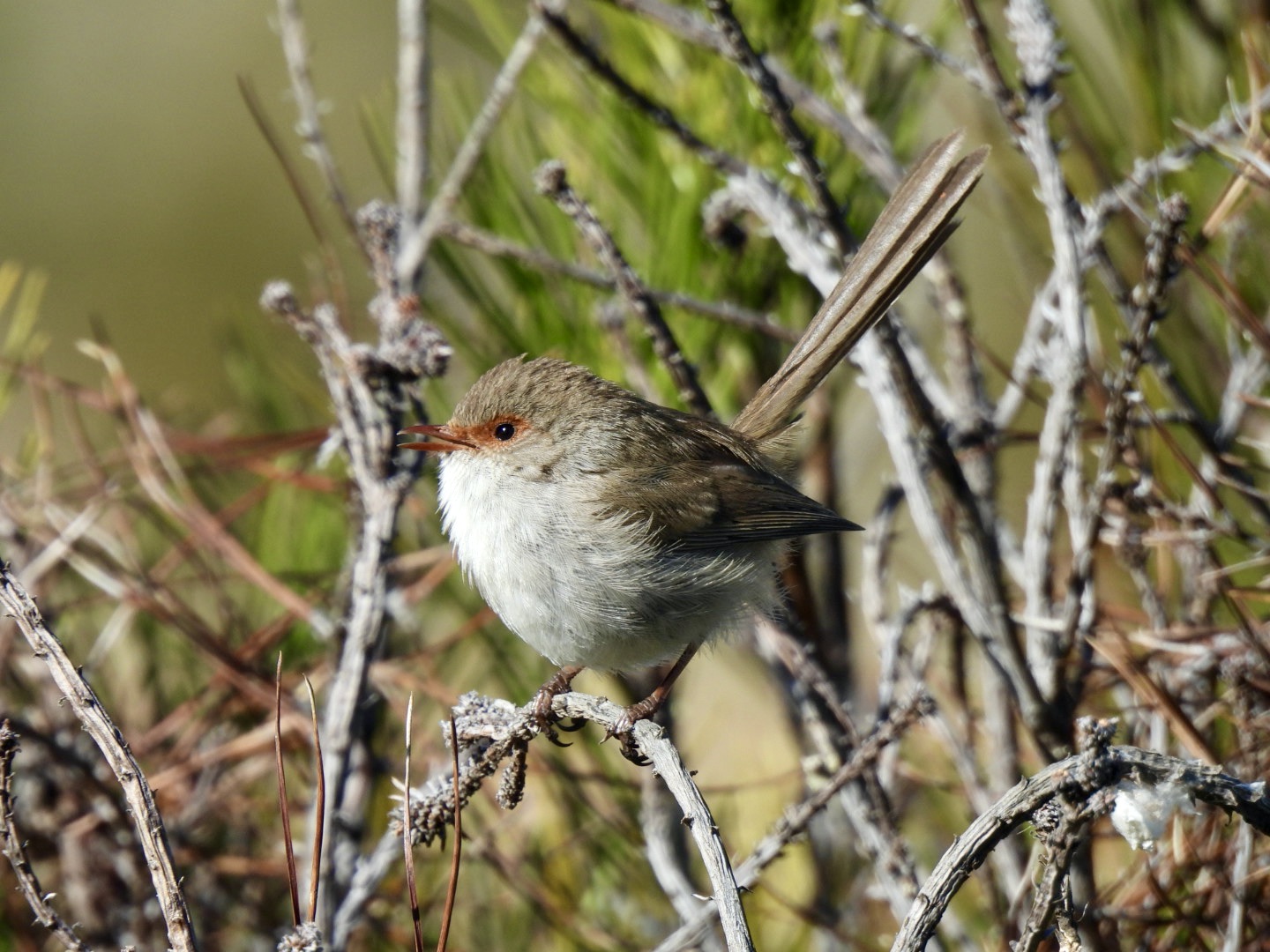
And what are trees without birds? One of the criteria for tree selection is to provide a habitat for Australian native wildlife. There were many birds enjoying the trees, including this Superb Fairy-wren. There is a comprehensive website for the National Arboretum Canberra, which includes an overview of the history, development, map, and available facilities. Have you been lucky enough to visit an arboretum?
Photo: Wide Brown Land sculpture, Marcus Tatton & Chris Viney, 2010


 jml297
Leave a comment