
I’ve had the good fortune to visit the Australian National Botanic Gardens a few times in the last decade or so. Similar to walks around other botanic gardens, my approach is to wander about and see what catches my eye. This varies on the time available to explore, the season, time of day and mood. It ensures an element of surprise for each visit.

On my most recent walk, I was drawn to the Rainforest Gully. This tranquil and cool setting hosts a range of plants from rainforests along the eastern coast of Australia. Fine misting sprays keep the gully moist, even during the peak of summer temperatures. Seeds and cuttings were collected from the wild, and were taken from the coldest part of their range where possible to give them the best chance of surviving the cold of a Canberra winter. There was an exhibit throughout the gardens on this visit, and I chanced upon a cassowary when I rounded a bend in the path. There is an interesting article on this incredible bird here.
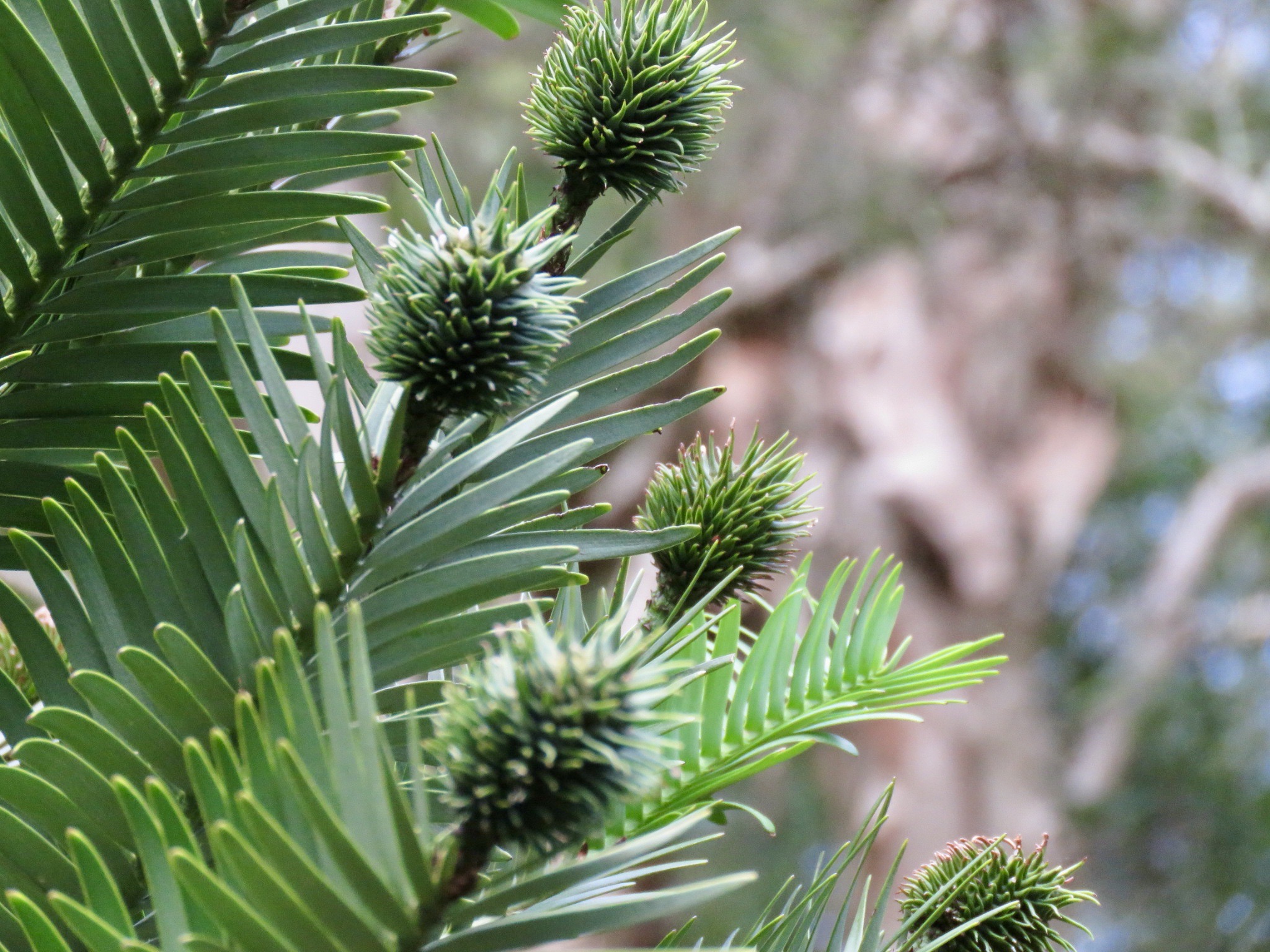
The first stand of Wollemi pines were identified in 1994 by David Noble during an abseiling trip in the Greater Blue Mountains area, about 200 km north-west of Sydney. It is one of the world’s oldest and rarest plants, dating back to the time of the dinosaurs. In the wild, it can grow up to 40 metres (about 130 feet) with a trunk of about a metre wide. There are less than 100 trees in the wild, and since its identification there has been a propagation program in place. You can find out more about this remarkable tree here.

One of the most identifiable trees in the Australian landscape is the eucalypt. There are over 700 species in Australia, and the gardens contain many plantings from all over the country. The texture of the bark varies from smooth to rough, and there are stringy and flaky trunks. When the flowers are blooming, they are popular with birds and insects alike. More than 100 species can be found on the Eucalypt Lawn.

The range of colours and textures throughout the garden present a treat for the senses. I was drawn to the cushion bush, which is a coastal shrub typically found along cliffs and coastal dunes. The silvery-grey foliage draws the eye, with the creamy white flowers creating a subtle contrast.
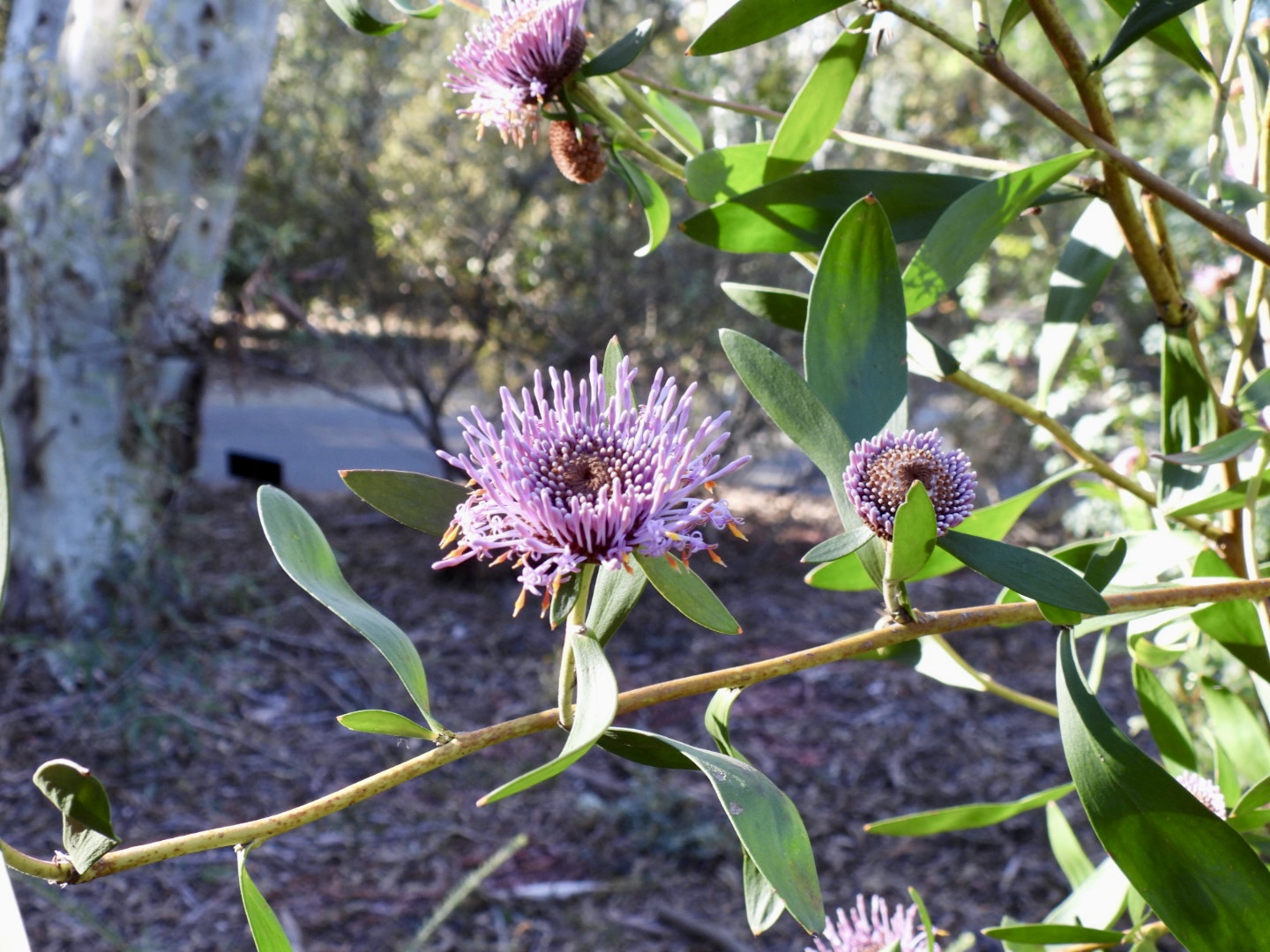
Some of the most vividly coloured wildflowers are from Western Australia, and the coneflower shown above is one example. It grows in heath, low woodland and shrub land, mainly along the southern tip of Western Australia.
A wander around the gardens is always a delight, with something different to see or a previously unexplored track to be followed. The Botanical Bookshop has a range of books and gifts, and the Pollen Café has a seasonal menu in a relaxed setting. I look forward to future visits and discoveries in the Australian National Botanic Garden. Have you had a walk around this beautiful garden?
Photo: Correa ‘Canberra Bells’




 jml297
Leave a comment