
This year has been a bumper season for cicadas in the Blue Mountains. Typically, they emerge in the upper mountains first, with masked devils leading the way at altitudes over 500 metres. That was certainly the case this year. It seems to happen overnight – a massed emergence of shells with the ground pitted with exit holes.

After being underground for seven years, the sheer volume of cicada numbers that emerge is an anti-predator defence. Almost all the population of periodical cicada species emerge in a synchronised manner, maturing into adults in the same year and within days of each other, with no cicadas in the years between. This deliberately overwhelms potential predators to ensure success in the breeding season, and is called ‘predator satiation’. Consumers of cicadas include birds, bats, spiders, wasps, tree crickets and ants. I’ve seen many birds flying off with a cicada in their beak over recent weeks.
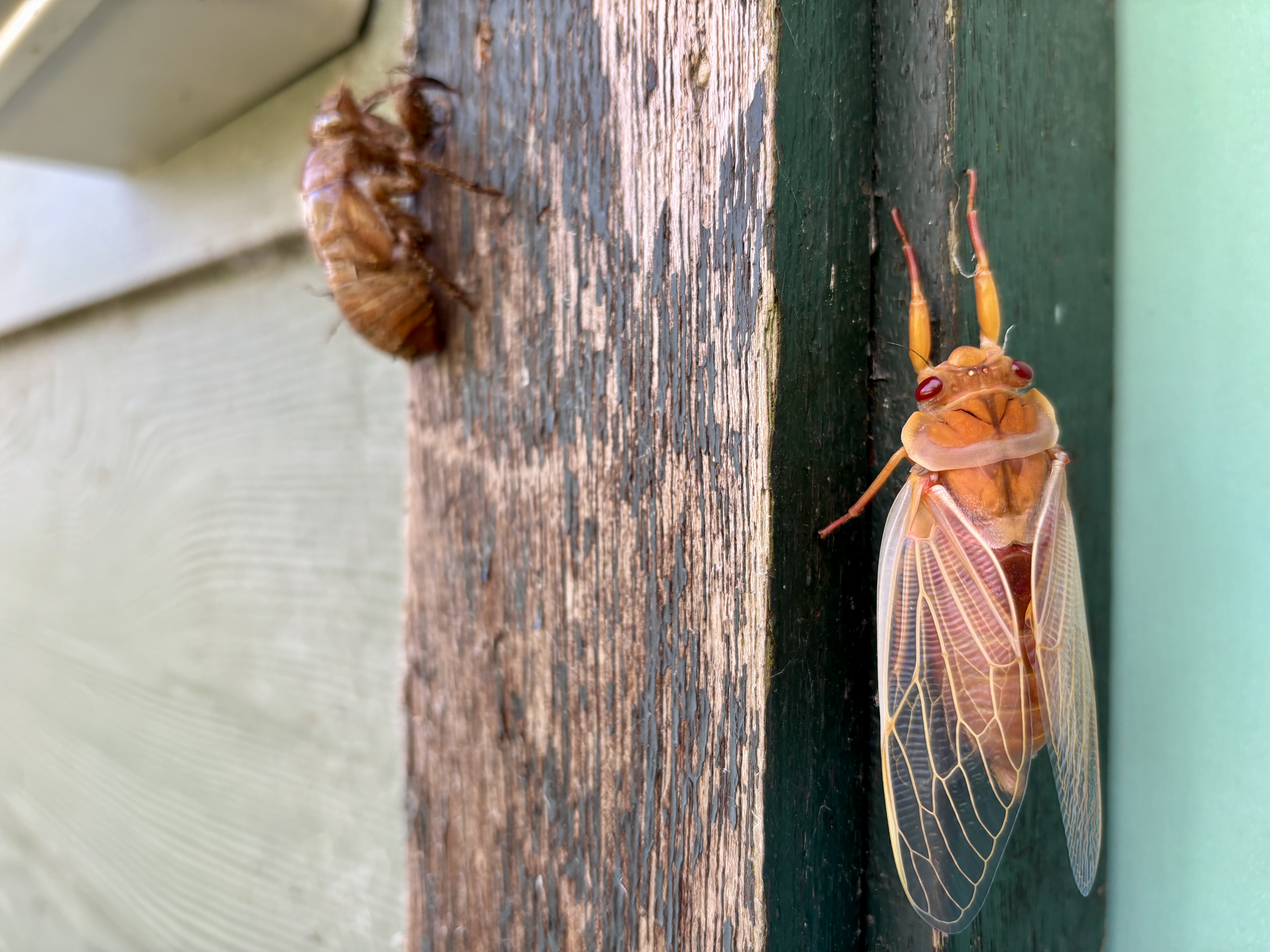
The dominant cicada in my local area is the Masked Devil. They can be orange or green, and are a variation of the Green Grocer cicada, one of the most common and easily identifiable cicadas in the eastern states of Australia. The world’s loudest insect is an African cicada, and hearing cicadas all together can take a bit of getting used to. It is the male cicadas that sing, mainly through the heat of the day. When they sing, their tympana (hearing organ) is creased, so the cicadas are not deafened by their song. Their call is amplified by their hollow abdomen and is species-specific.
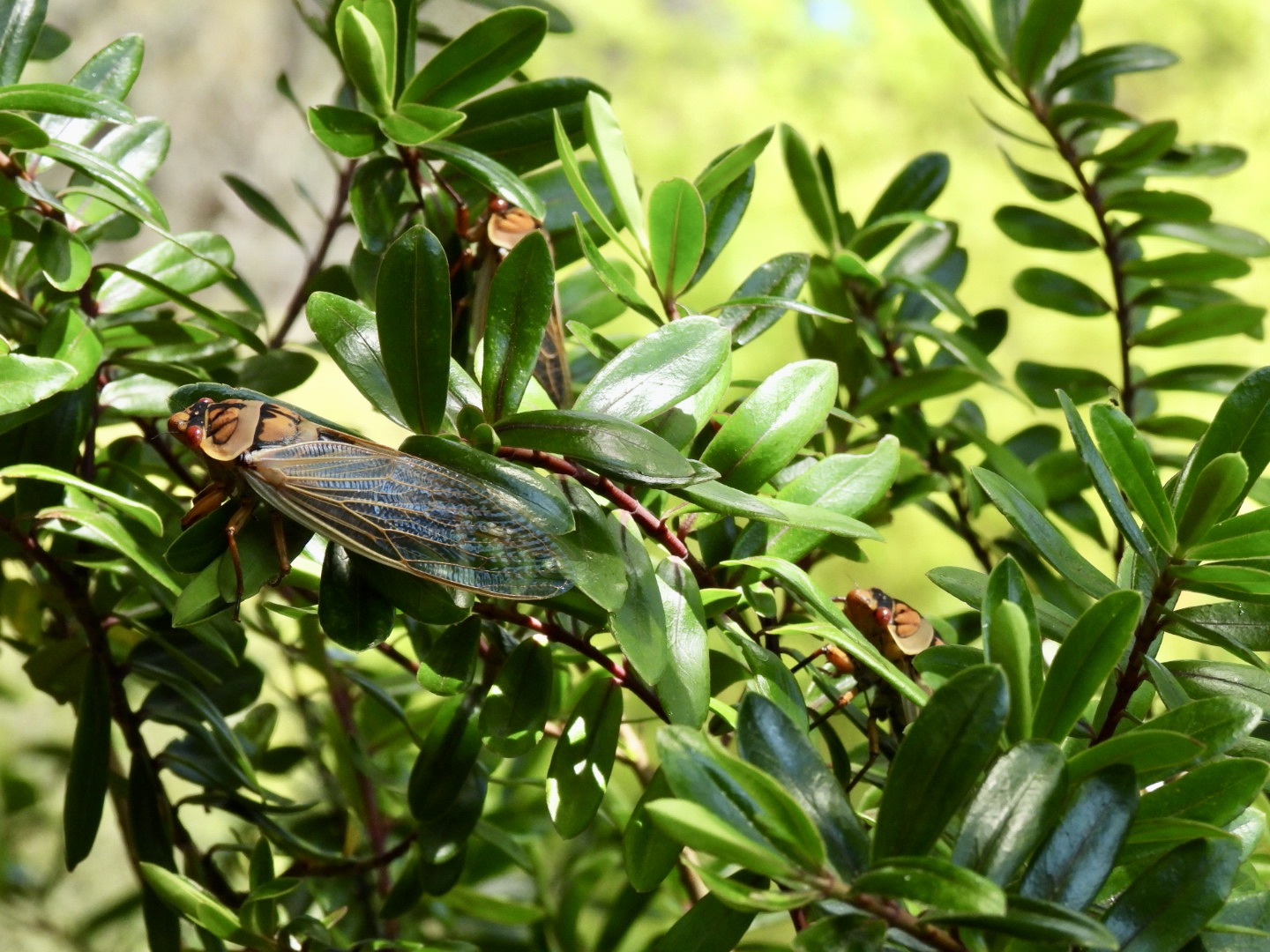
Cicadas have five eyes. The ocelli are three jewel-like eyes in a triangle between their main eyes. They are mostly used to detect light and sense large objects. Cicadas feed by sucking sap from plants, using a long sharp rostrum. Plants that they prefer include eucalyptus, callistemon, acacia, jacaranda, and liquid amber trees. The photo below shows a trio enjoying a garden shrub.
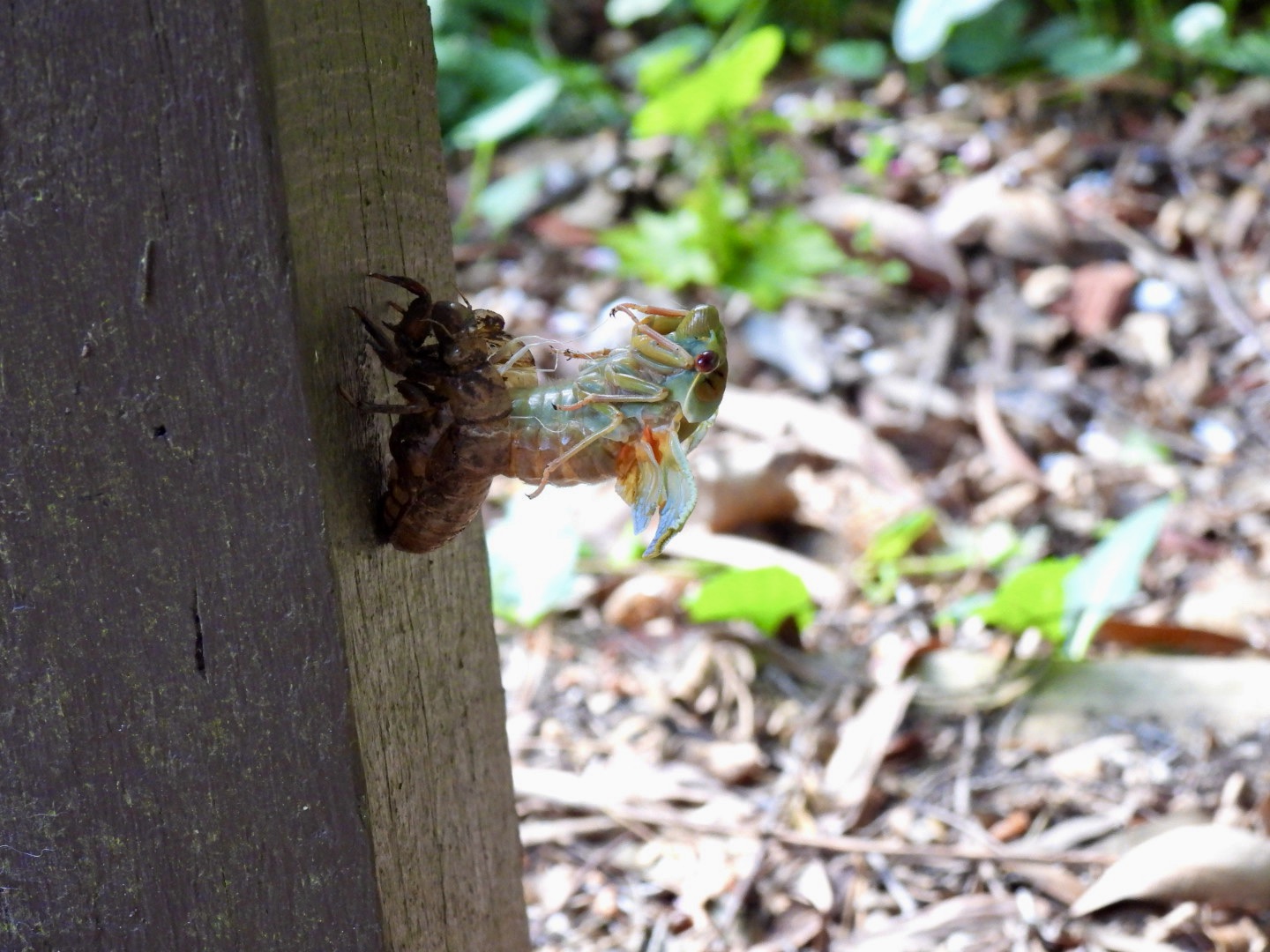
The life cycle of the cicada has four stages. Several hundred eggs are laid in soft tree branches, with eggs hatching within 1–3 weeks. The hatched nymph falls and digs underground, feeding on sap from tree roots for up to 7 years. When they emerge, nymphs are fully mature. They burrow from the ground onto a tree or similar surface before moulting from the shell as an adult. Adult cicadas live between 1–6 weeks with one goal: to mate, and start the cycle again.
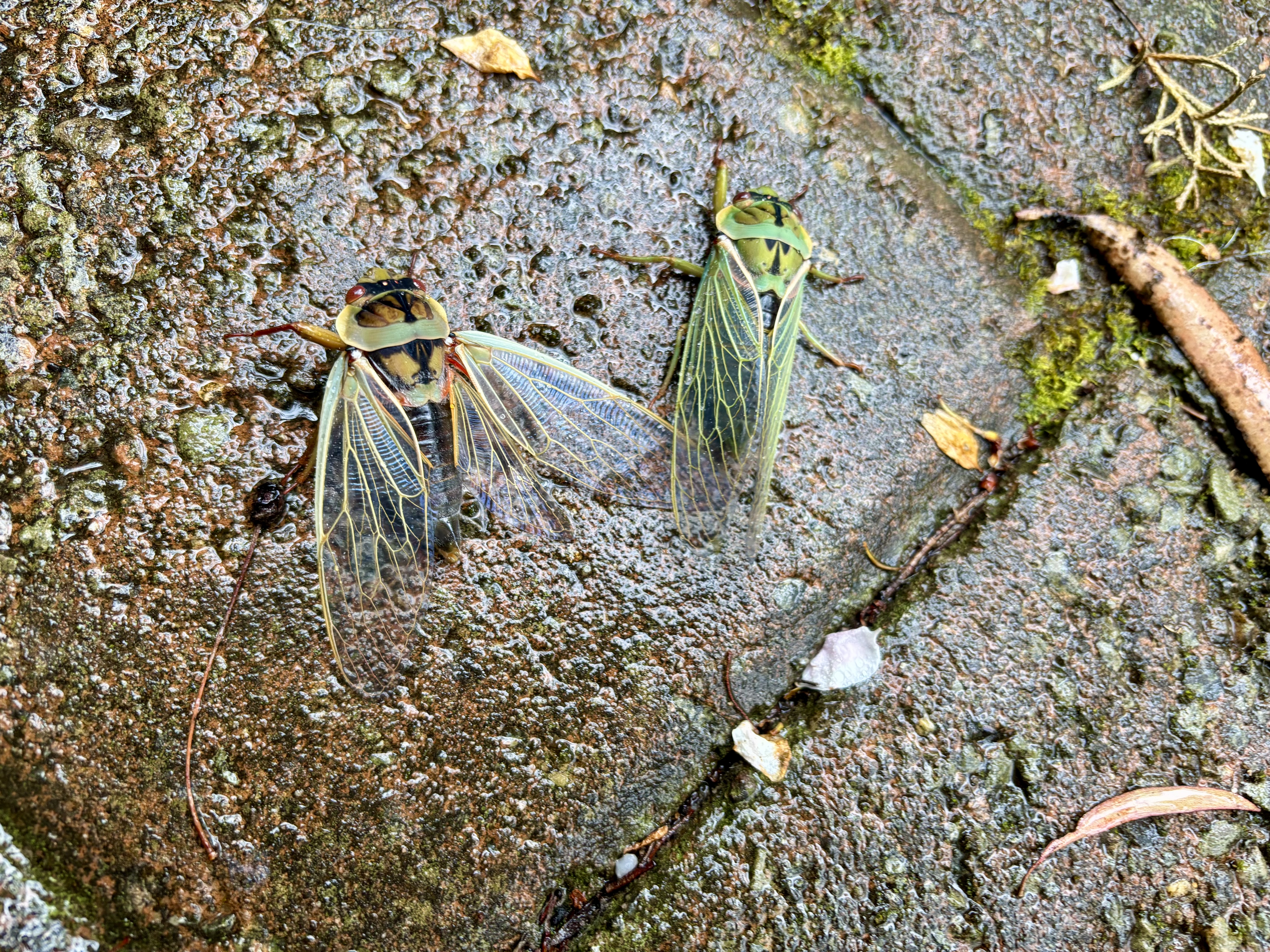
There are about 800 known cicada species in Australia, making it the world cicada capital. The diversity of vegetation and the long period of geographic isolation have contributed to this considerable variety of cicadas, which can be found in woodlands, arid grasslands and rainforests.
It’s been 7 years since cicadas captured my attention locally, and it’s been interesting to observe them again. I’ve rescued quite a few from bird baths or shifted them off paths to give them a better chance of survival, and admired their colour and clumsy determination. The website cicadarama has been a great resource, along with A Photo Guide to Common Cicadas of the Greater Sydney Region by Dr Nathan Emery. These and other references have increased my appreciation of the cicadas in my backyard. Do you have cicadas in your area?
Photo: empty cicada shell (nymph casing)


 jml297
Leave a comment