
In August this year, I joined a tour of the historic St Matthew’s Anglican Church at Windsor. Guided tours are available a few times a year, and are organised by the Defenders of Thompson Square in collaboration with St Matthew’s Anglican Church and the Hawkesbury Historical Society. The tour includes the church, bell tower and cemetery, and runs for approximately 2 hours. A percentage of the entry fee is donated to the church conservation fund.
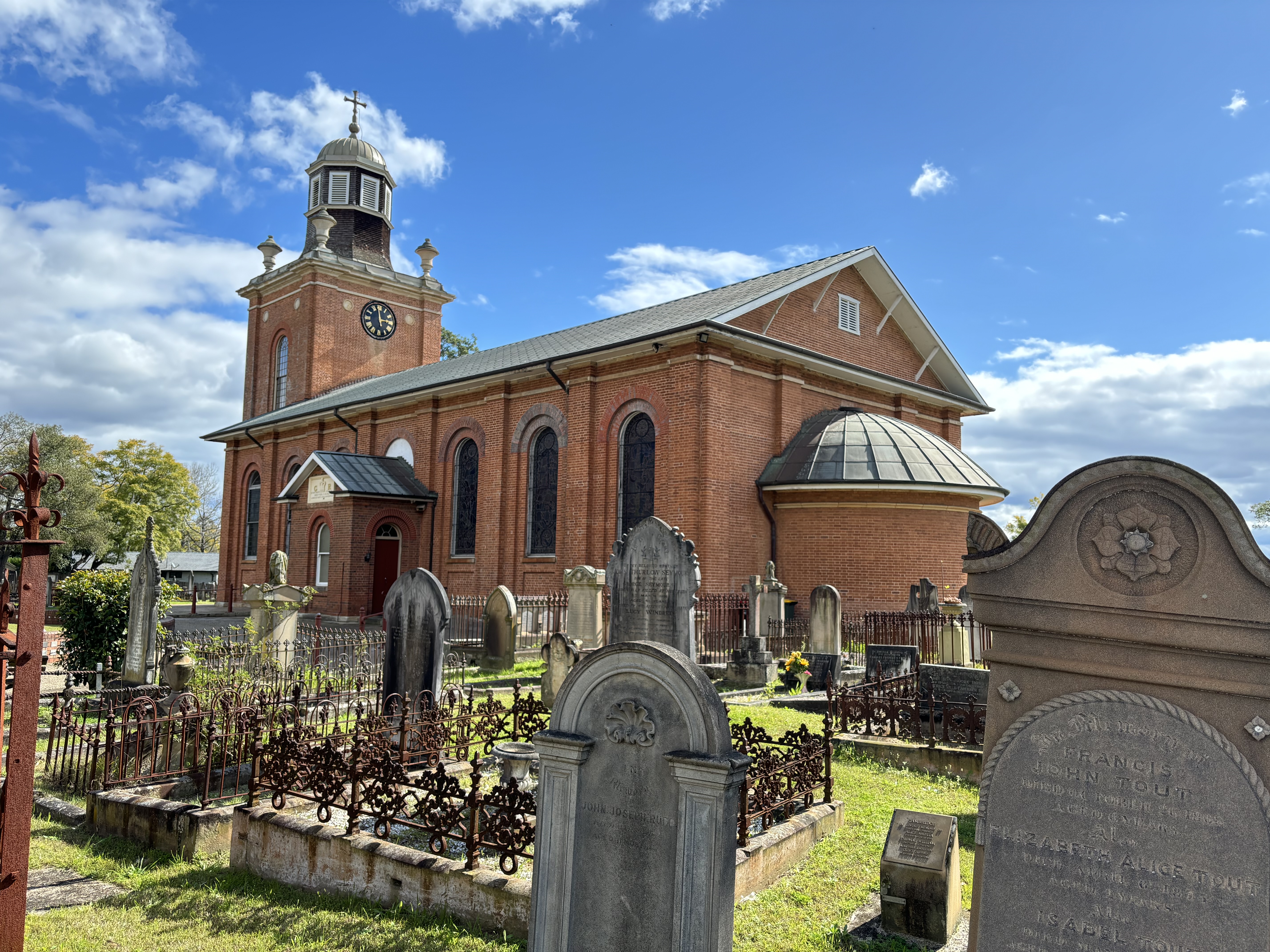
This was the fourth building to be used as a church in Windsor between 1803 and 1817. Its location was selected by Governor Macquarie, and construction commenced in 1817. Part-way through construction, however, a committee concluded that the building was ‘unfit to stand’ due to poor materials and workmanship. It was dismantled, and an entirely new design was implemented by Colonial Architect Francis Greenway. By September 1821, the building was in use for church services, and it was consecrated in 1822 by Reverend Samuel Marsden. It is the oldest Anglican Church in Australia. The cemetery was designated as early as 1810, and contains many graves of historical interest. Free settlers were buried on the front south side, separate from the graves of convicts which were located towards to the back of the cemetery.
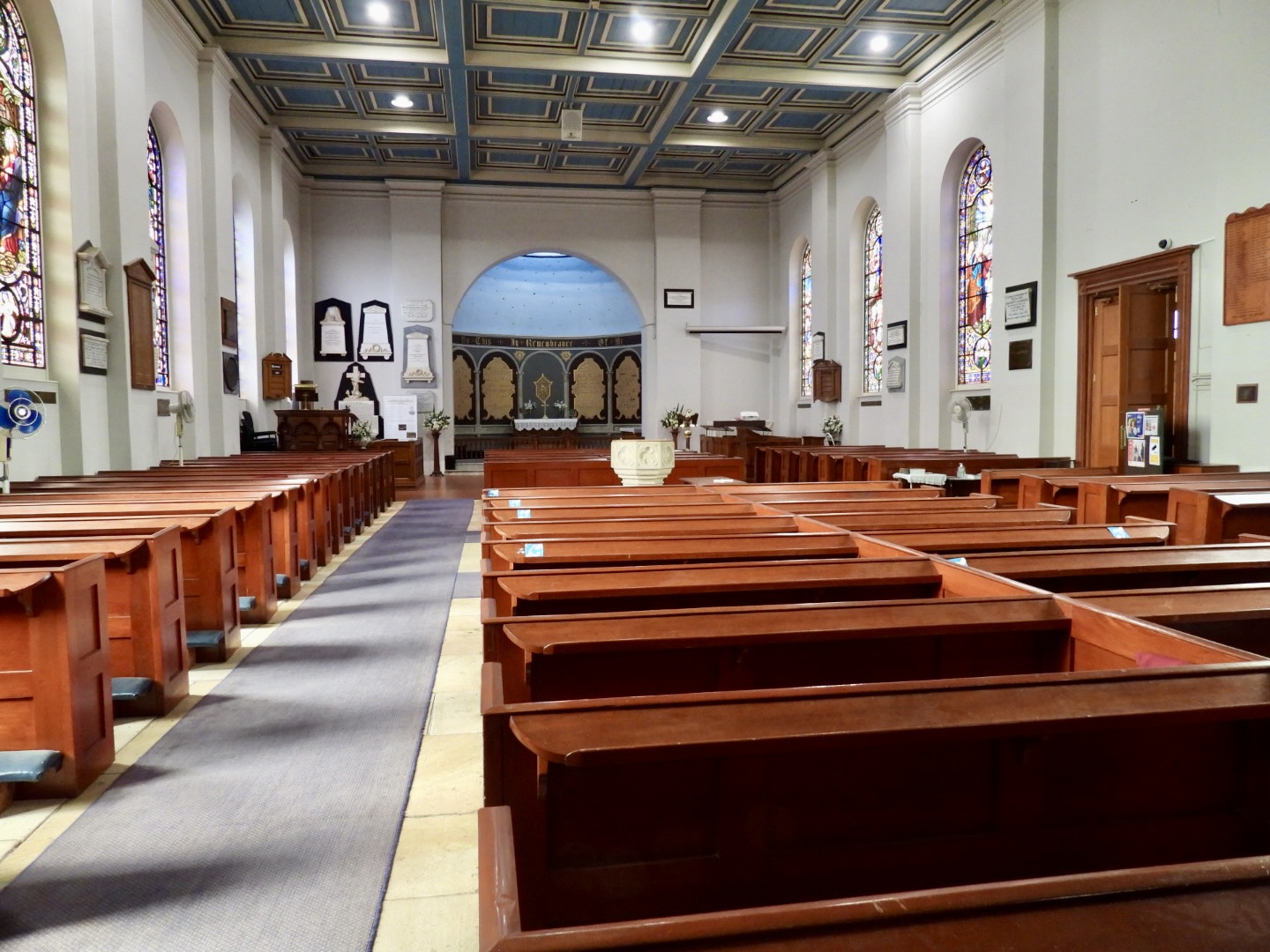
The local military detachment provided music for services until 1840, and the church has one of the first pipe organs installed in Australia. One of the main sources of income for churches at the time were pew rents. This was a revenue stream for St Matthew’s until 1956: it was the last church in Australia to levy pew rentals. The sandstone font has been in use since 1840s, and was donated by the Cox family.
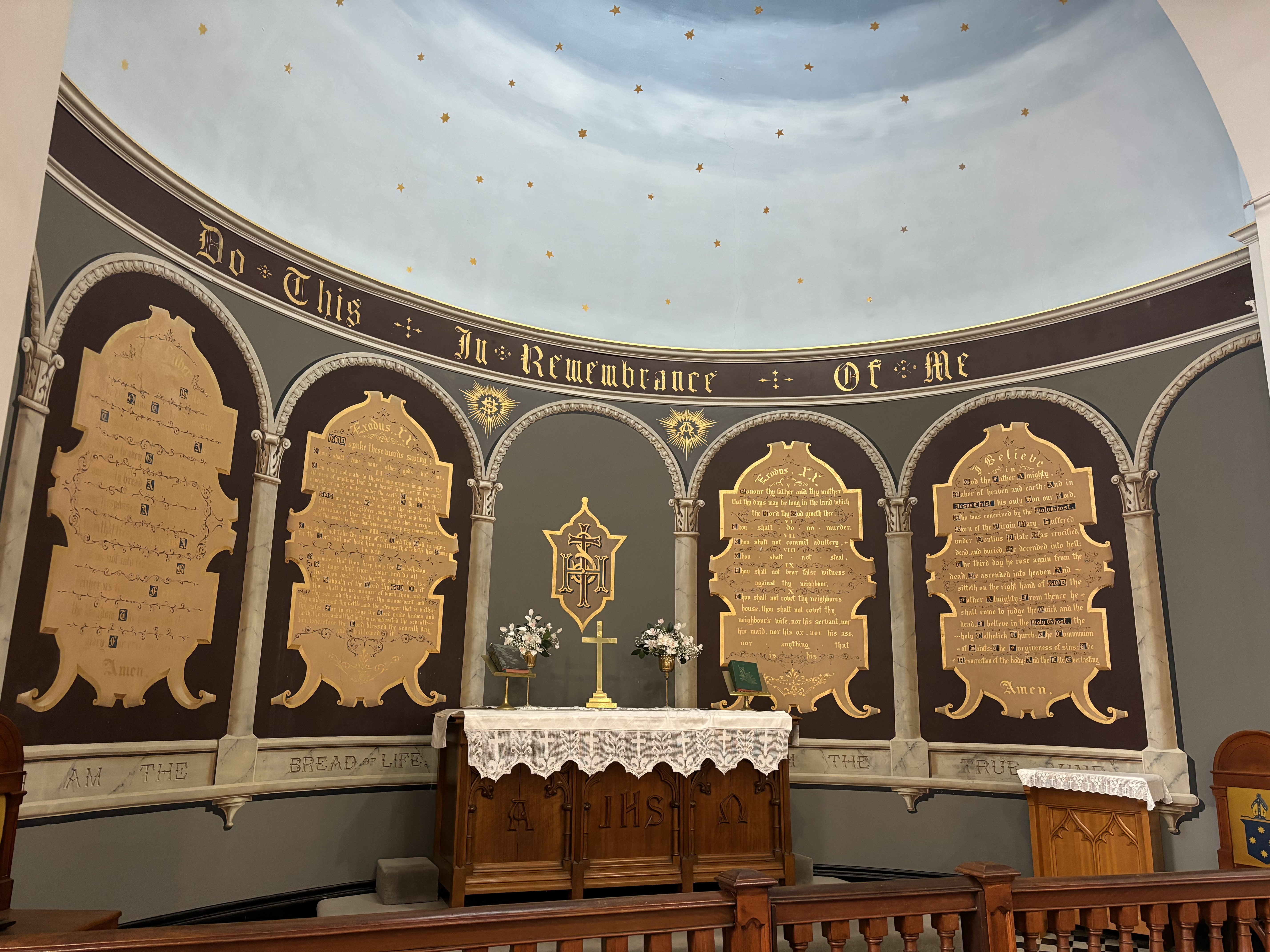
There are many features to note within the church, including the reredos in the apse shown above. The ceiling of the apse is painted in shades of blue to represent the night sky; the location of the stars were drawn by local astronomer, John Tebbutt. There is a photo of the Tebbutt family tomb here.
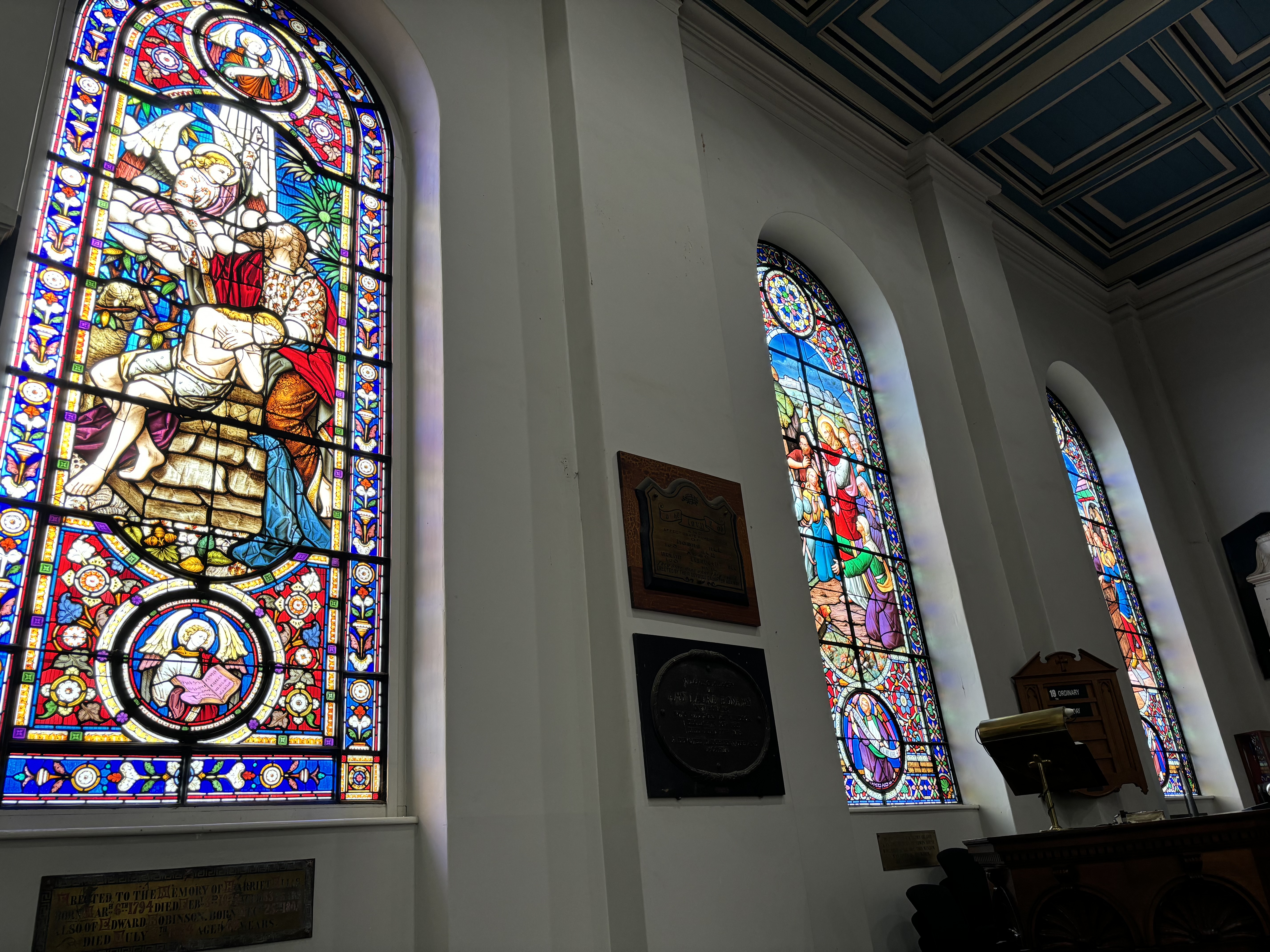
The stained-glass windows in the front section of the church contain memorials to local people. They were made at Newcastle-on-Tyne in the late 1800s. In 1942, the windows were removed due to fear of war damage. They were stored in the cellar of Rouse Hill House.
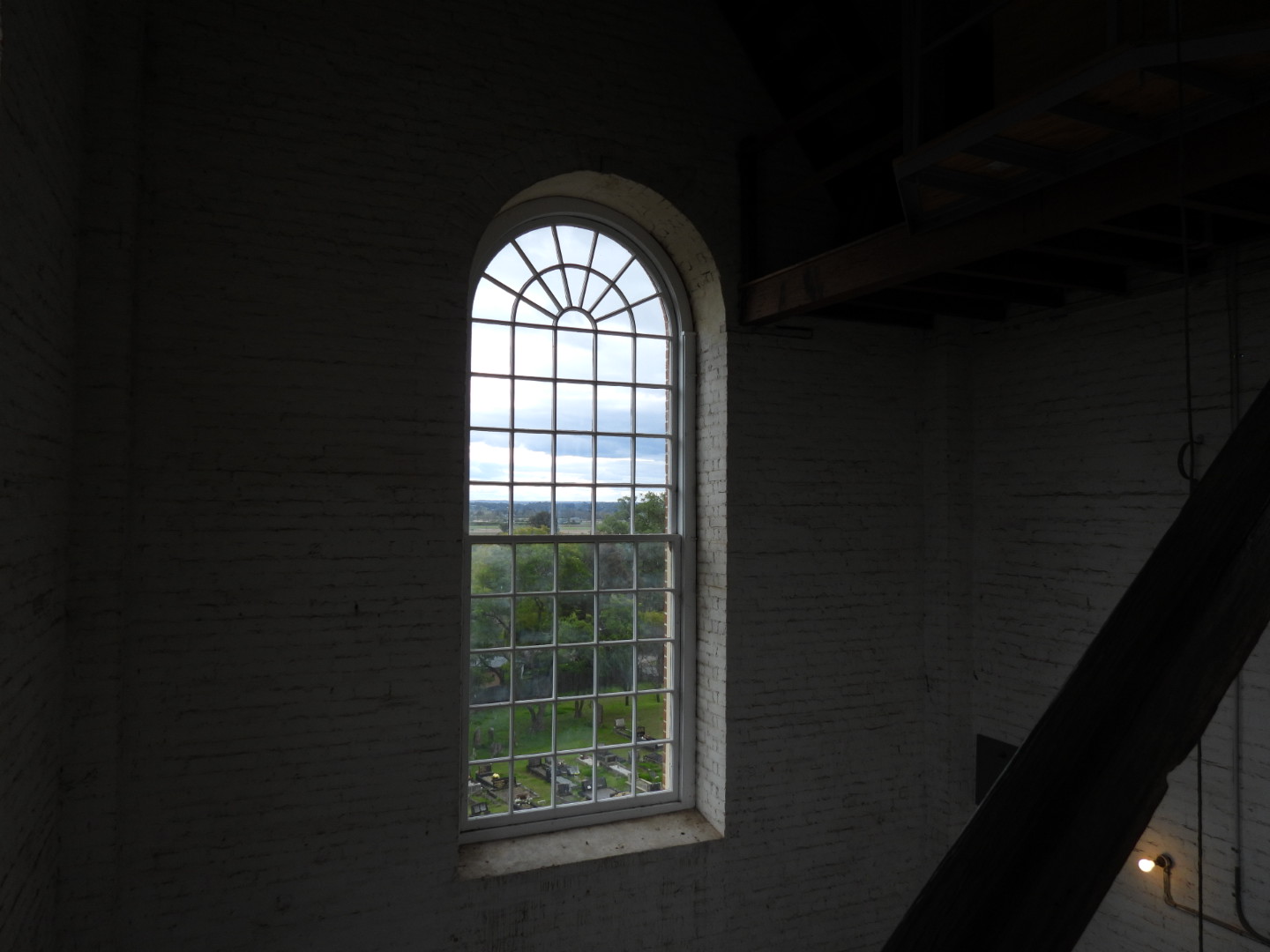
One of the highlights — no pun intended — of the tour was the bell tower. Access is via a tight spiral staircase with no handrails. The walls were marked with graffiti etched over many decades. From the landing, we were invited to ring the bell. The bell is a sister to one in St James, Sydney; they were cast in the same foundry and came out on the same ship. On a clear day, the bell can be heard over a kilometre away. From the restored arch windows, there are views towards the Blue Mountains in the west.
I thoroughly enjoyed the informative tour of St Matthew’s, and it piqued my interest to find out more about the ‘Cathedral of the Hawkesbury’. There is a fact sheet from the Hawkesbury Regional Museum which provides more detail and has some great historic photos. There is also an excellent history of the church available here. The tour guides were informative and really brought the church’s history to life with stories and insights about its construction, changes over the years, and the important role it played in the local community.
Photo: St Matthew’s Anglican Church, Windsor with columbarium in foreground.
 jml297
Leave a comment