
On a spectacular autumn day, I arrived in Clarence, near Lithgow, for a ride on the Zig Zag Railway. My ticket was booked for the first trip of the day, departing Clarence for Top Points, then heading to Bottom Points before returning to Clarence. After checking in, I was given an old-fashioned cardboard ticket. There is a café on the platform, and I enjoyed a coffee as people took their seats in the various carriages, or watched the engine prepare for the trip.

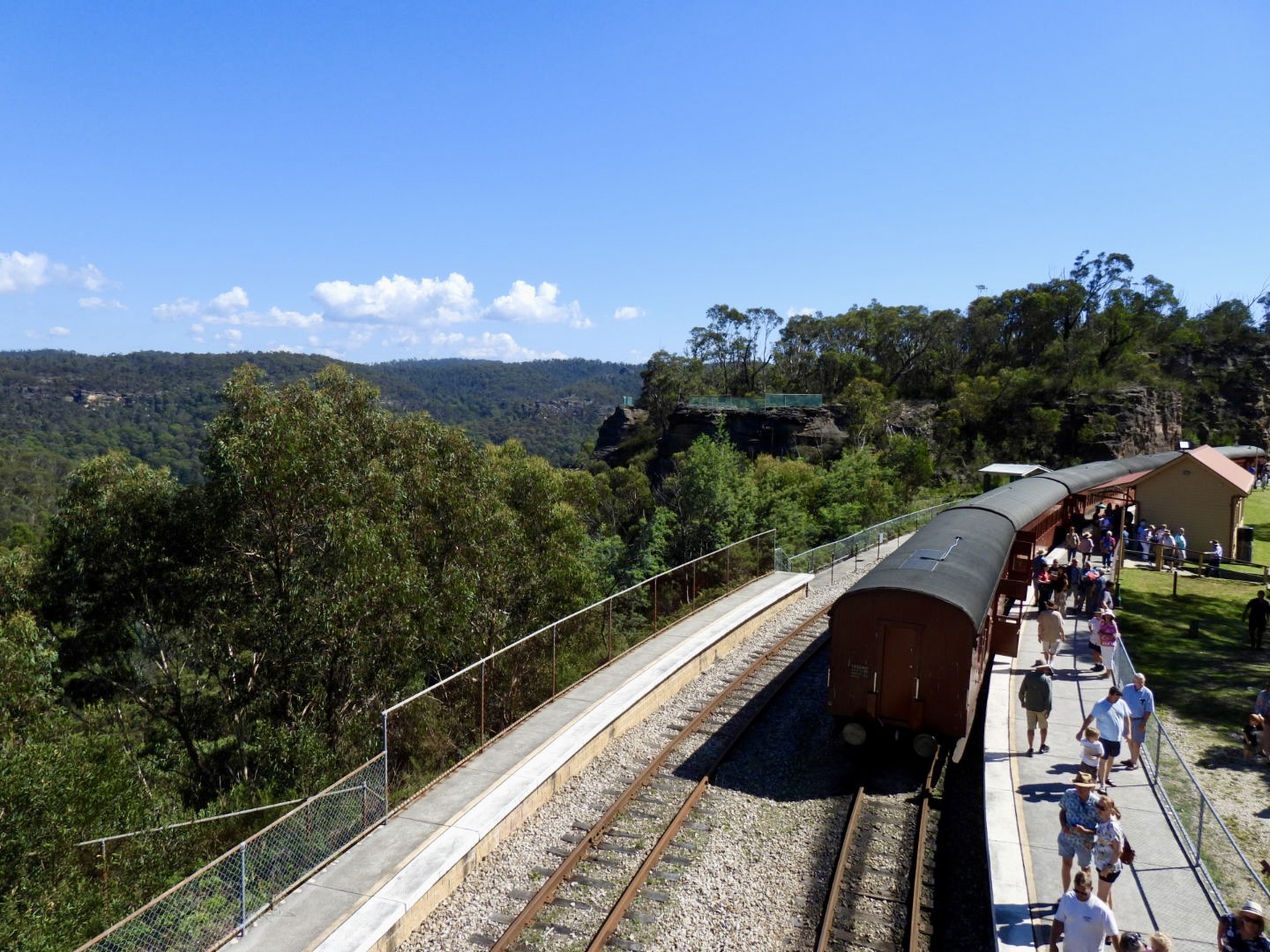
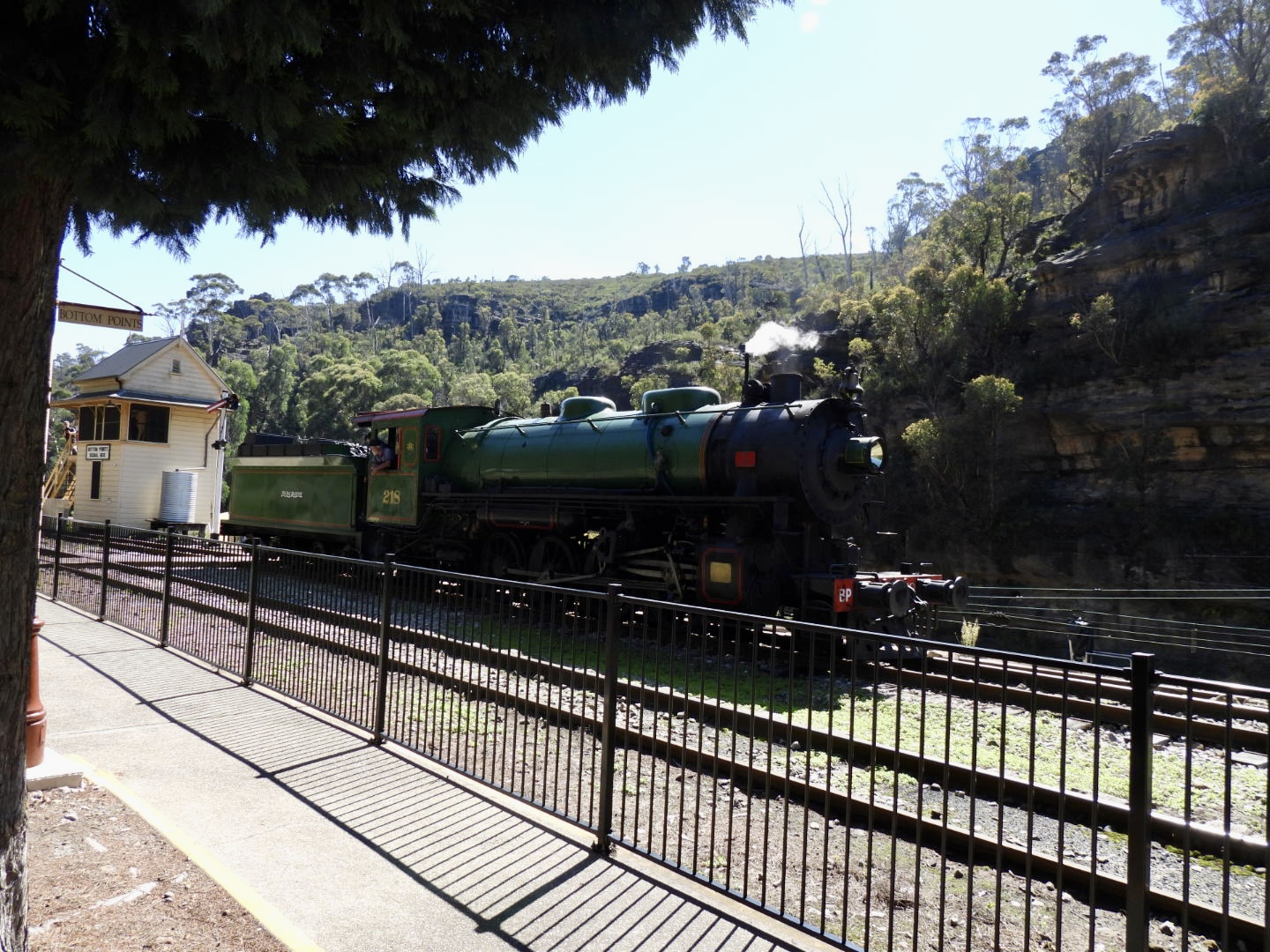
The railway is largely run by volunteers, with only a few paid employees. These volunteers are knowledgable about the trains and the heritage of the Zig Zag, and their enthusiasm was infectious. Soon after leaving Clarence, we were steaming our way through a tunnel, and there were wonderful views of one of the three viaducts as we approached the Top Points stop, best viewed from the right-hand side of the carriage. The stop at Top Points provided an opportunity to view the surrounds from an over-bridge as the engine took on water. Engine 218A was built in Philadelphia USA, and was assembled and based in Cairns, Queensland. It was in operation from 1943 through to 1969, and there is a summary of the engine’s history here.
The next stop was Bottom Points. There is a National Engineering Landmark plaque in one of the sandstone walls, noting the engineering feat known as the Great Zig Zag, Lithgow:
A railway zig zag is a series of reversing ramps used to avoid very steep grades. John Whitton, Engineer in Chief NSW Government Railways 1856-90, chose this as the economical method for the descent from Clarence to Lithgow. Built during 1866-69 by contractor Patrick Higgins, it involved massive rock excavations, a tunnel and three stone arch viaducts. During its 41 years of operation it accelerated the development of western New South Wales and achieved world renown as a major engineering work.
The Great Lithgow Zig Zag provided rail access to western New South Wales from 1869 through to 1910, when a ten tunnel deviation was completed. The importance of the railway was confirmed when it was declared as a reserve by the Crown. In the 1970s, the Zig Zag Railway Co-Op was founded by volunteers, and the first passenger service was in 1975. The railway operated through to 2012; it was then closed due to rising costs and regulatory requirements. There were major setbacks to the railway reopening, including significant damage from vandalism and bush fires. It reopened to the public in May 2023. There is an article celebrating the event here with some fantastic photos of what was described in the 1870s as “the eighth wonder of the world”.

Many people have fond memories of travelling on the Zig Zag, and it is fantastic to be able to enjoy the amazing scenery and meticulously restored locomotives, rail cars and wagons. The experience is unique, and it is wonderful to be able to travel through the narrowing embankments with steam billowing through the tunnel, then opening up to superb views including sandstone viaducts.
You can find out more about the Zig Zag Railway here. Have you enjoyed a ride on a steam train recently?
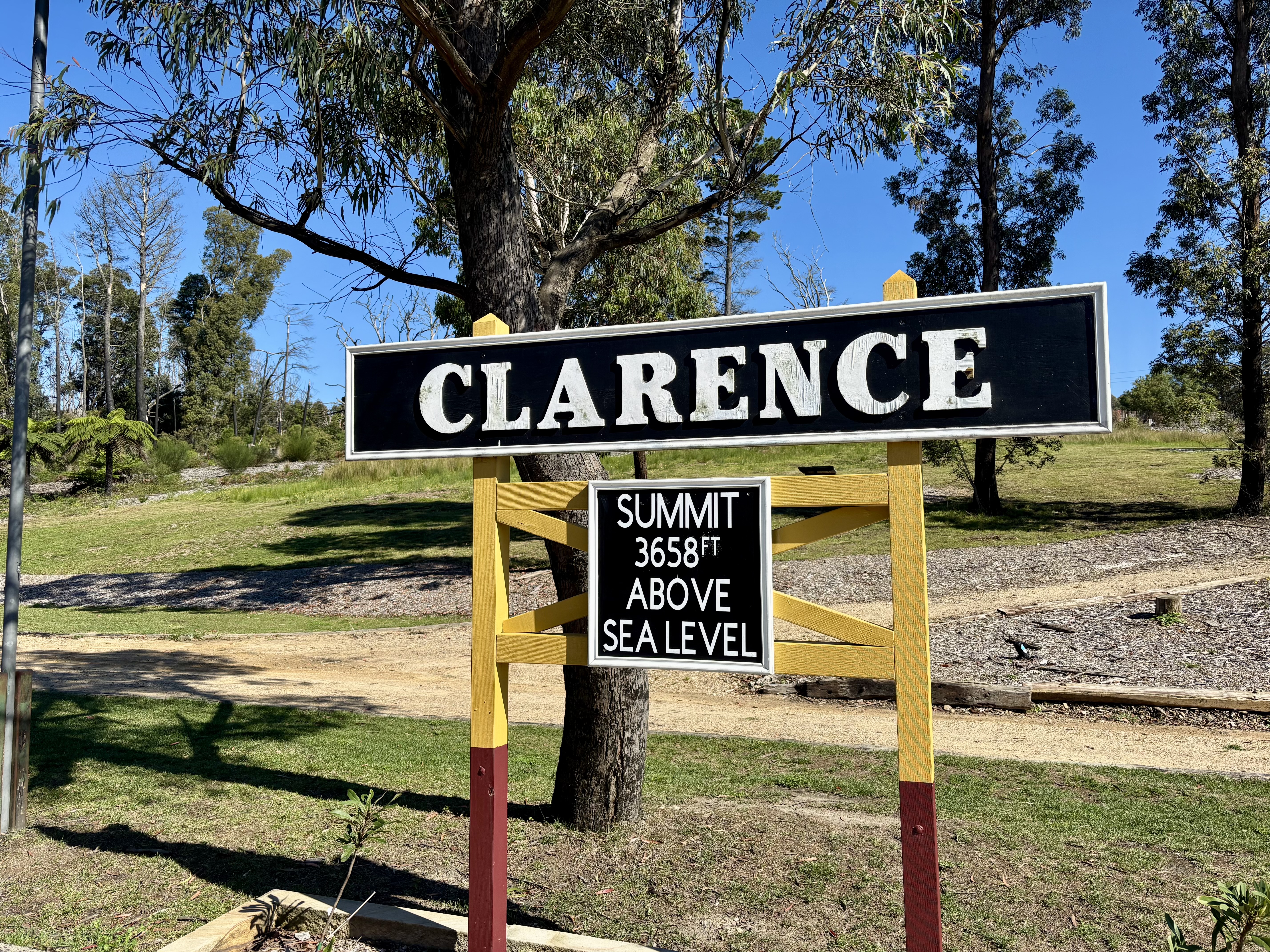
Photo: entrance to the Zig Zag Railway Station, Clarence


 jml297
Leave a comment