Berrima is one of those towns that I’ve stopped at occasionally on the way to the south coast or Canberra. It was bypassed by the Hume Highway in 1989, but it is worth the short detour to have a look around this remarkably well-preserved town. Berrima is located 118 km south of Sydney, and has a population of about 600. It is part of the Wingecarribee Shire, and the Gundungurra and Dharawal are the First Peoples and Traditional Custodians of the lands and waters of the area.

Similar to Carcoar in the central west of NSW, Berrima was initially expected to be a major centre to service the southern districts, and this is reflected in the public architecture. The courthouse, built from 1835-1838, was the location of a gruesome trial in 1843. Lucretia Dunkley and Martin Beech were having an affair, and were tried for murdering Dunkley’s much older husband. There is a link here to Dunkley’s convict history, and newspaper reports of the murder and trial. It is grim reading, and the trial is included in an audiovisual presentation in the Berrima Courthouse museum. The circuit court moved to Goulburn in 1849, and the importance of the courthouse, and the town’s population, reduced significantly.
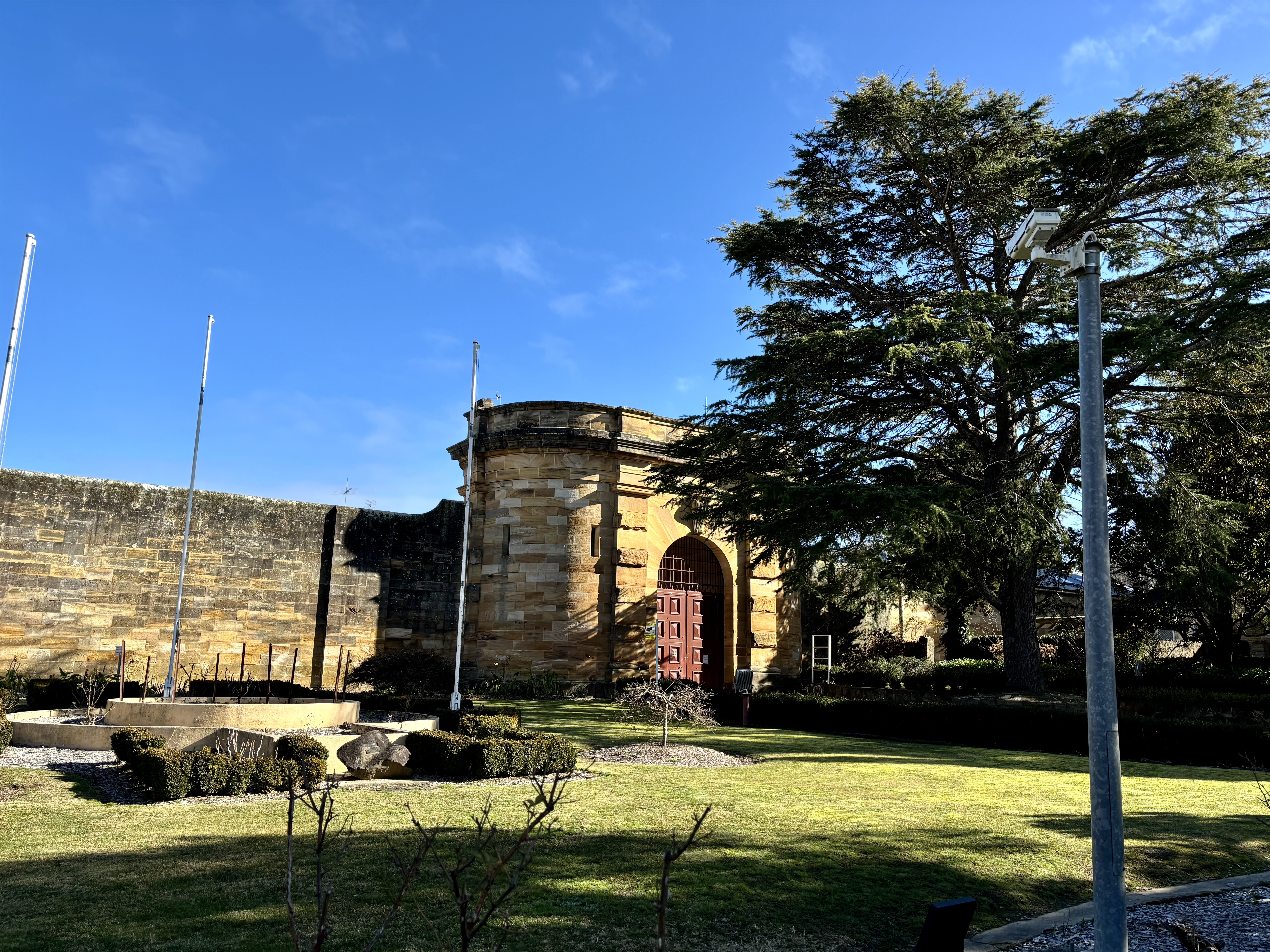
Construction of the Berrima Gaol commenced in 1834, and it was a maximum and minimum security prison for male and female prisoners for decades. It was closed in 1909, then used as an internment camp for German prisoners of war from 1914-1919. Further closures and openings followed, including use as a training centre, until its final closure in 2020. The site was sold to a private developer in 2022 for $7 million, and there is an overview of the Berrima Quarter project here. Berrima Gaol had a terrible reputation, and was known as the ‘Castle of Despair’. There are some photos of the last days of the Berrima Correctional Facility here.

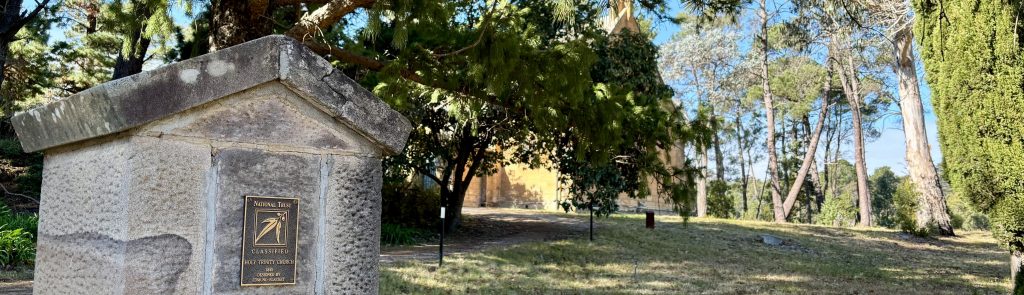
There are a couple of beautiful old churches in Berrima, including the Holy Trinity Anglican Church. It was built from 1847-49 by William Munro, and designed by Edmund Thomas Blacket. This is one of many churches and cathedrals designed by Blacket, and was constructed from local sandstone. The stained windows are older than the church by about 100 years.
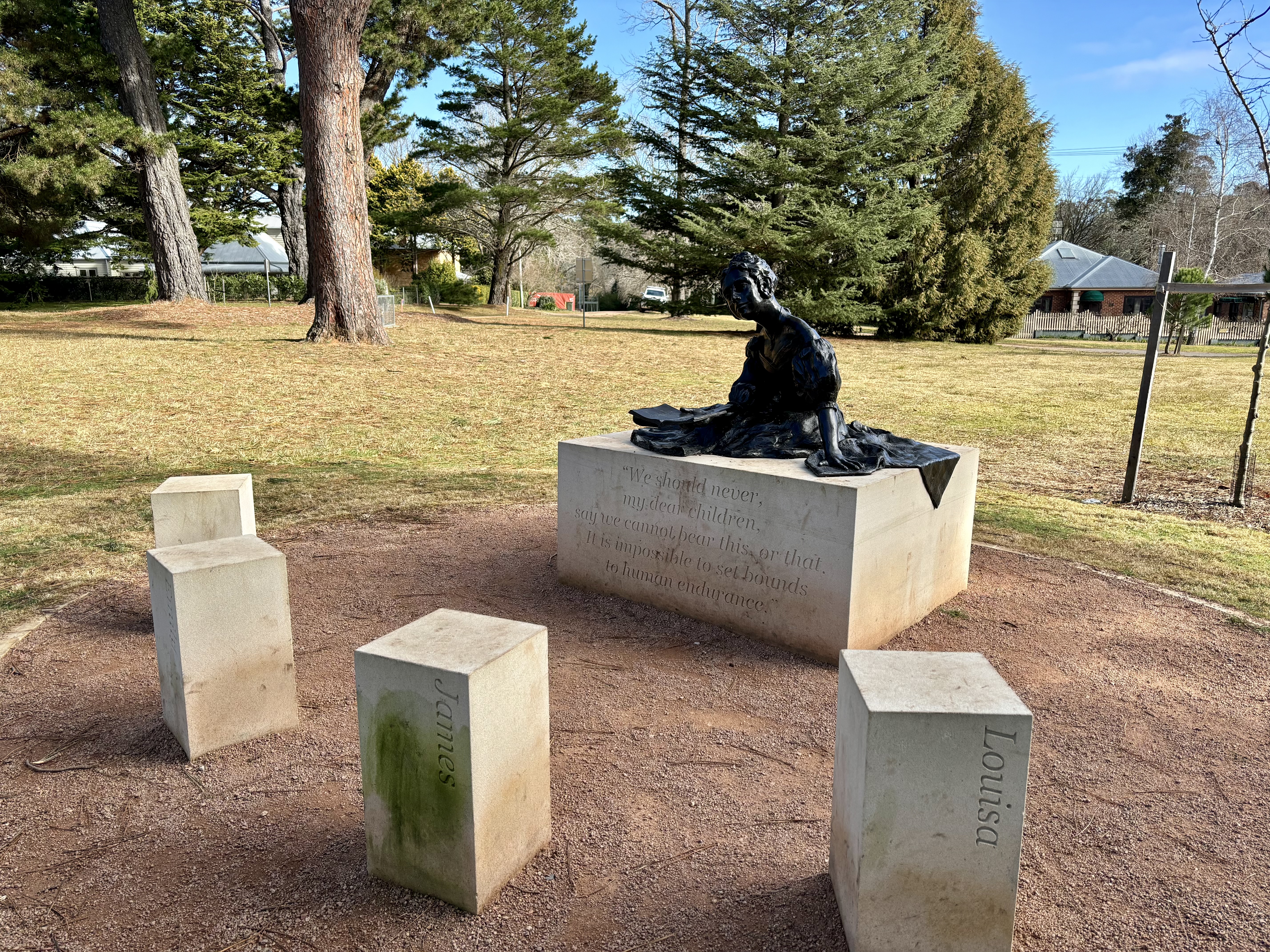
A relatively new addition to the attractions in Berrima is a sculpture commemorating Charlotte Atkinson, the first published children’s author in Australia. Charlotte migrated from England in 1826 to take up a role as governess with the family of Hannibal and Maria Macarthur. On the voyage, she met her husband, James Atkinson. They built a house in the Berrima district, but James died suddenly, leaving Charlotte with four young children. Charlotte remarried, but it resulted in a custody battle and a landmark Family Law case. You can read about the sculpture here and The Charlotte Project provides more detail into how the statue was created by Julie Haseler Reily to honour this remarkable woman.

Each time I visit Berrima, I appreciate its history and heritage. There are giftwares, clothing and lolly shops, galleries and places to eat. The retention of colonial buildings and infrastructure, preserved by the relocation of the administrative centre to Goulburn and the railway bypass of the 1860s, has created a unique atmosphere for locals and tourists alike. You can read more about the historic buildings of Berrima here, including Harpers Mansion, a National Trust property, which has one of the largest hedge mazes in Australia. There is also the Berrima District Museum, which would be worth a visit, and you can hear more about it on an episode of the Roadshow and Tell podcast.
Have you been to Berrima?
Photo: National Trust sign at the entrance to the Holy Trinity Church, Berrima


 jml297
Leave a comment