
Zosterops lateralis (from zoster, “a girdle or warrior’s belt”, ops, “eye” and lateralis, “side”)
(Zosterops – a girdle or warrior’s belt, and eye – lateralis)
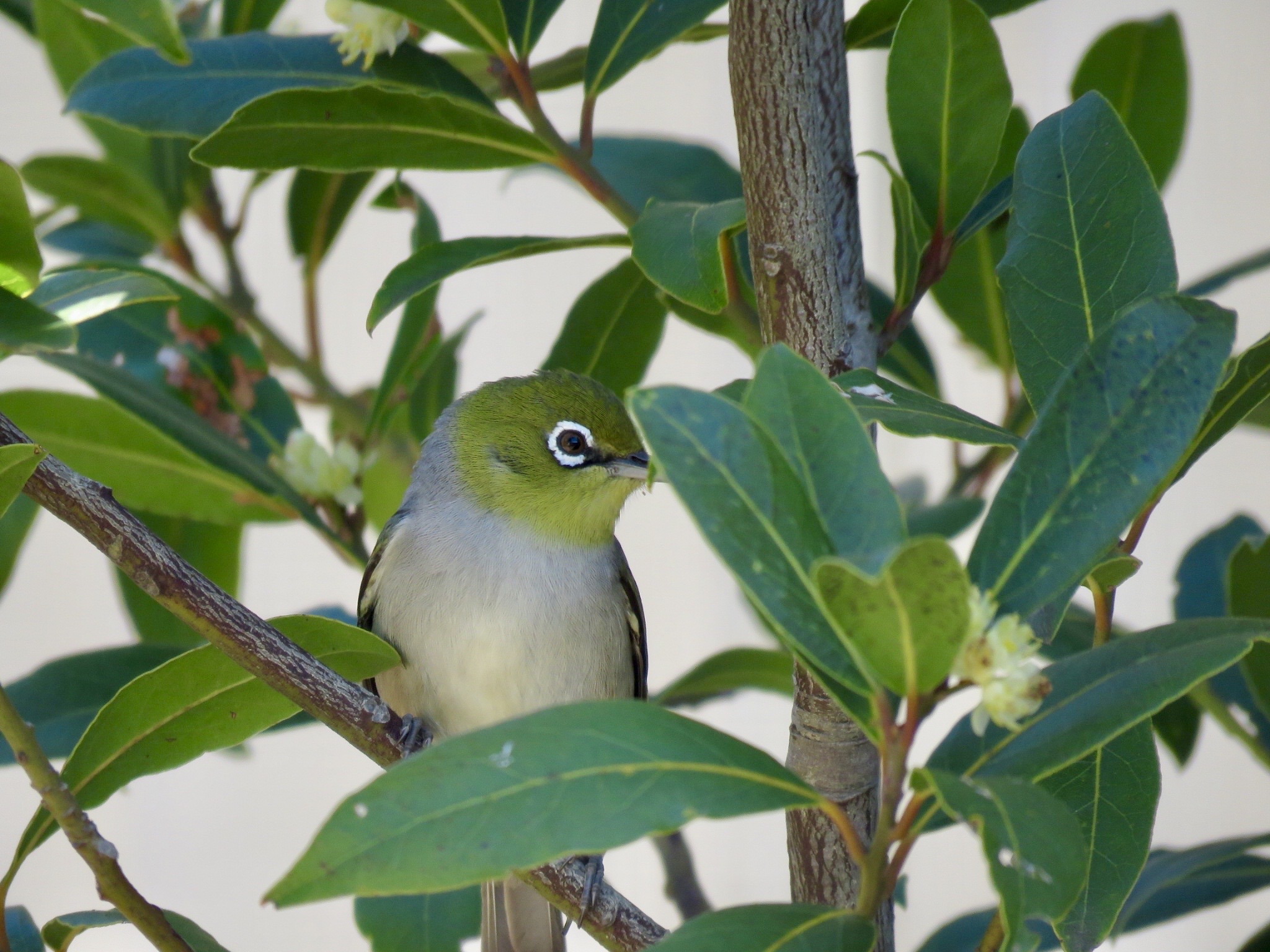
These small birds are a joy on many levels. Firstly, they are easily identifiable: many small birds are brown and are collectively known as LBJ’s — little brown jobs. No such fear with a silvereye, as their distinctive green and grey feathers along with the clear eye-rings makes them easy to identify. There is a wide variety of colours, and nine generally similar Australian races. Silvereyes can be found in south-eastern Australia, Tasmania and New Zealand, with related species in Asia, India, Africa and some Pacific Islands.

In the Blue Mountains, silvereyes are sedentary breeders, and in autumn and winter their numbers are increased by non-breeding migrants from Tasmania, on their way to warmer weather in southern Queensland. This is a distance of more than 1500 km.
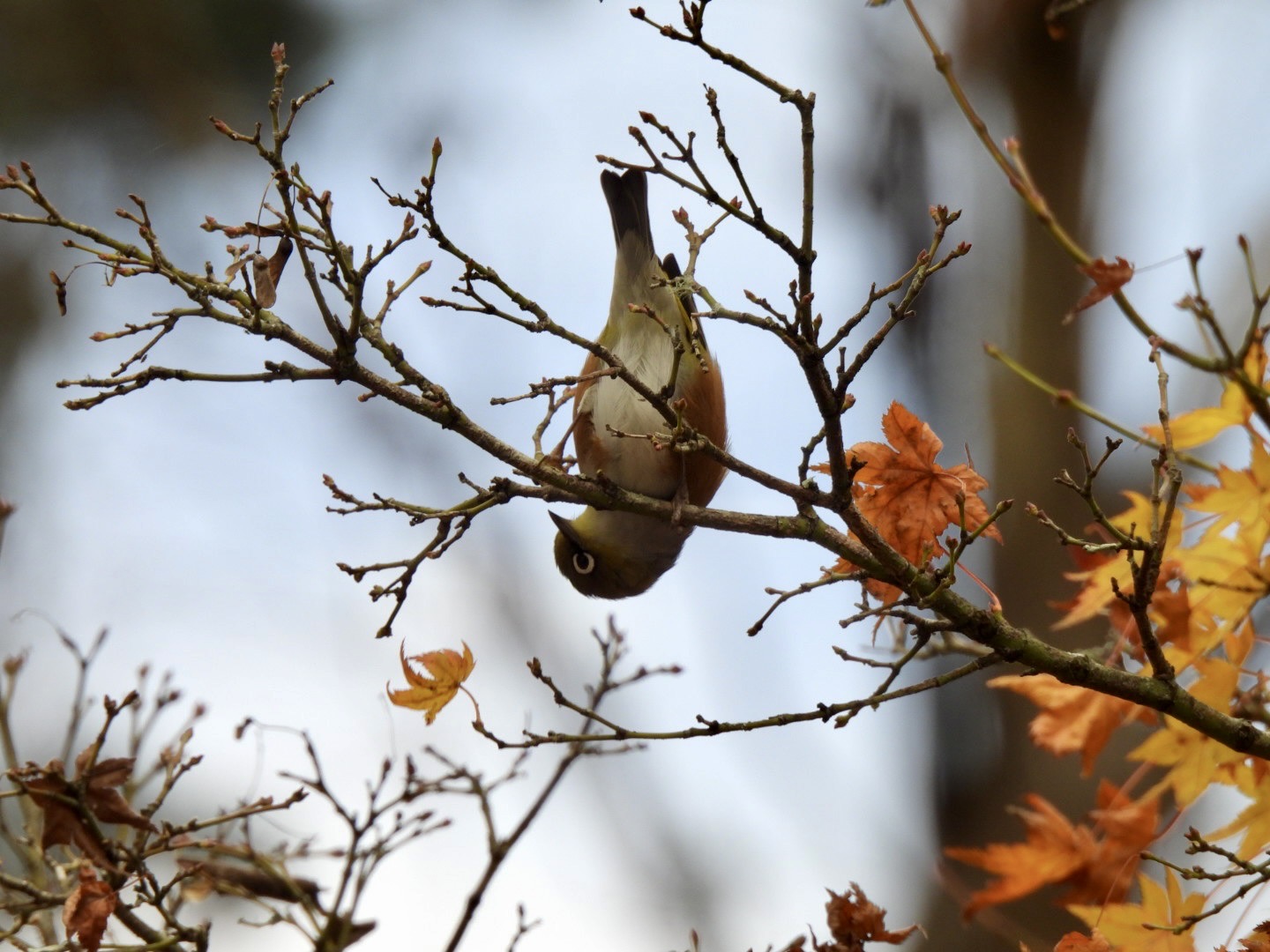
Silvereyes eat insects such as aphids, along with fruit, worms, and nectar. They have brush-tipped tongues, like honeyeaters. They are social birds and travel in small flocks, which can be problematic for vineyards, orchards, and gardens with fruit trees. Here is an excerpt from a poem by C J Dennis, The Silver-eye:
In our silver spectacles
And our sober olive suits
We’re very, very innocent;
We wouldn’t touch your fruits.
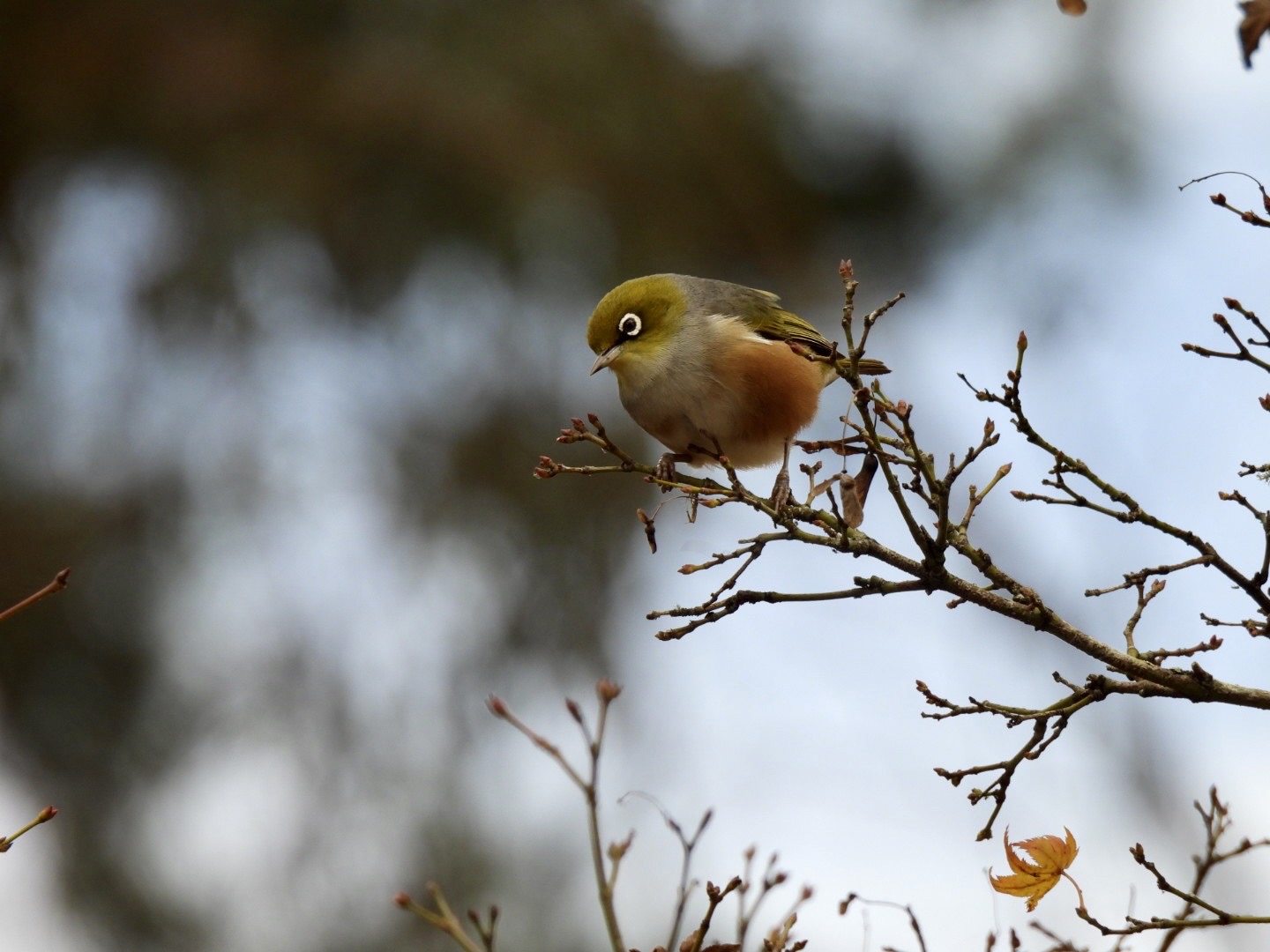
The bright chatter of a flock of silvereyes is easy to hear as they constantly call out to each other. There is chirping and warbling, and silveryes are also capable of mimicry. They are busy little birds, moving swiftly from one patch of foliage to another. Silvereyes prefer wooded habitats, including urban gardens and parklands.
This year, they were particularly fond of a maple tree in my garden, and it was a joy to watch them arrive, get busy with finding food, then in a heartbeat move as one to the next food source. You can find out more about silvereyes here.
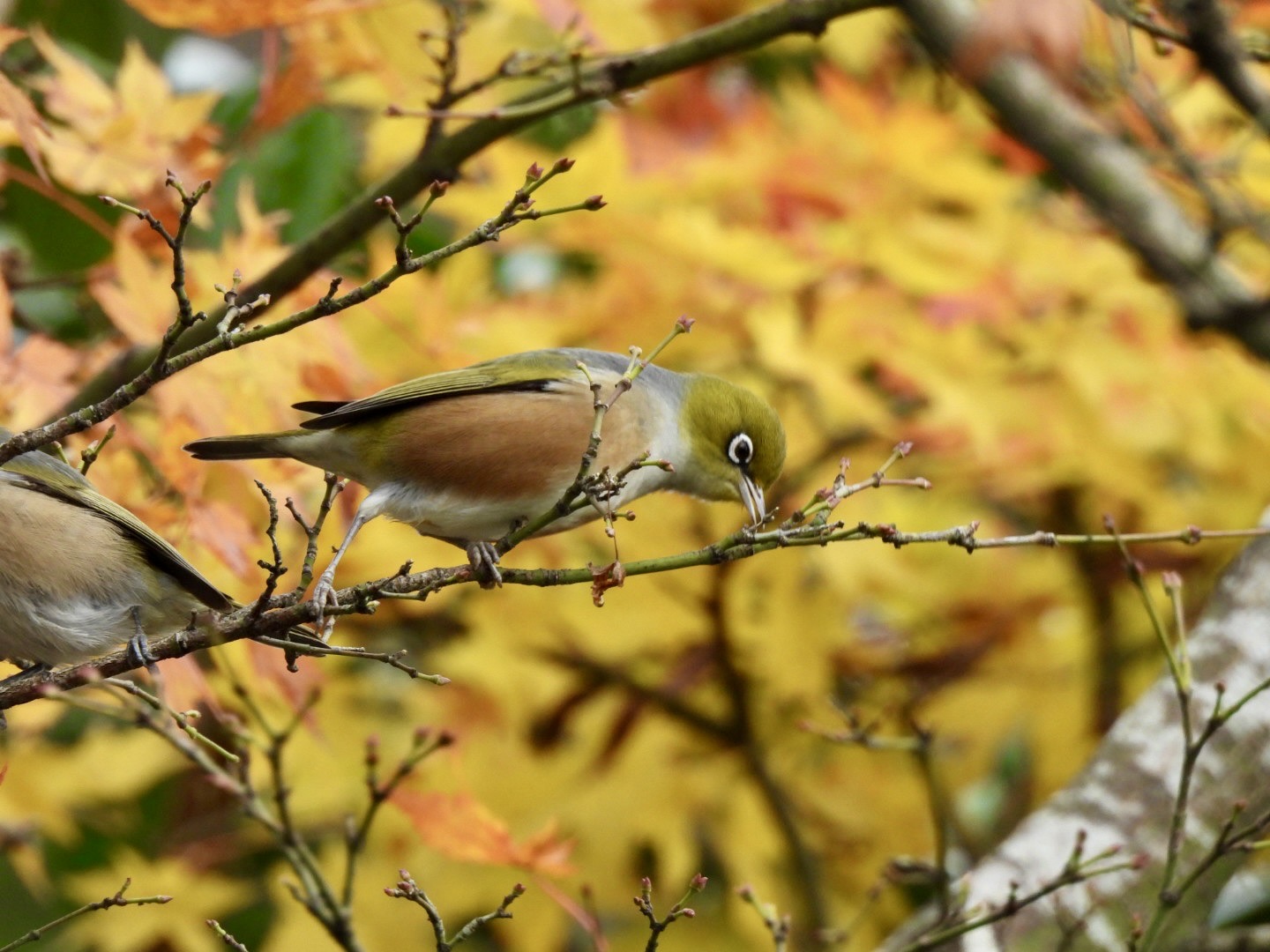
Have you spotted a silvereye in your garden?
Photo: silvereye in my garden



 jml297
Leave a comment