
Queanbeyan is located 300 km south-west of Sydney, and 12 km south-east of Canberra. It is situated on the junction of the Molonglo and Queanbeyan rivers in a narrow valley on the Limestone Plains. The First Nations Custodians of the Queanbeyan-Palerang region are the Ngunnawal and Walbunja peoples, alongside the Ngambri and Ngarigu people. Queanbeyan means ‘clear waters’. The population is about 38,000, and it is a centre for wool, cattle and mixed farming communities.

The original Christ Church, Queanbeyan, was built in 1842-44. The church shown above was the second built on the site, and was designed by Alberto Soares. It was built in 1859-1860, with the steeple added the following year. There are other heritage buildings on the site, including a rectory, stables and a former school building. Soares was the Anglican Minister to Queanbeyan from 1857 to 1877.

Showgrounds remain an important part of the infrastructure of country towns, and the Queanbeyan Showground has been in use since 1893. The showgrounds were established on a traditional camping and ceremonial place for Aboriginal people. The set of memorial gates with their Art Deco style were built in 1934 to the memory of a local businessman and council alderman, Thomas Collett.
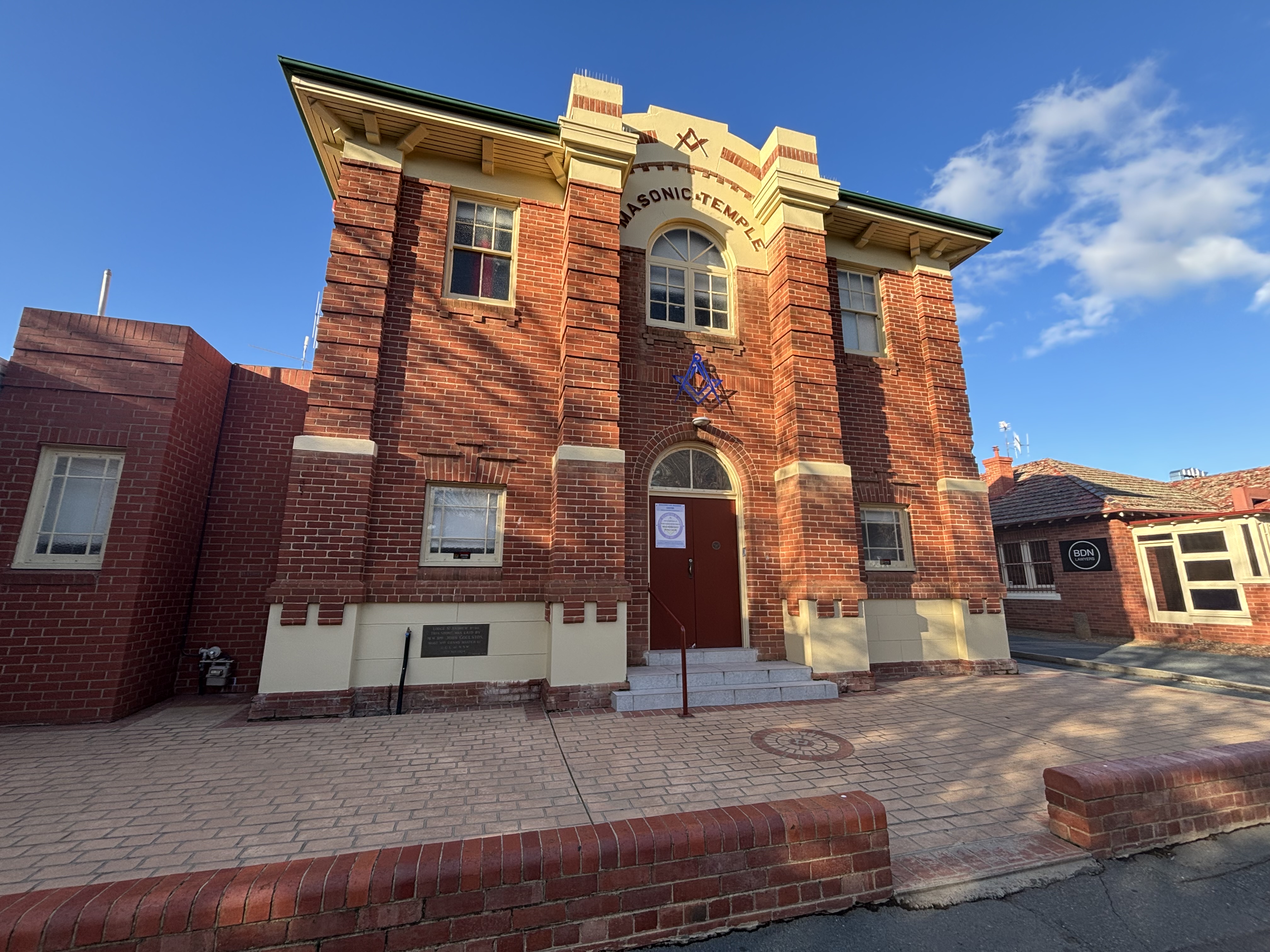
As civic buildings, Masonic Halls can be found in many towns and suburbs. The Queanbeyan Masonic Hall was built in 1925 by four separate lodges which were operating in the town at the time.
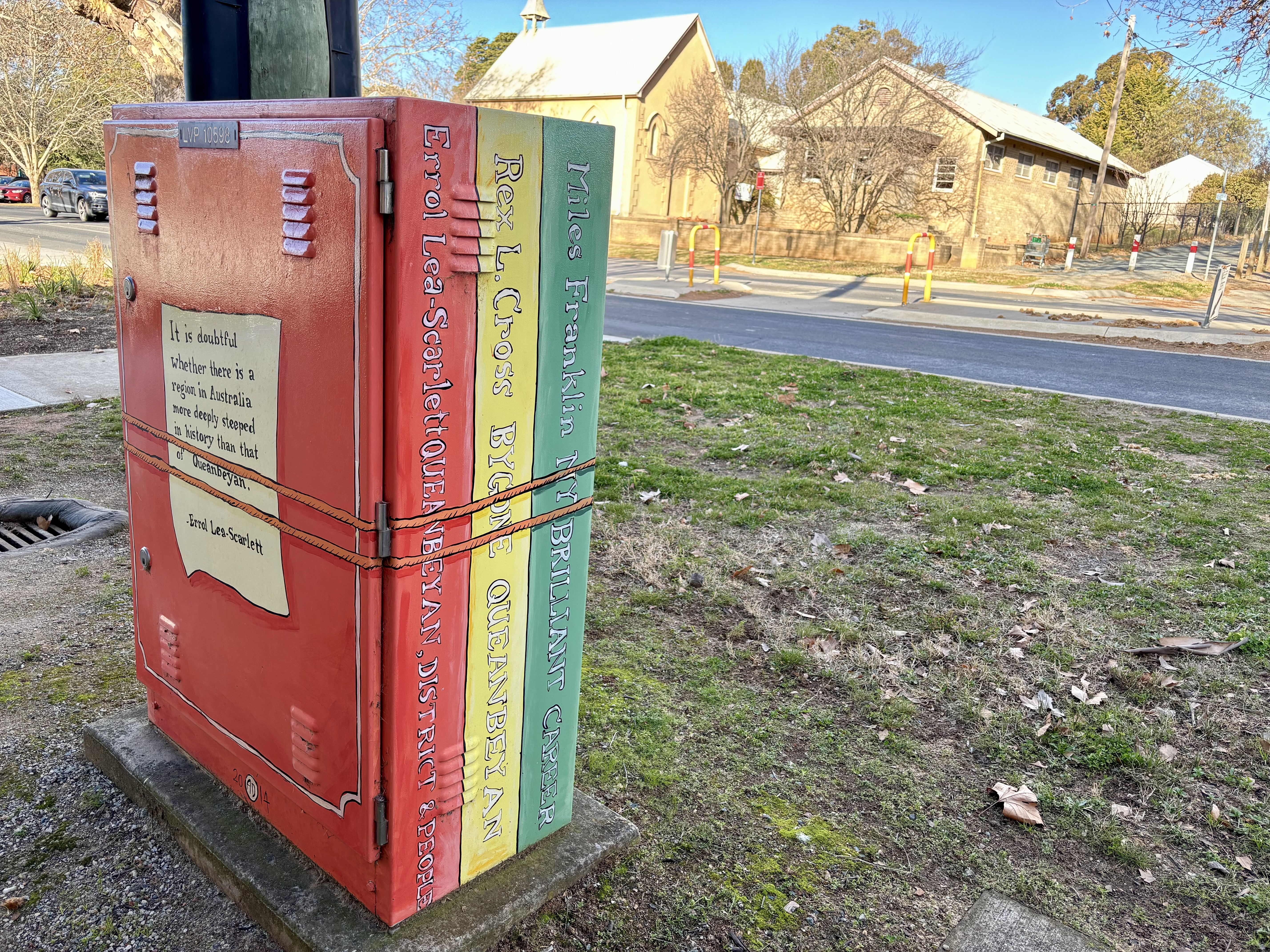
An example of public art in Queanbeyan can be found in Rutledge Street. The Book Stack Power Box was created by Adam Long. There is an extensive Queanbeyan Public Art Walk which can be previewed here.

The Queanbeyan-Palerang Heritage Library is located in the Queanbeyan School of Arts building, which was built in 1927. It has an extensive local history collection for the region, including Queanbeyan, Braidwood and Bungendore.
You can find out more about the history of Queanbeyan on a heritage walk with more information available here. There is a short video featuring historic highlights here, including some exhibits in the Queanbeyan Museum.
Have you had a wander around Queanbeyan?
Photo: Old Queanbeyan Municipal Council Chambers in Farrer Place

 jml297
Leave a comment