
Malurus cyaneus (from malurus, “delicate tail”, and cyaneus, “blue“)
With their swift movement, it can be challenging to spot where the Superb fairy-wrens are when they pass through the garden. They are tiny birds, only 160 mm in length (about 6 inches), and they can be seen hopping about in the grass, or calling from the vantage point of shrubs or branches.

It is difficult to ignore the brilliant blue breeding plumage of the dominant male in a large family group. In addition to their bright turquoise cap, males may use flower petals or small leaves as part of their courtship display. There have been extensive studies of family groups with both males and females known to visit neighbouring territories, then returning to incubate and raise offspring. There is a short video about a long-term study at the Australian National Botanic Gardens by ANU, including the philandering habits of the wrens, which can be found here.

Superb fairy-wrens are known for their complex social structure and cooperative approach towards raising offspring. Whilst incubating the nest, the female is fed by one or more males in the family group, and the chicks are fed by parents and helpers. Only the dominant male in the group has full colours: the non-dominant males have blue-brown tail feathers, a black bill and legs, and brown eyes.

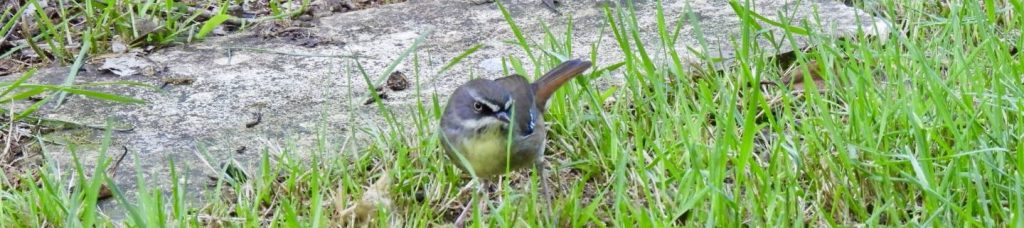
Female wrens are brown and cream. Their tail feathers are usually brown with a green or blue tinge, and they have a chestnut-brown bill and legs. They have a small red band over their eyes. To get a sense of the fantastic colour palette of Australia’s fairy-wrens, have a look at A Guide to Australia’s Fairy-wrens by Australian Geographic.

Superb fairy-wrens eat insects, spiders, and occasionally fruit. They generally feed on the ground, flying low between bushes and remaining close to cover. They are a resident species and territorial, with males singing soon after sunrise to confirm their boundaries. Superb fairy-wrens can be found from southeast Queensland through to South Australia, preferring areas with dense undergrowth for protection.

It is difficult not to be charmed by these sweet, bright, curious birds. I love spotting them in my garden, and listen out for their zizzing and chittering calls. Do you have wrens visit your backyard?
Photo: male Superb Fairy-wren at Lake George, NSW
 jml297
Leave a comment