
Acanthorynchus tenuirostris (from acantha, “spine”, rhunkhos, “bill”, and tenuis, “slender or thin”)
Eastern spinebills are one of my favourite garden visitors. These honeyeaters are shy, fast, and incredibly agile, and are one of only a couple of Australian birds that can hover like a hummingbird.
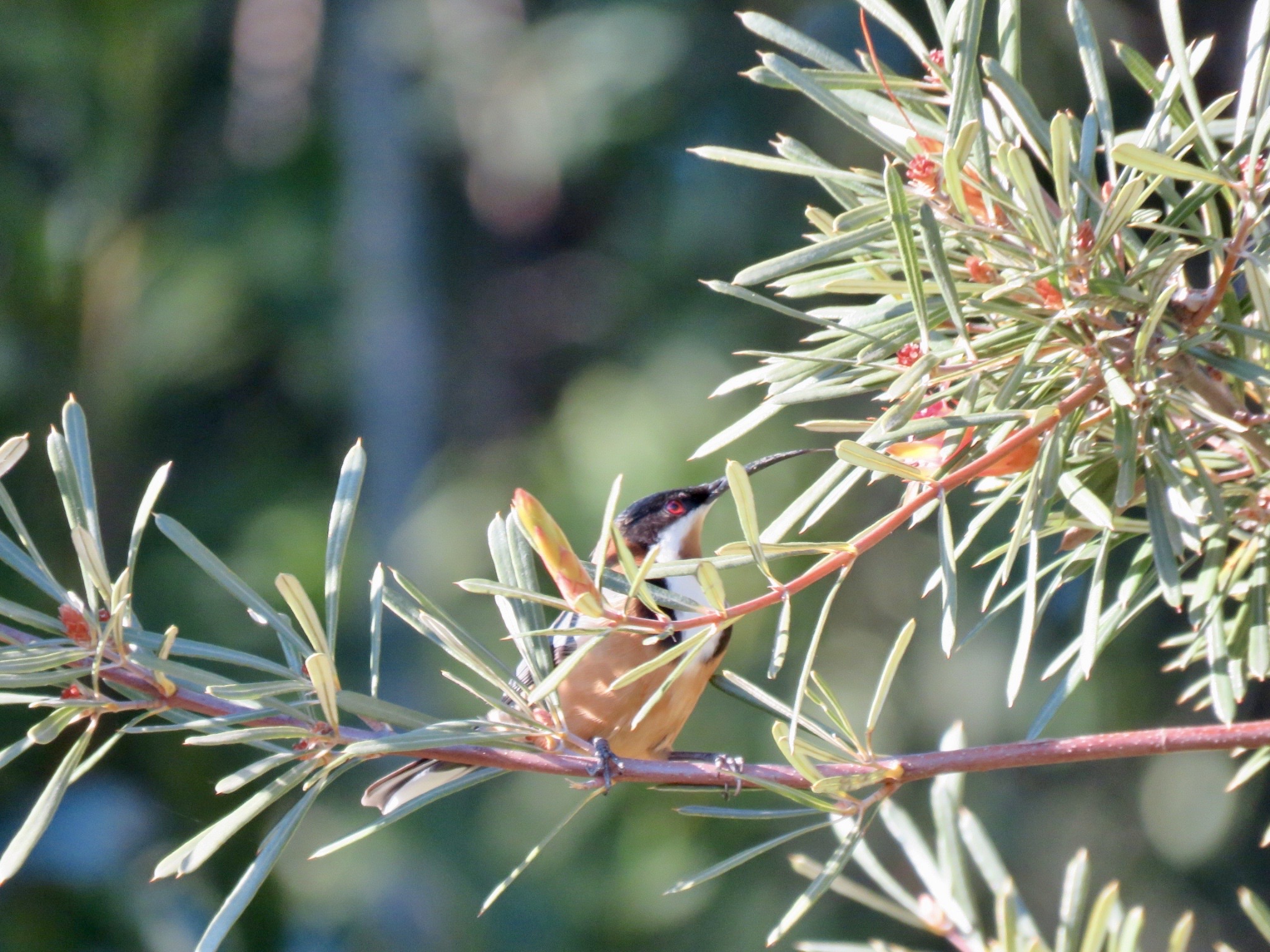
They are one of the smaller honeyeaters, averaging 16 cm (6.3 inches) when mature. With their long, thin beak, bright red eyes and black, white and caramel colouring, they are striking birds. Eastern spinebills can be found in various locations across the eastern states. There is also a Western Spinebill, found only in Western Australia, which has more orange and grey colouring.
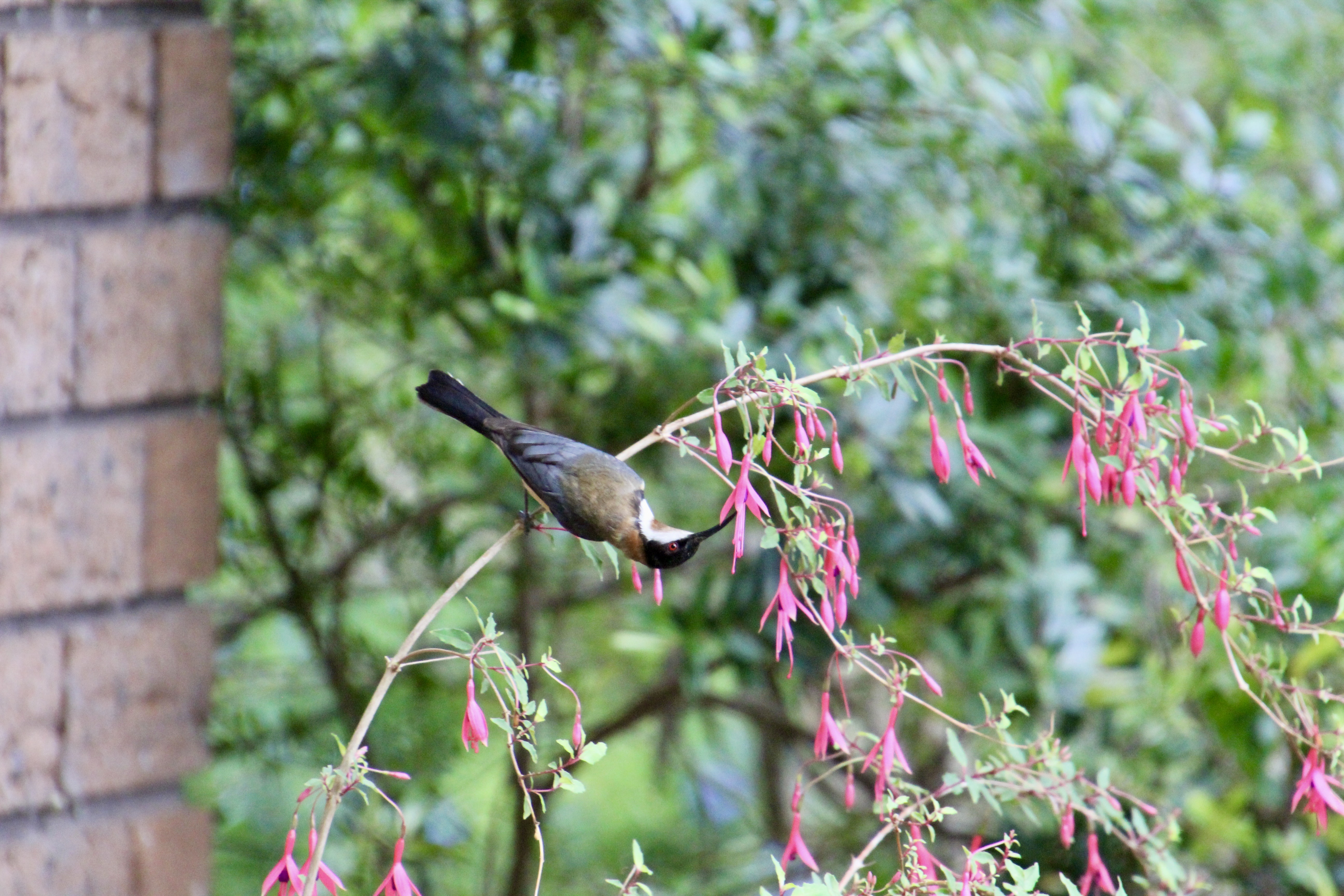
The down-curved shaped bill is perfect for dipping into bell-like flowers, and over the seasons there have been many sightings of spinebills enjoying fuchsia blossoms and other flowers in the garden. Eastern spinebills can flap their wings at a high enough speed to enable them to feed whilst airborne; they are also acrobatic and swiftly move into different positions to extract nectar.

Adult eastern spinebills are similar in appearance; males have a black head, and the female head is grey, with slightly duller colouring overall. Immature eastern spinebills have a cinnamon or buff coloured chin and belly, and are yet to develop the black prongs or horseshoe-shaped breast feathers that adult birds have. They are also missing the black feathers in the middle of the chin, visible on mature males and females, that looks like a goatee.

As they feed, birds sometimes have a dusting of pollen at the base of the beak. This may be transferred to other plants as they feed, and is called ‘blind pollination’. There is some pollen visible in the photo above.

Eastern spinebills are territorial, and they call to each other with a distinctive whistle as they move from bush to bush. They are usually seen in pairs, and seem to flit from one place to the next, wary of the larger honeyeaters which tend to move them on. They like dense shrubs, like the daphne shown above.
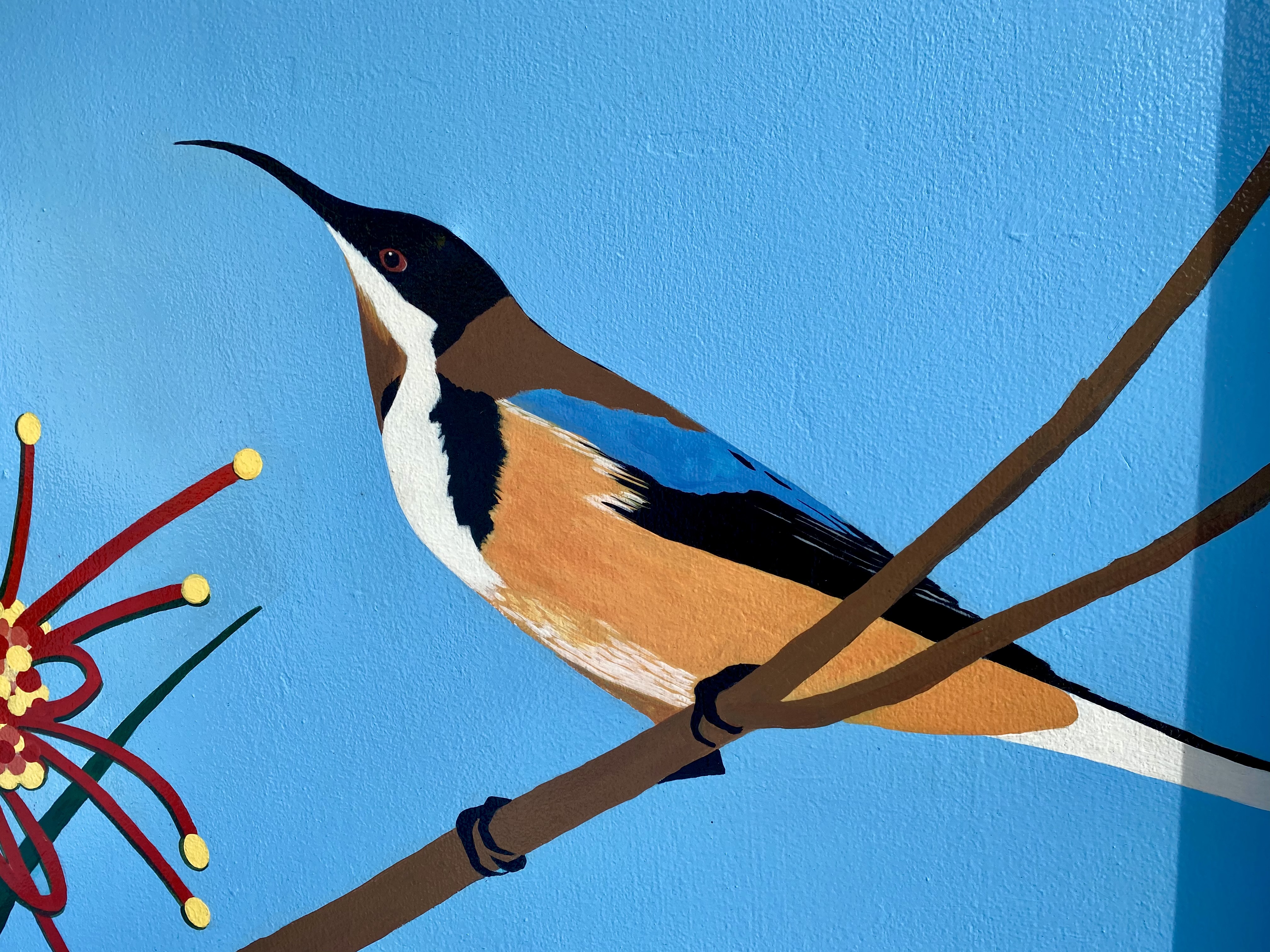
The Eastern Spinebill is a common and widespread breeding resident of the Blue Mountains, found in forest areas, woodlands, heath, and swamps. In the winter months, they tend to move to lower altitudes, though there can be an influx of them when banksias and other native plants are in flower. There are murals of this busy bird in the mountains, including the one shown above and another at Springwood.
Do you have Eastern Spinebills visit your garden?
Photo: Eastern Spinebill at The Blue Mountains Botanic Gardens, Mount Tomah

 jml297
Leave a comment