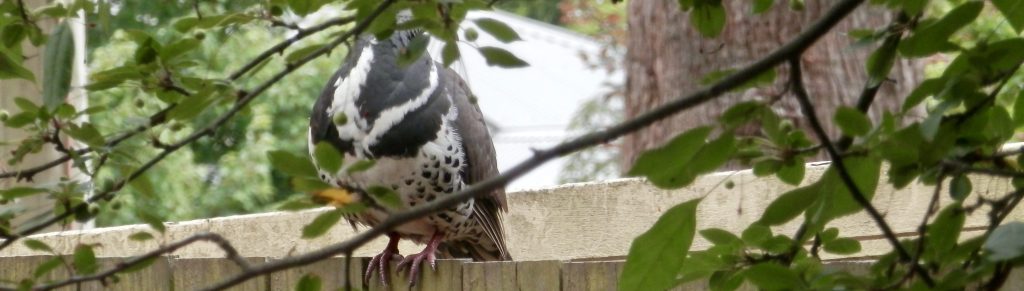
Leucosarcia melanoleuca (from leocosarcia, “white flesh”, and melanoleuca, “white and black”)
Over the years, I’ve enjoyed the occasional backyard encounter with a Wonga pigeon. I’ve only seen them on solo visits to date, and they are known as a solitary bird. They are shy and hesitant, and if approached tend to fly off, making a distinctive sound with loud wingbeats. Their call is a monotonous ‘whop’ or ‘whoo’, repeated frequently in breeding season. There is a short clip here of Wonga pigeons at Wentworth Falls last year which gives a taste of that persistent call, as well as some lovely footage of these birds.
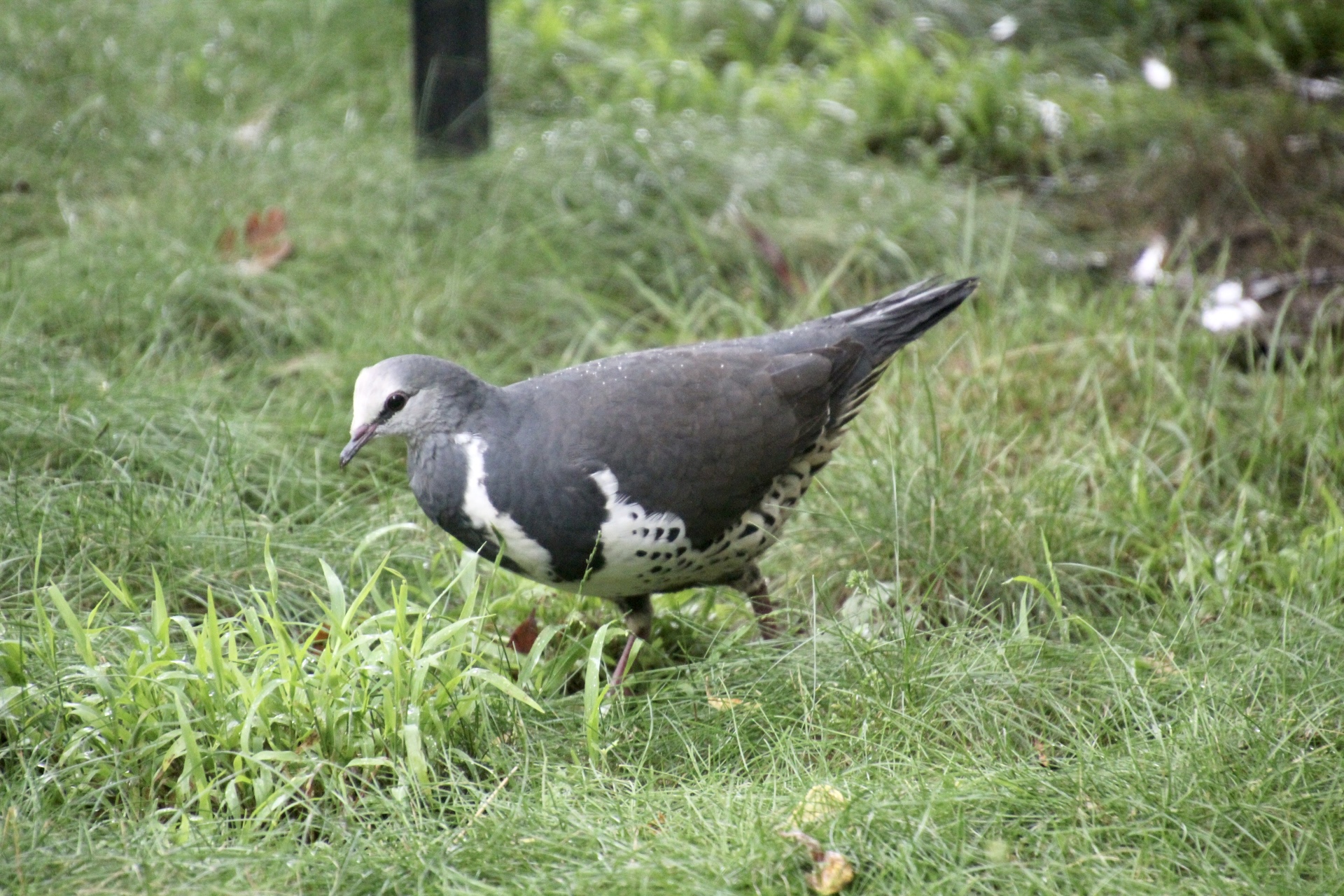
Wonga pigeons are a large, plump bird with a comparatively small head. The average bird is 43 cm (16.93 inches) long. Their grey, white and black colouring make them easy to identify. They have a distinctive double “V” pattern on their chest, with heavily spotted undersides and tail. Immature birds are duller, being more brownish and with a blackish bill. Male and female birds are alike, with no seasonal variation.
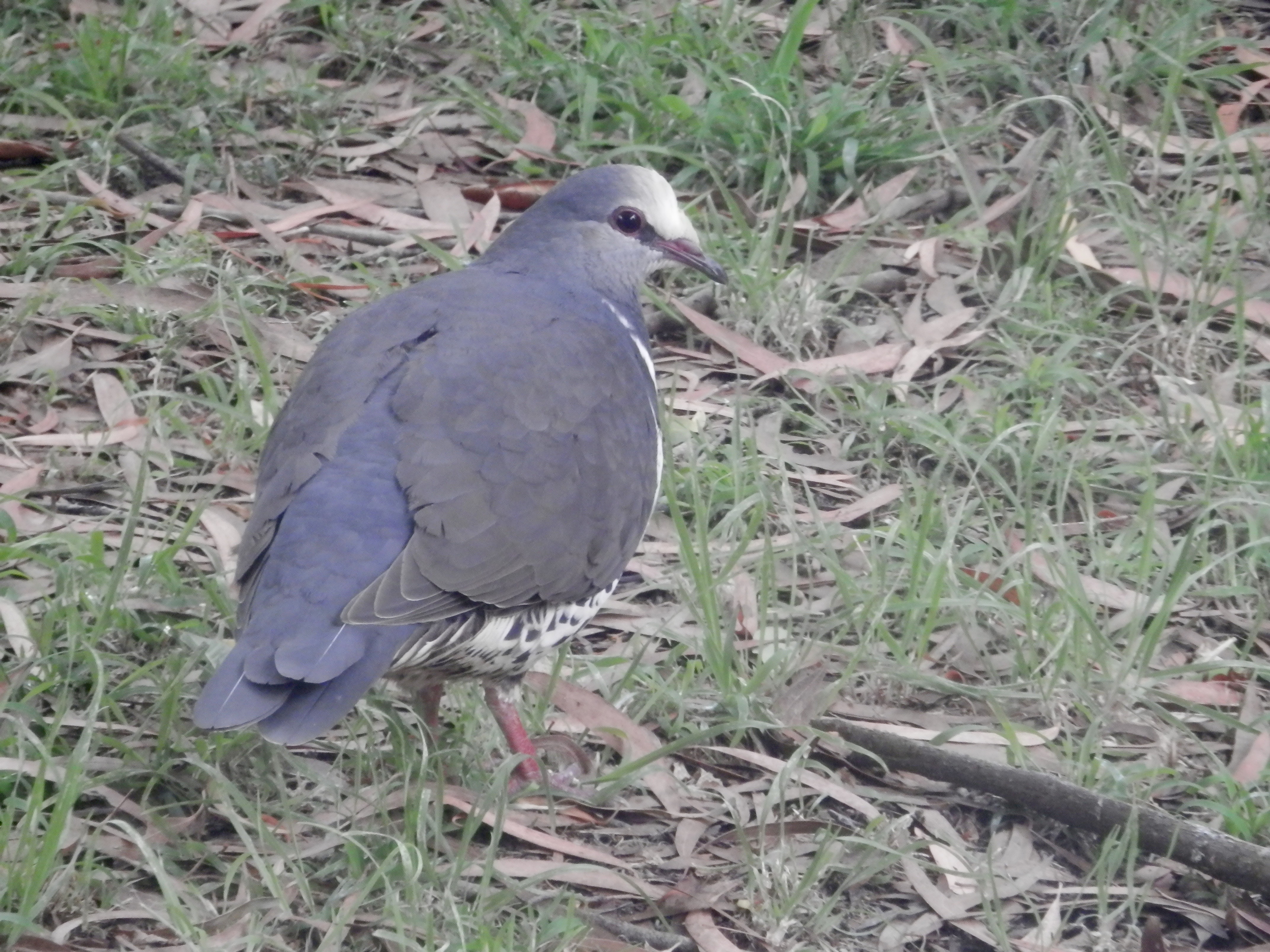
And we glimpsed the stately and dignified Wonga Pigeon, the big bird of battleship grey, blue-grey, and white, master of camouflage, yet a bird of outstanding beauty.
Australian Birdwatcher’s Diary, Ted Schurmann & Wendy Jennings
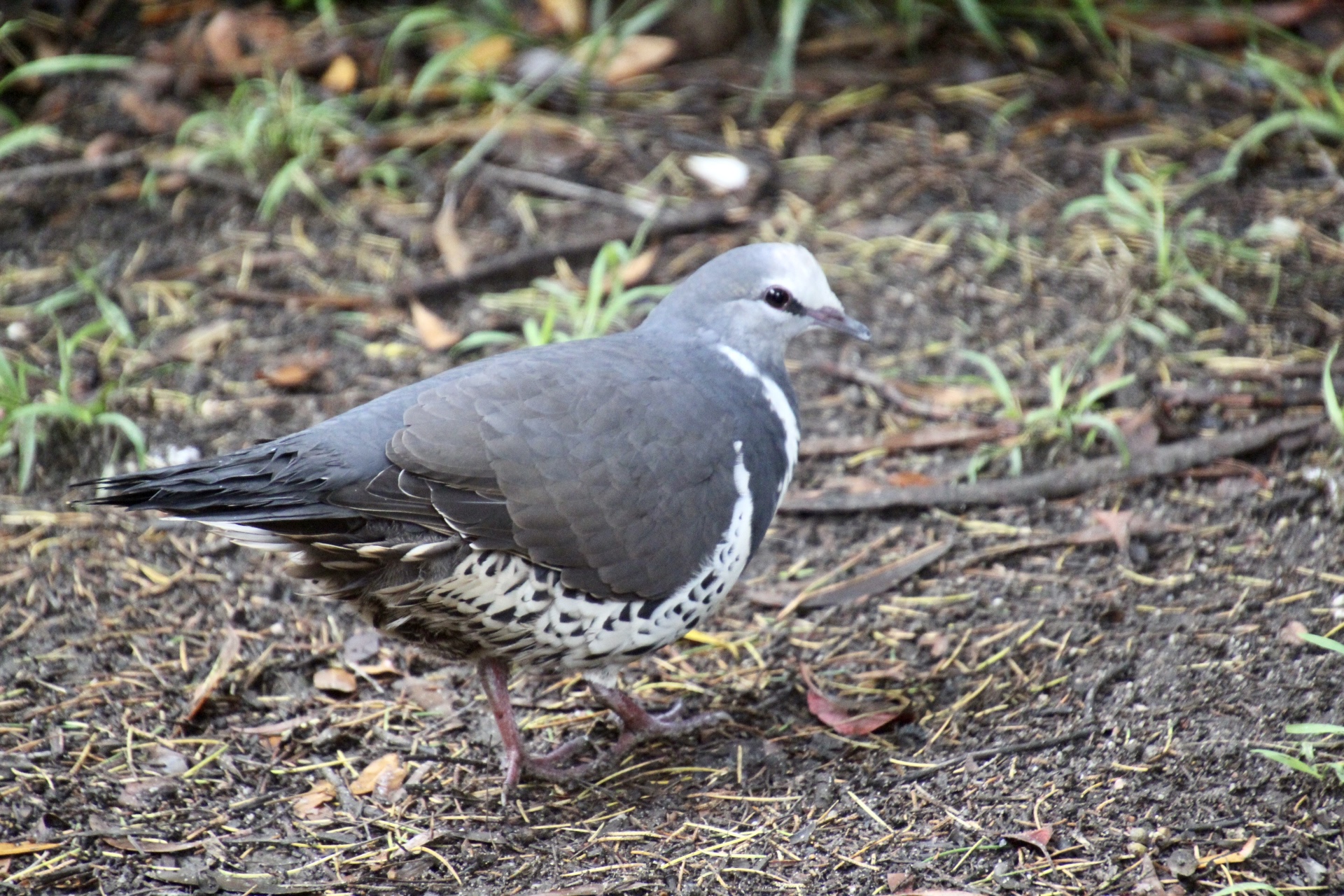
Wonga pigeons are ground feeders, eating mainly eucalyptus and acacia seeds, as well as fallen fruits and insects. They walk rapidly as they search for food.
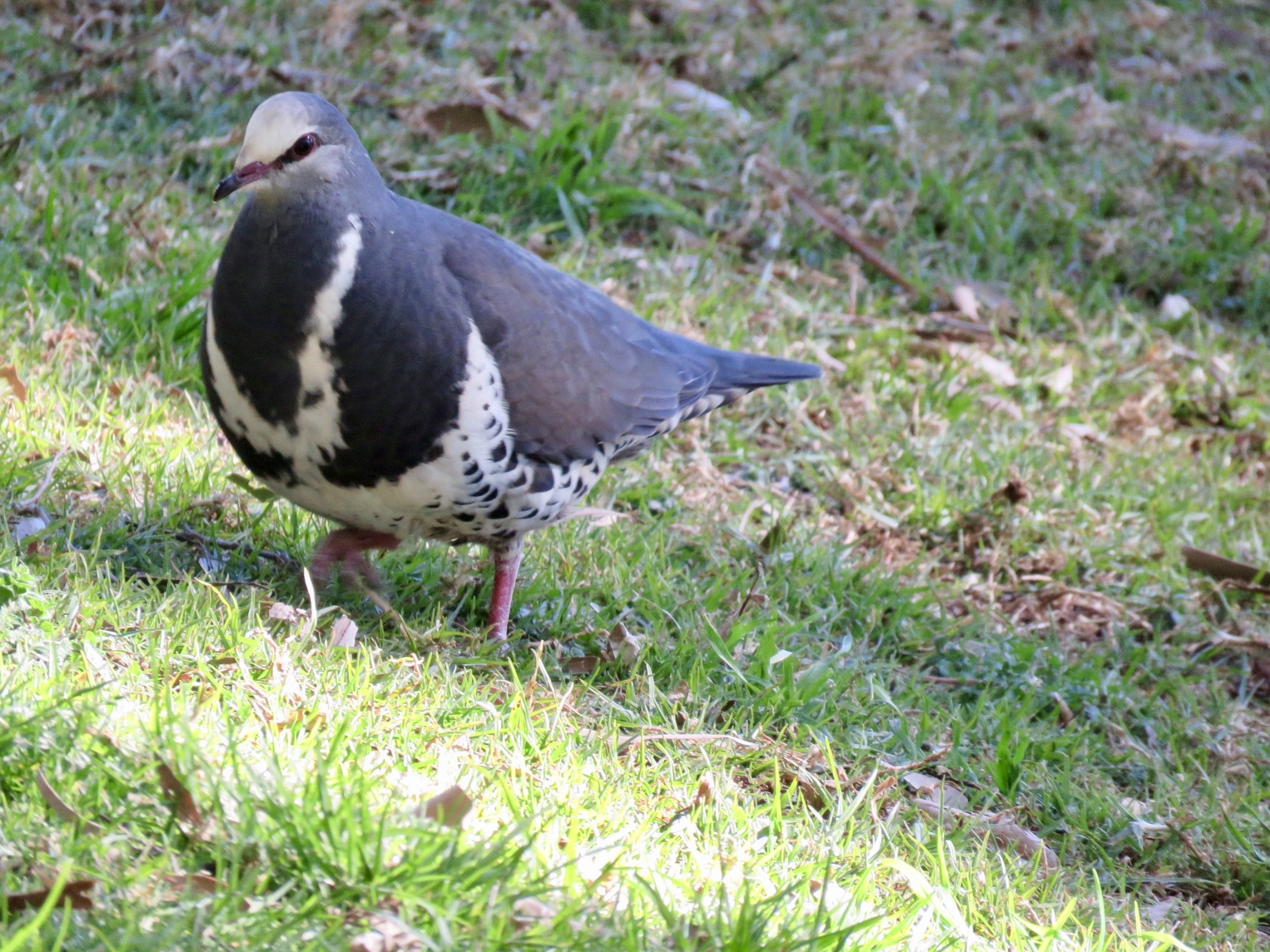
They are found on the east coast from southern Queensland through to Victoria. Wonga pigeons are moderately common and widespread residents of the Blue Mountains, preferring shrubby wet sclerophyll forests and nearby open vegetation. Wonga pigeons can also be found in dense coastal forest areas as well as woodland and scrub.
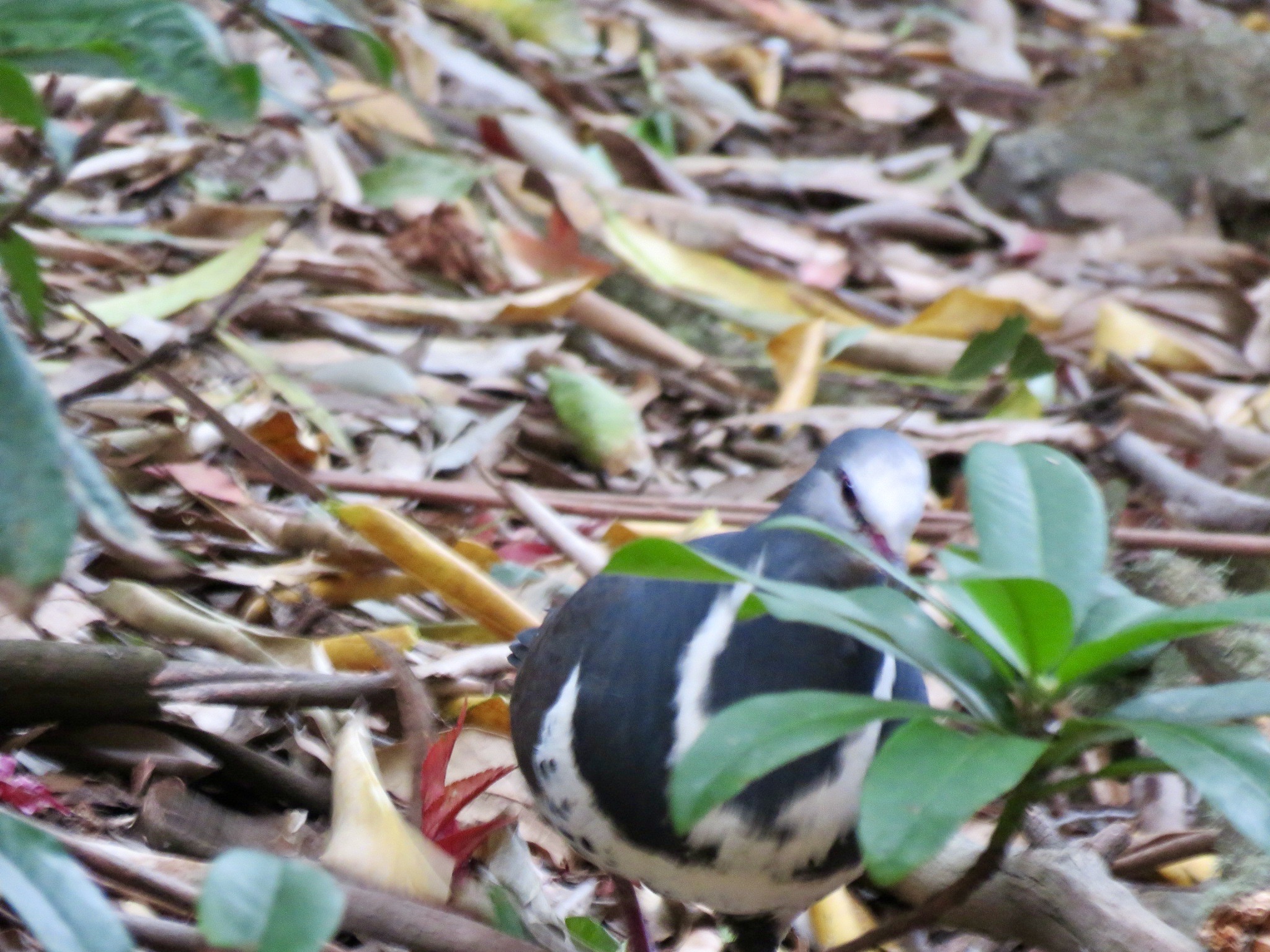
Finding a Wonga pigeon in the backyard is always a delight, even if their visits are typically short and discrete. You can find out more about them here. Have you come across a Wonga pigeon in your garden?
Photo: Wonga pigeon on a fence

 jml297
Leave a comment