
Vanellus miles (from vanellus, “lapwing”, and miles, “soldier”)
These birds are a familiar sight in many towns and cities, and can often be heard calling at night as they fly overhead. Masked Lapwings may be found in coastal areas, in parks and sports grounds, and are particularly visible and vocal when protecting their young.
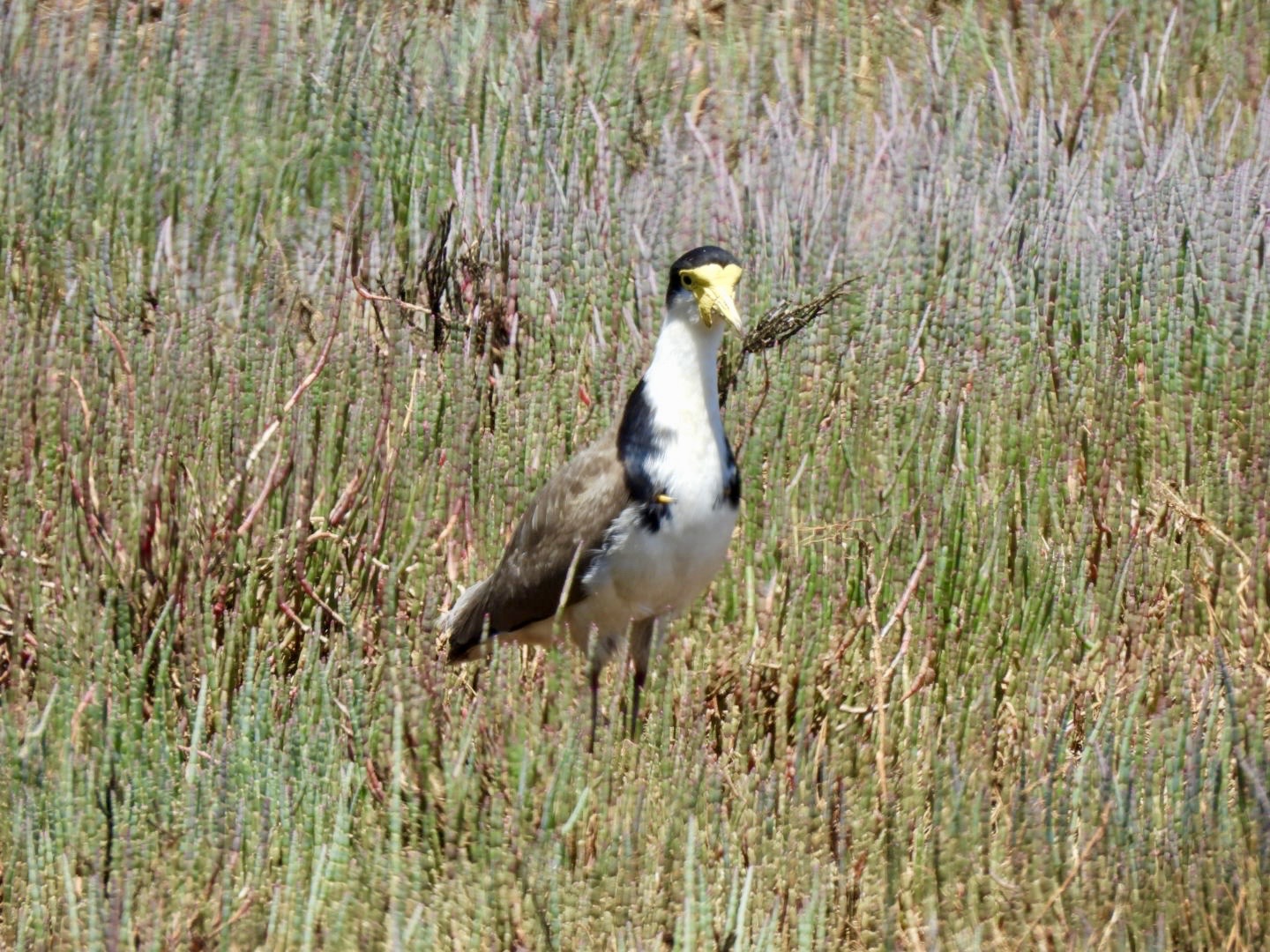
Masked Lapwings are part of the plover family, and there are two subspecies in Australia. Northern birds are smaller, have a larger facial wattle and lack the black neck or collar marking of southern birds. Southern birds have smaller wattles and more distinctive black markings. Adults have a small yellow spur on the bend of the wing: this isn’t always obvious, but is part of the bird’s defence when they or their chicks are under threat. They were formerly known as the Spurwinged Plover, and you can see another photo of the spurs here. Understanding these physical differences is important, especially when observing Masked Lapwings in different regions. Their behaviour, too, varies depending on the stage of life.

Masked Lapwings are typically found in pairs, occupying grassy spaces including parks, school grounds and golf courses. During breeding, the nest is a scrape on the ground which holds 3 or 4 eggs and is fiercely defended.
The nests of Masked Lapwings are extremely vulnerable. In open ground the pair scrape a hollow free of vegetation and line it simply with twigs, grass and sometimes dried cow dung. Fields of stubble, paddocks, sandy pits, mudflats, marshes, caravan parks, airstrips and golf courses are all likely sites. The pair dedicate themselves wholly to their parental duties. At no time is the nest left unattended.
(Know Your Birds, L Egerton)
Nesting sites are staunchly defended. Adult birds will dive-bomb any animal or person that ventures too close, and may even decoy predators by feigning injury—moving away from the nest with a trailing wing. Encounters with Masked Lapwings are particularly memorable — and potentially alarming — during the breeding season. They are a visible, vocal bird with a defensive approach towards their young. You can see some great footage of these birds in a short clip called Australia’s BEST Bird Parents — Plovers.
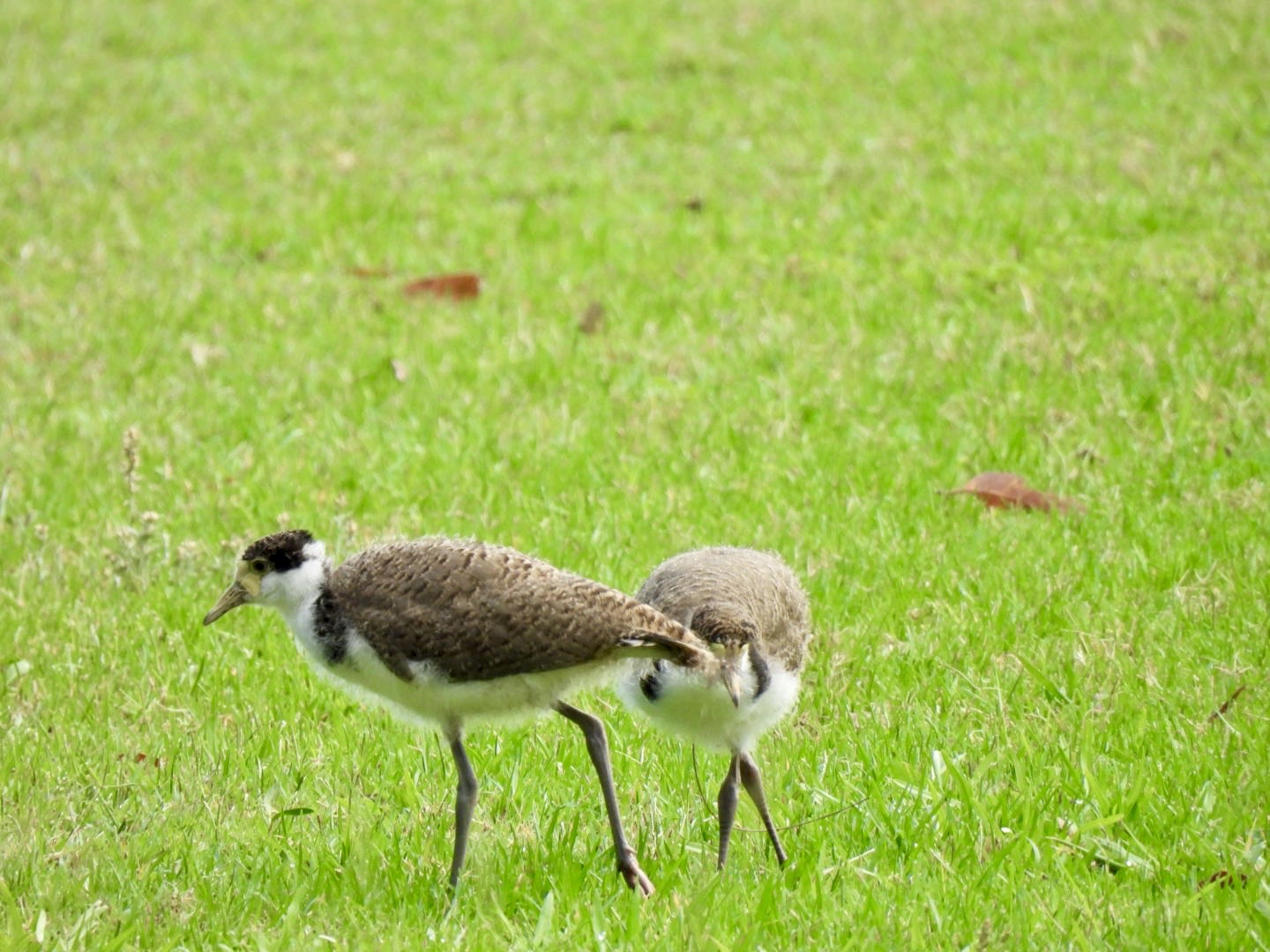
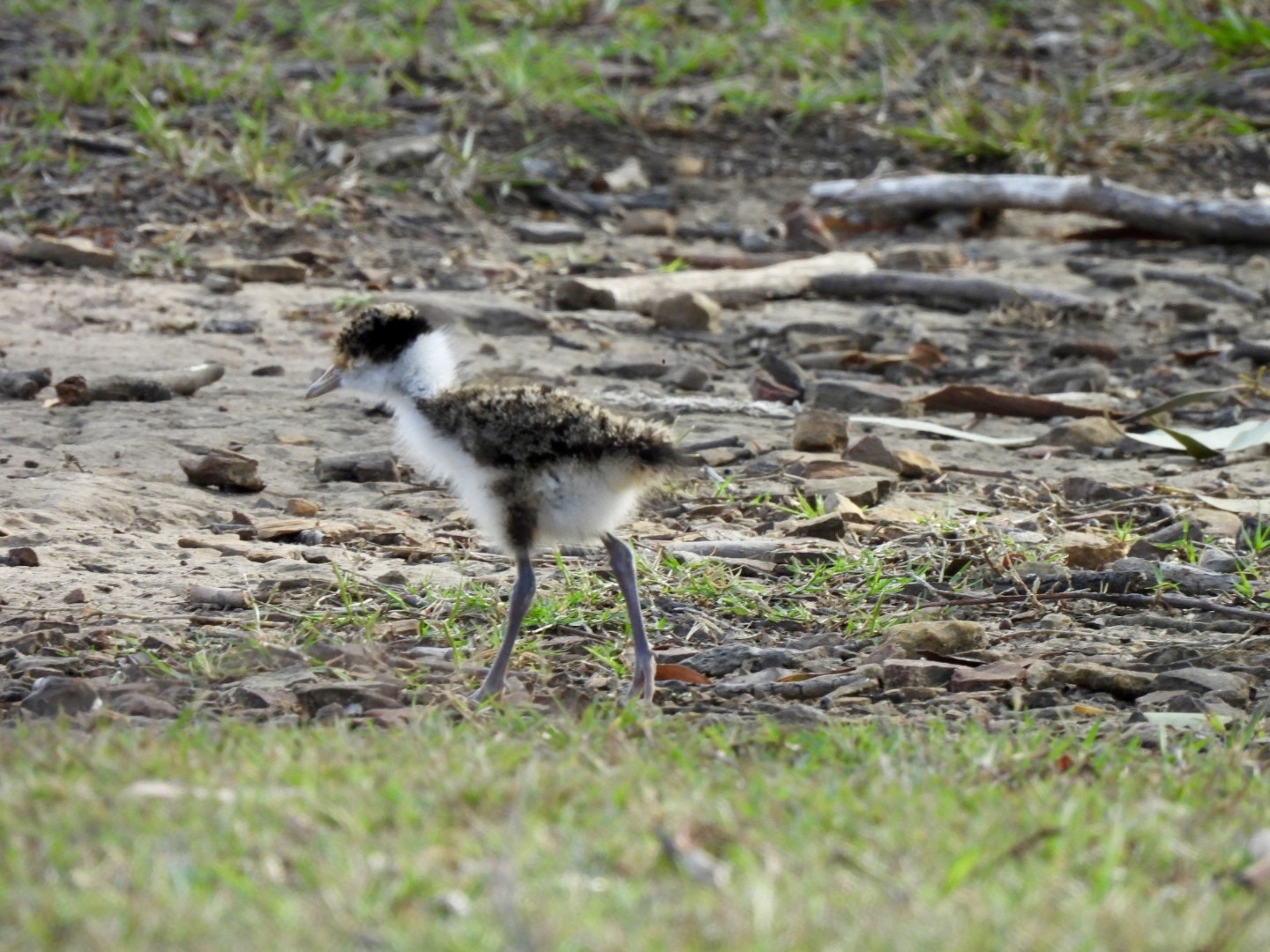
Young birds are active soon after hatching. Their plumage is mottled, which helps with camouflage in grassy areas. Due to the location of the nest on the ground, they are at risk from dogs, foxes and other predators. Chicks learn to fly within six or seven weeks, but remain with their parents for months. Their diet includes insects, seeds, molluscs and worms.
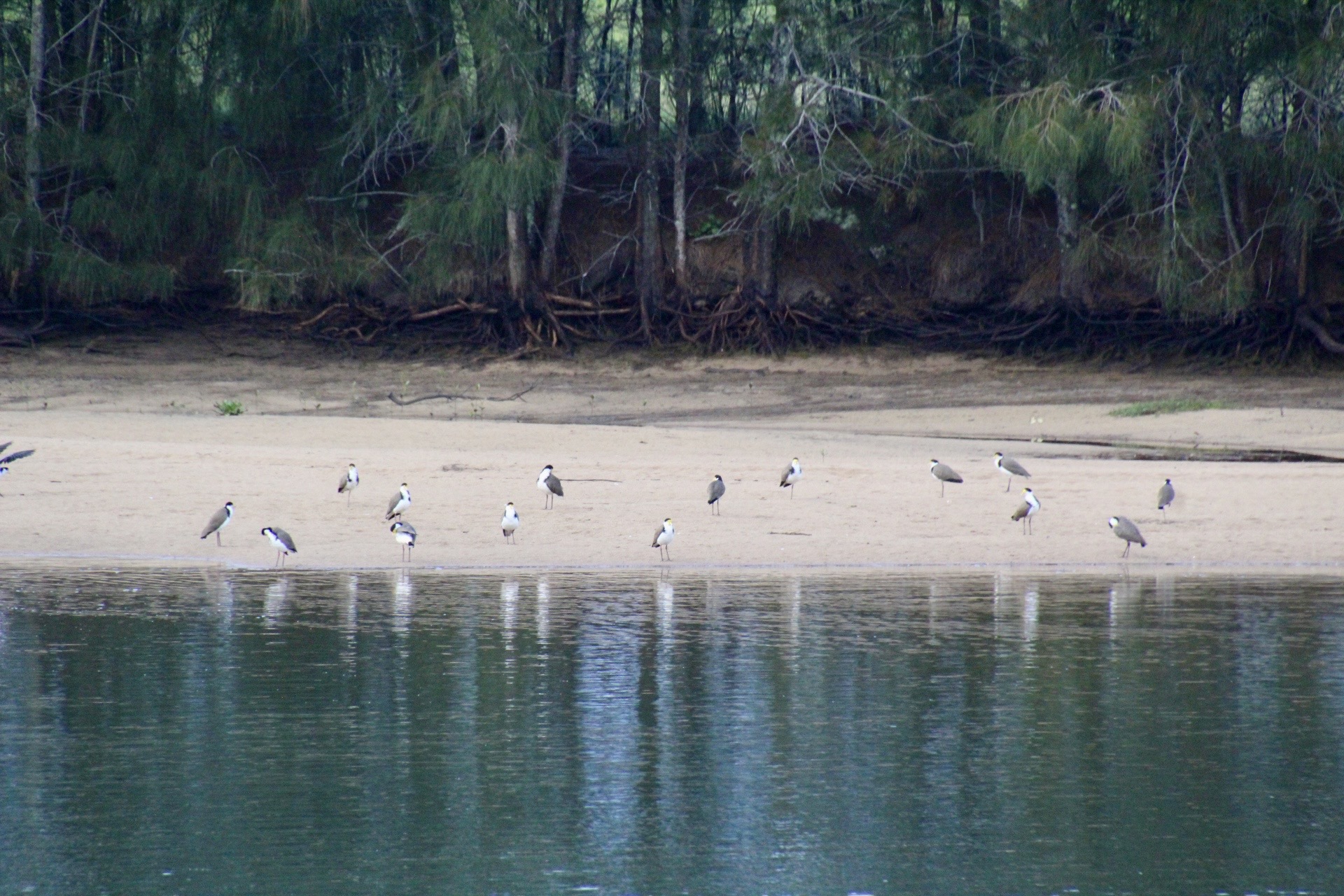
Masked Lapwings are found from the top of Western Australia across the eastern coast and through to South Australia, as well as in Tasmania. Their call, especially when alarmed, is a shrill “kekekekekek”. You can hear a recording of it here. In my local area, I’ve often seen these birds on vacant land and in parks, their calls echoing at dusk.
Have you seen — or heard — a Masked Lapwing lately?
Photo: Masked lapwings in flight, Moruya, NSW

 jml297
Leave a comment