
Ptilonorhynchus violaceus (from ptilon, “feather”, rhunkhos, “bill”, and violaceus, “violet-coloured”)
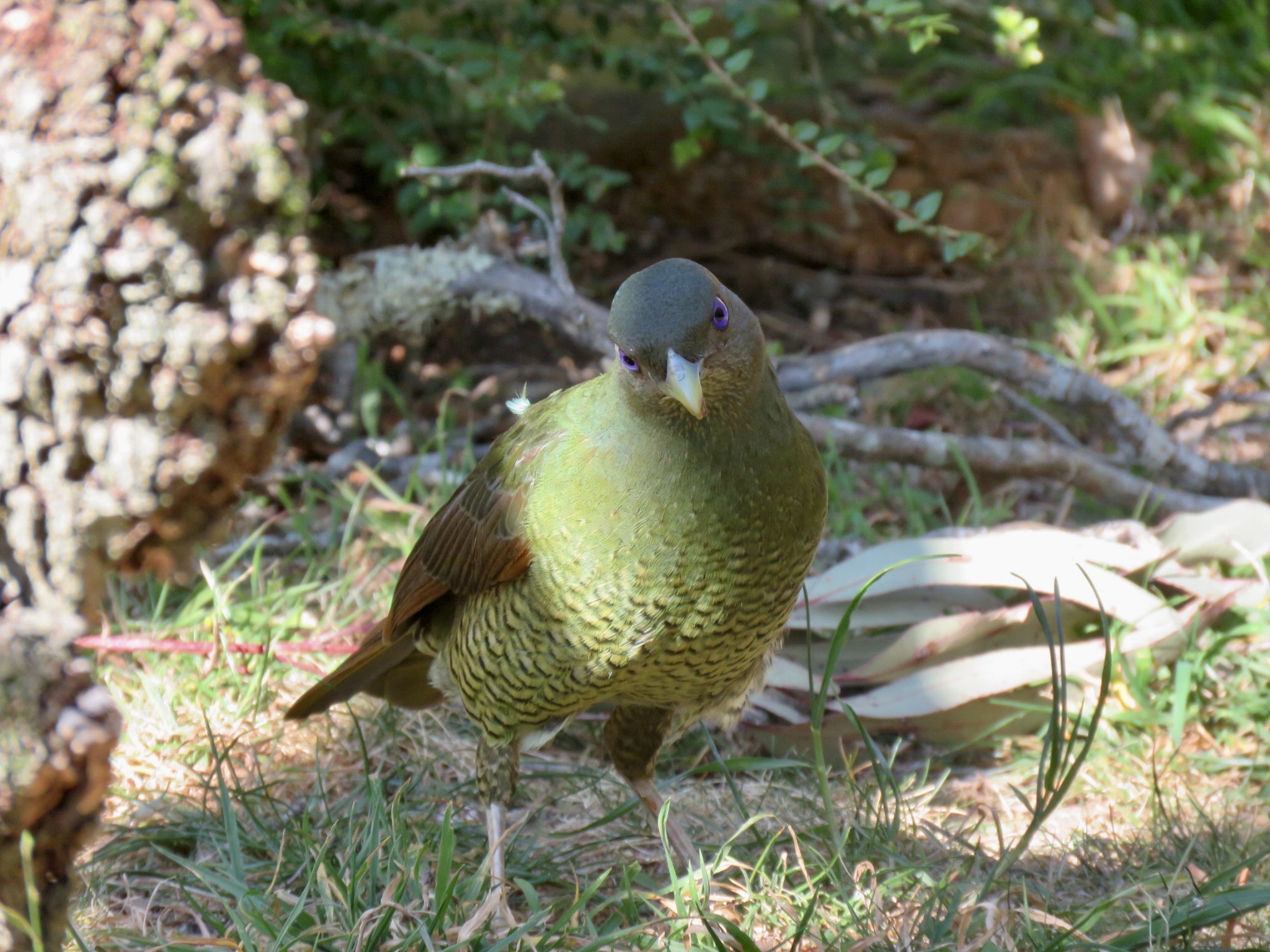
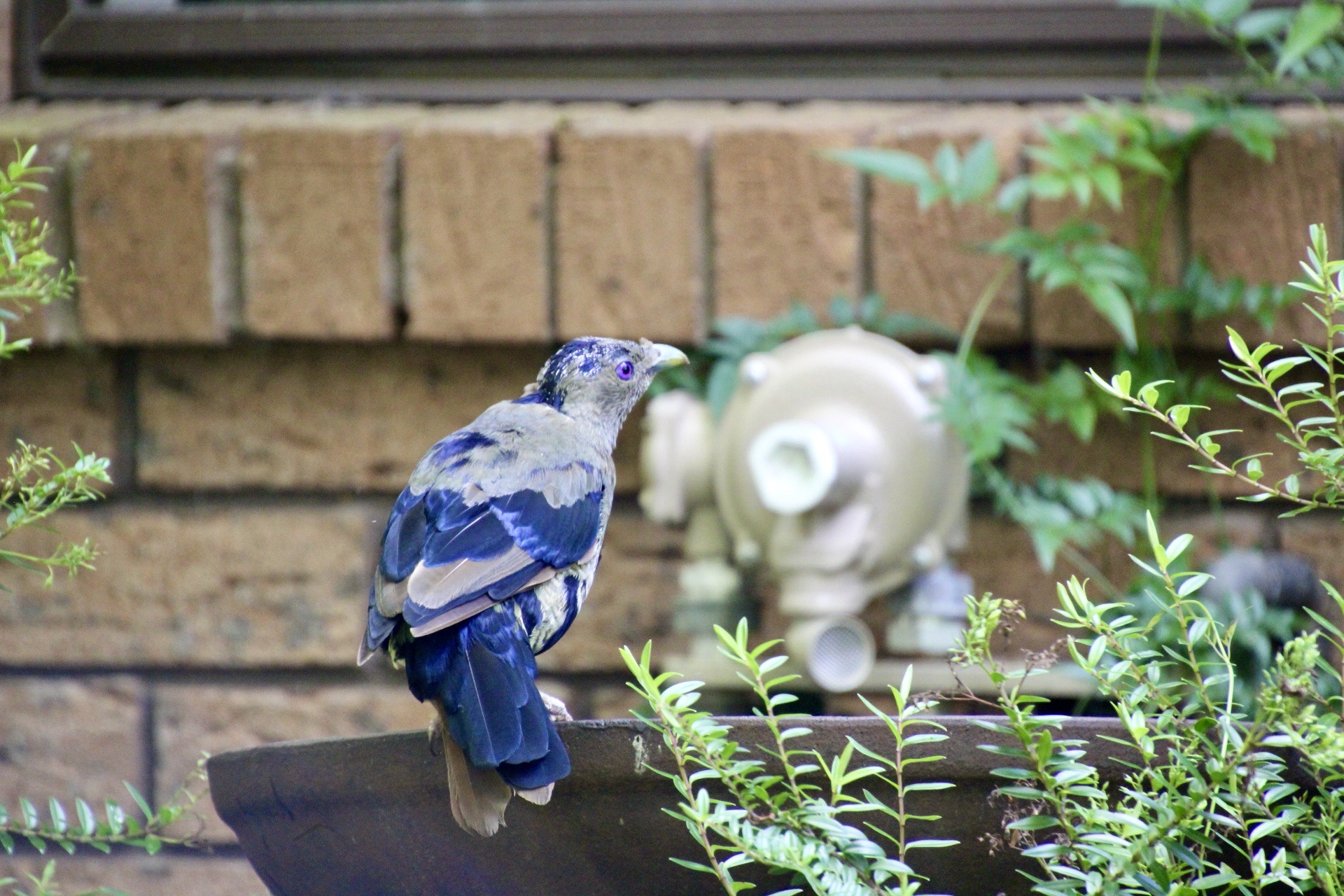
Satin bowerbirds are a regular and welcome visitor to my garden. Most of the birds are coloured grey-green, with olive-brown wings and a scalloped underbody. Their eyes are violet-coloured, and females and juvenile males look the same. Both male and female birds have feathers extending onto their relatively stout bills. By the age of seven years, males will develop their beautiful blue-black feathers, looking patchy during their transition to mature plumage.
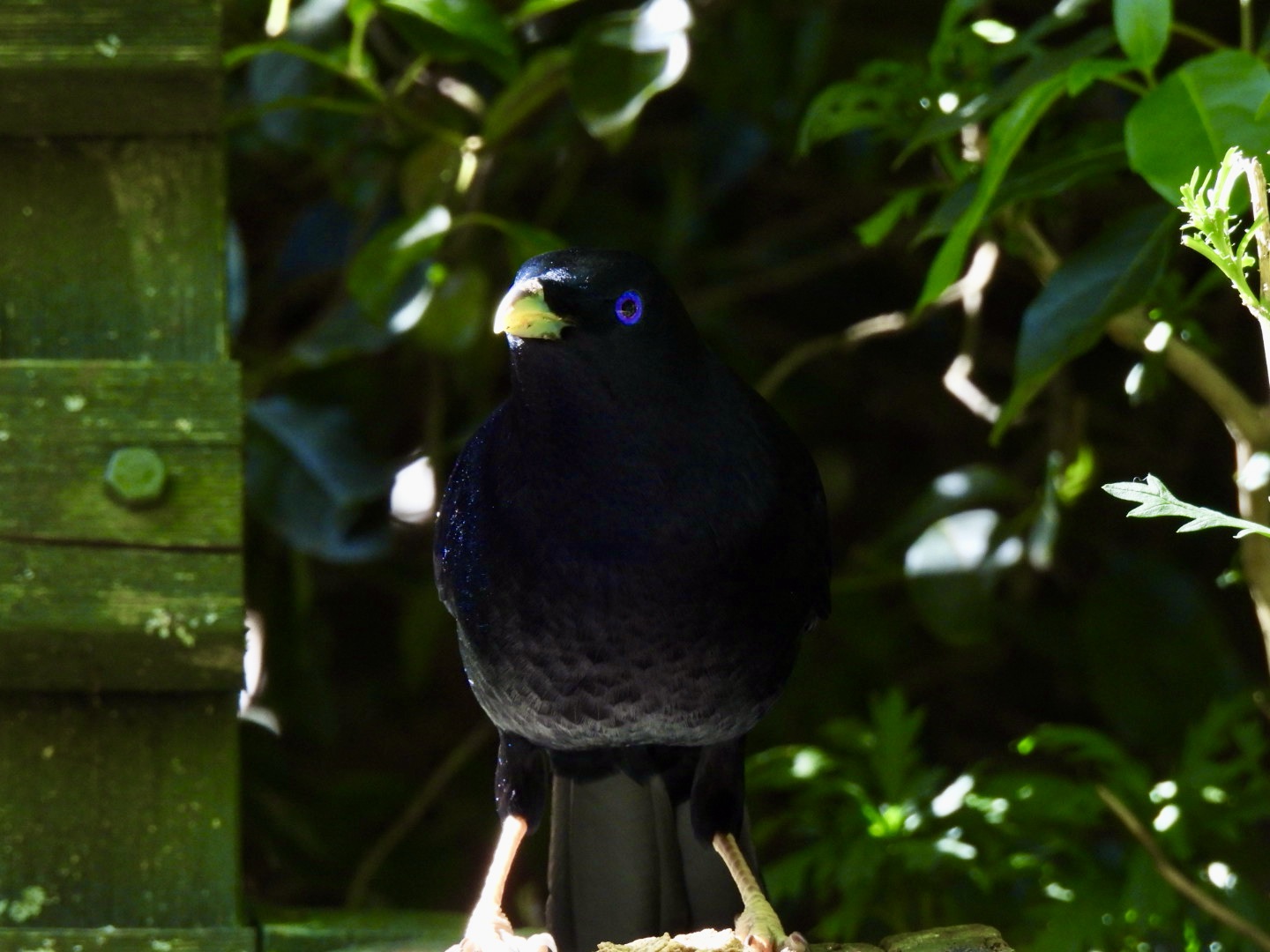
Mature birds are quite stocky, being 270-330 mm in length (10–13 inches) and weighing 160–270 grams (0.35-0.60 pounds). Satin bowerbirds are one of eight bowerbird species in Australia; others include spotted, regent, western and golden bowerbirds. These birds are found along the east coast of Australia from southern Queensland to Victoria. Rainforest or wet sclerophyll forests are their preferred habitats. They are a breeding resident of the Blue Mountains. Some birds remain in the local area throughout the year, others move across a wider area. There is a minor species variation in northern Queensland: these birds are smaller, and the female has greener plumage.
Bowerbirds have developed their own architecture for the construction of their bowers, along with tool-using capabilities. Dominant males individually make and maintain U-shaped bowers, constructed with twigs and grasses. Sometimes sections are secured in place with a mixture of saliva and charcoal or green liverwort, which is applied with a stick, similar to painting a wall. Bowers are oriented north-south to ensure sunlight illuminates the bird’s display and plumage, and are decorated with blue and yellow pieces. These can be flowers, feathers, plastic, or anything else in the right colour. When an interested female approaches the bower:
Male seizes object in bill, adopts trance-like poses, head low, eyes suffused lilac-pink, leaps sideways, flares wing/tail, utters wheezing, whirring notes; mates with females attracted. (The Field Guide to Australian Birds; Pizzey & Knight)
Bowers tend to remain in the same area from one year to the next, but they are constantly being dismantled, added to and rebuilt. Rival males, mature or juvenile, will take decorations from an unguarded bower, or simply destroy it. The Blue Bower is an excellent image of a pair of satins as part of the 2024 Wildlife Photographer of the Year exhibition. You can see a short clip of the bower preparation and dance moves of the male here.
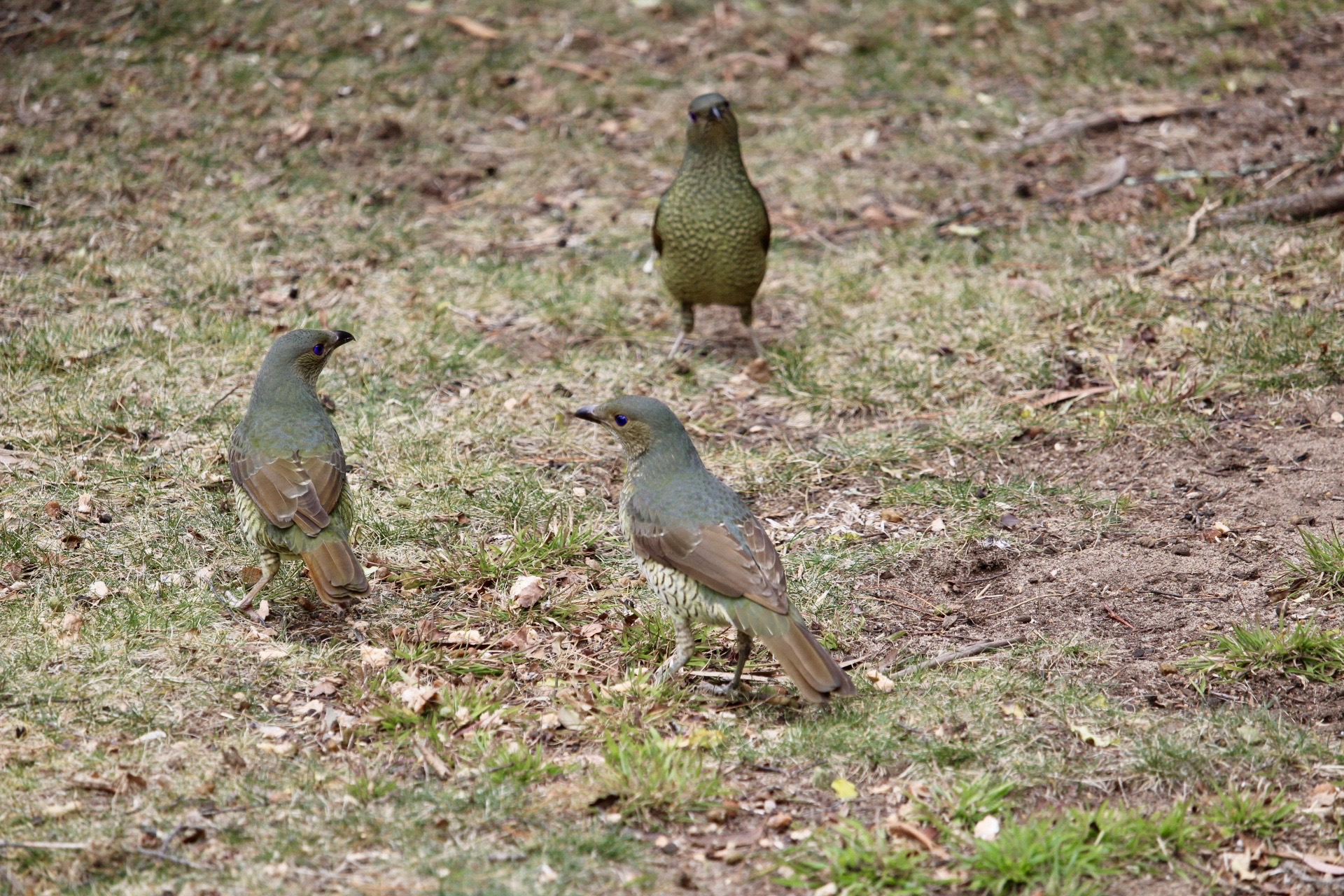
Satin bowerbirds are vocal, making an interesting array of noises from soft calls to a greeting of ‘cheeru’. They whir, make rattling and creaking sounds and also mimic other birds in the area. They eat grass, insects, fruit, and garden vegetables. Satin bowerbirds breed from September to January, with a shallow nest high in a tree holding two to three eggs. Males are completely preoccupied with the bower construction and maintenance: all nesting and rearing of the chicks are left to the females.
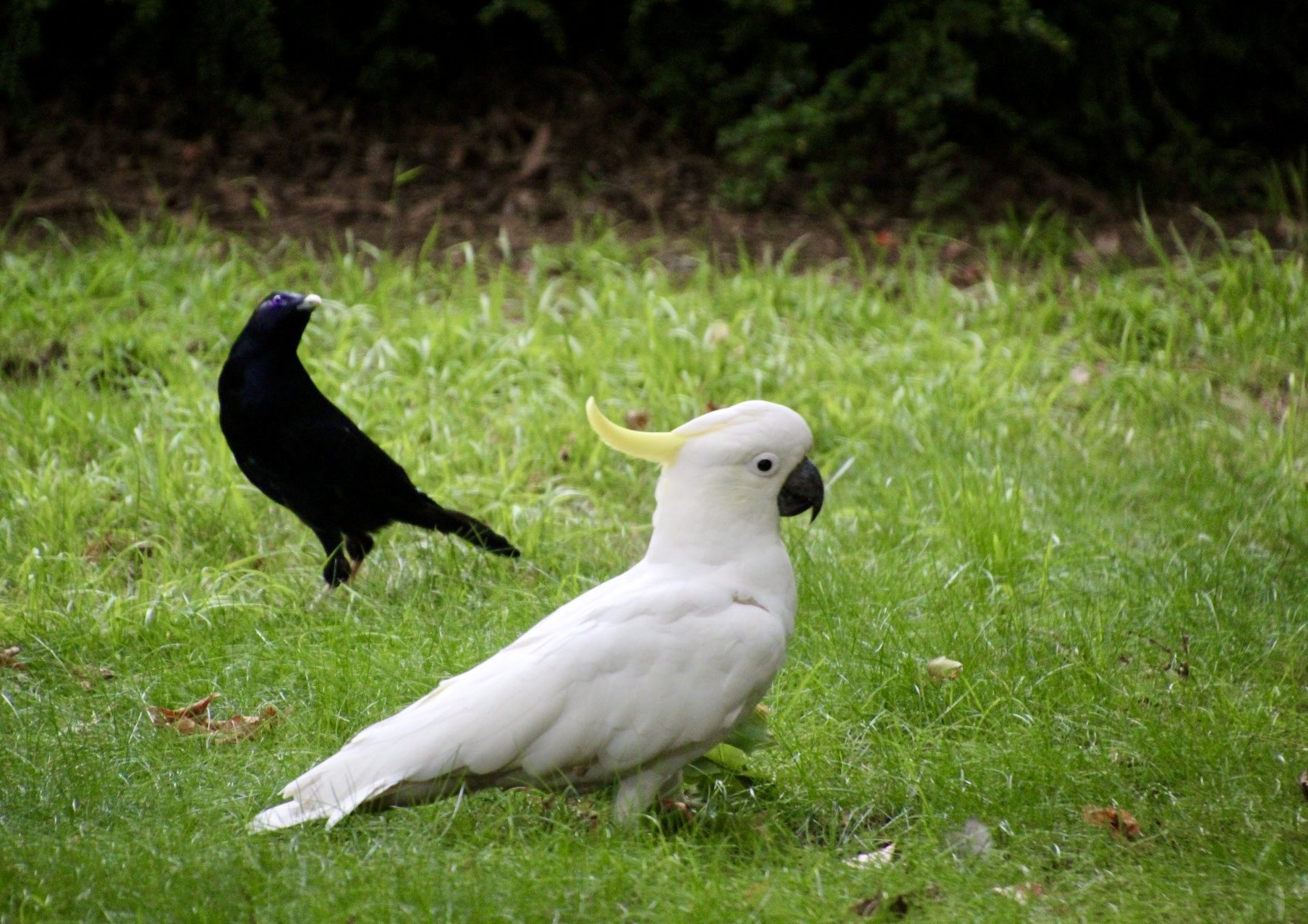
These bright, curious birds are a joy to see in the garden, hopping around or flying between trees. The olive-green feathers provide an effective camouflage, and the mature males are stunning with their blue-black feathers with a satin sheen. There have been extensive studies completed on the behaviour of this wonderful bird, and you can find out more about them here.
From the first encounters with satin bowerbirds in my garden, they have fascinated and entertained me. Learning more about their behaviours and bowers has only heightened my interest in this remarkable bird.
Have you had any encounters with a satin bowerbird?
Photo: Male satin bowerbird


 jml297
Leave a comment