On a recent trip to Bathurst, I took a walk through the Bathurst Peace Garden. Situated along the banks of the Macquarie River, the sound of slow moving water and the shade of mature trees soften the space. The garden includes teak seats donated by the Indian Government in 1956. It was rededicated in 1988, when a bust of India’s first Prime Minister, Jawaharlal Nehru, was presented by the Deputy High Commissioner of India.
This sense of calm is reinforced by an artwork that turns peace into an act of dialogue.
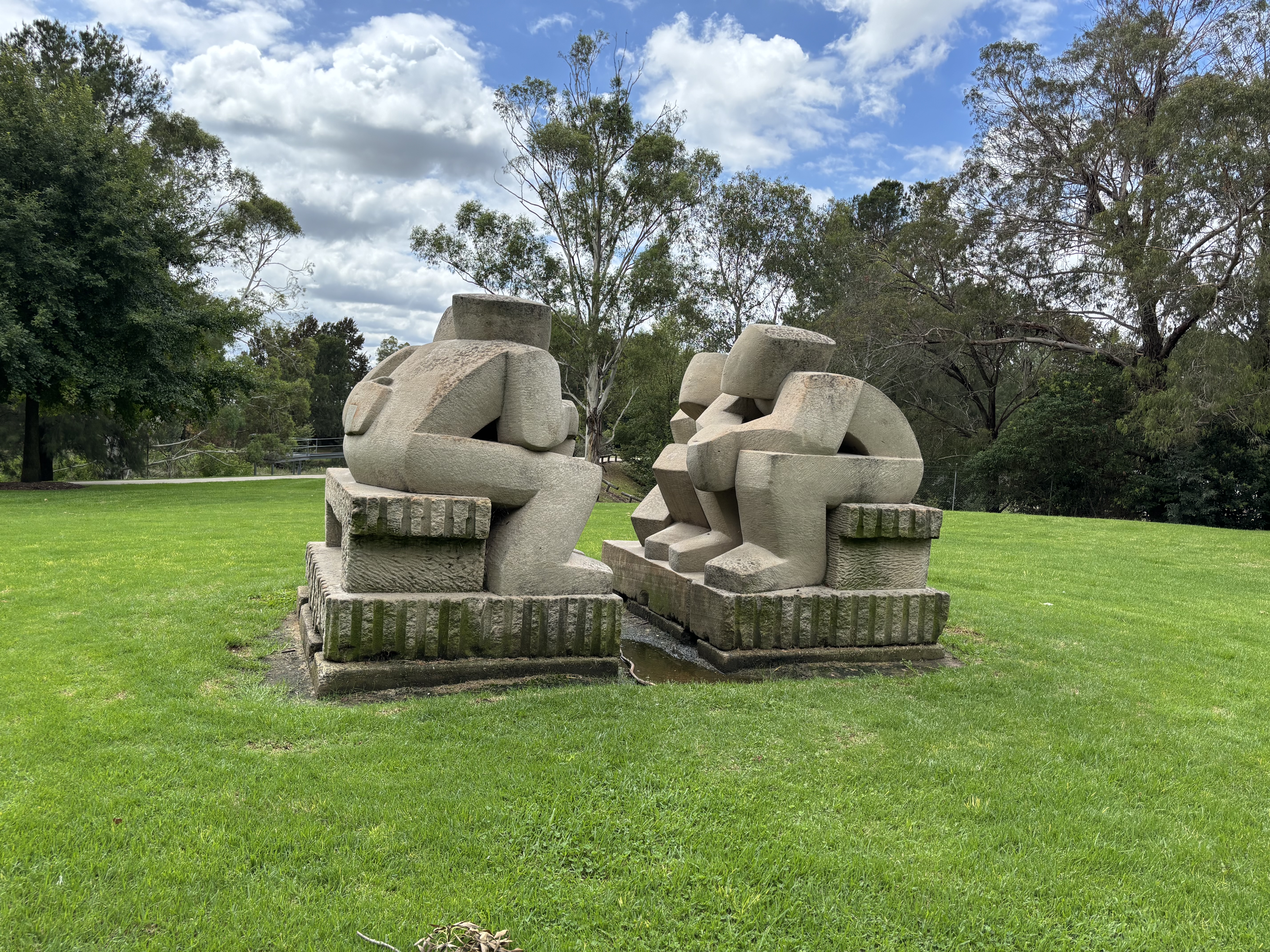
Also located in the park is the sculpture titled Conversation by Stephen Hart. It was created from two 15 tonne blocks of Bondi sandstone, their rough surfaces facing one another as if paused mid exchange, and represents interaction. According to a detailed article available here, the work began with an interest in exploring the machinery of communication.
From the riverbanks of Bathurst, reflections on peace continue in the Blue Mountains.
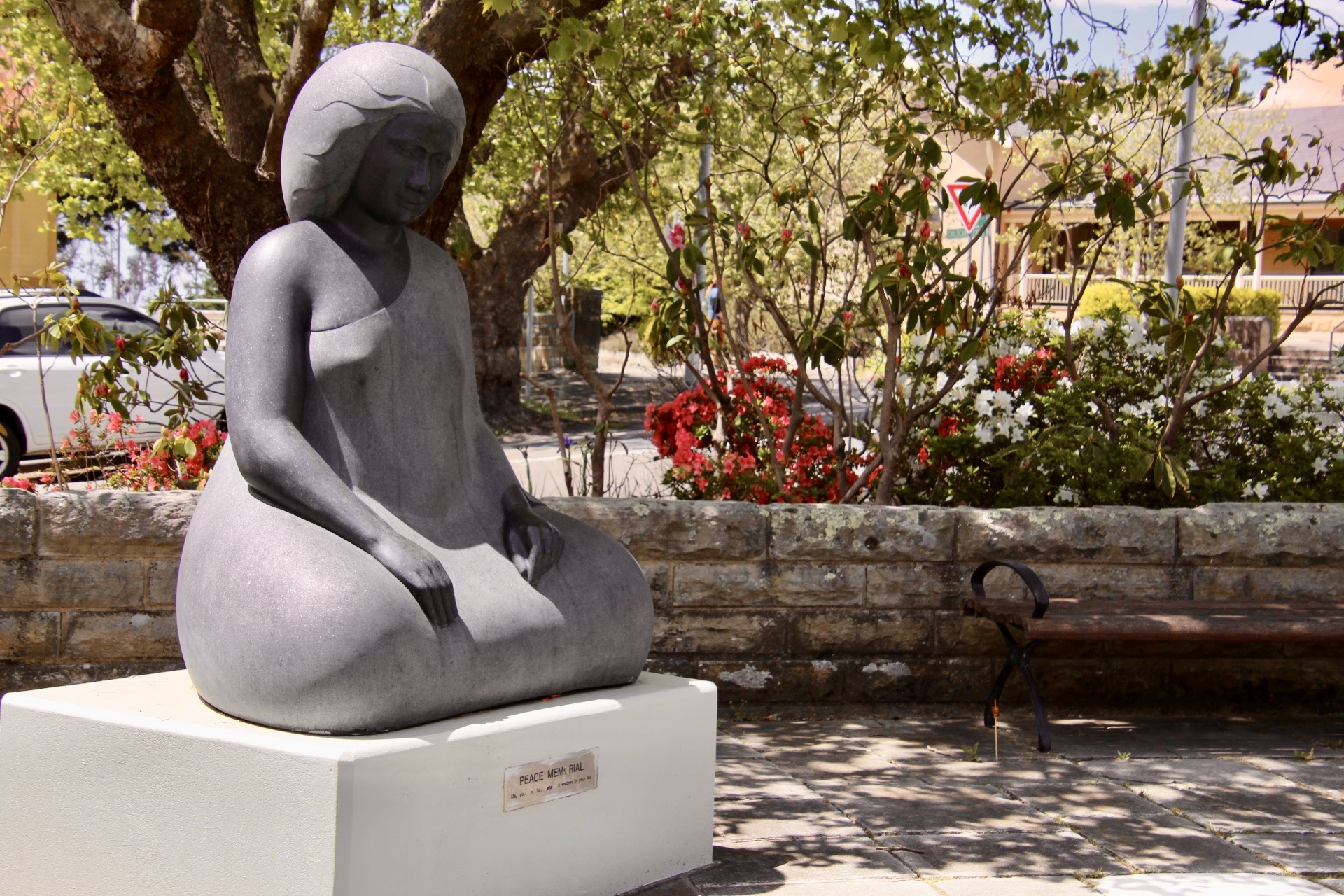
One of my favourite places in Katoomba is the Peace Memorial Park near the Civic Centre. The sculpture shown above is titled Peace Memorial and was created by Tom Coley. Coley was born in England and lived in Tasmania and the Blue Mountains for many years. The black granite for the sculpture was sourced from Newcastle, its polished surface catching and reflecting light differently as weather moves across the mountains. When the statue was commemorated in 2009, Coley explained that he had tried to meditate to understand what peace is. My admiration for this public artwork has been documented before, and there is more information available on Tom Coley here.
This search for peace through art and place also leads west to Cowra.
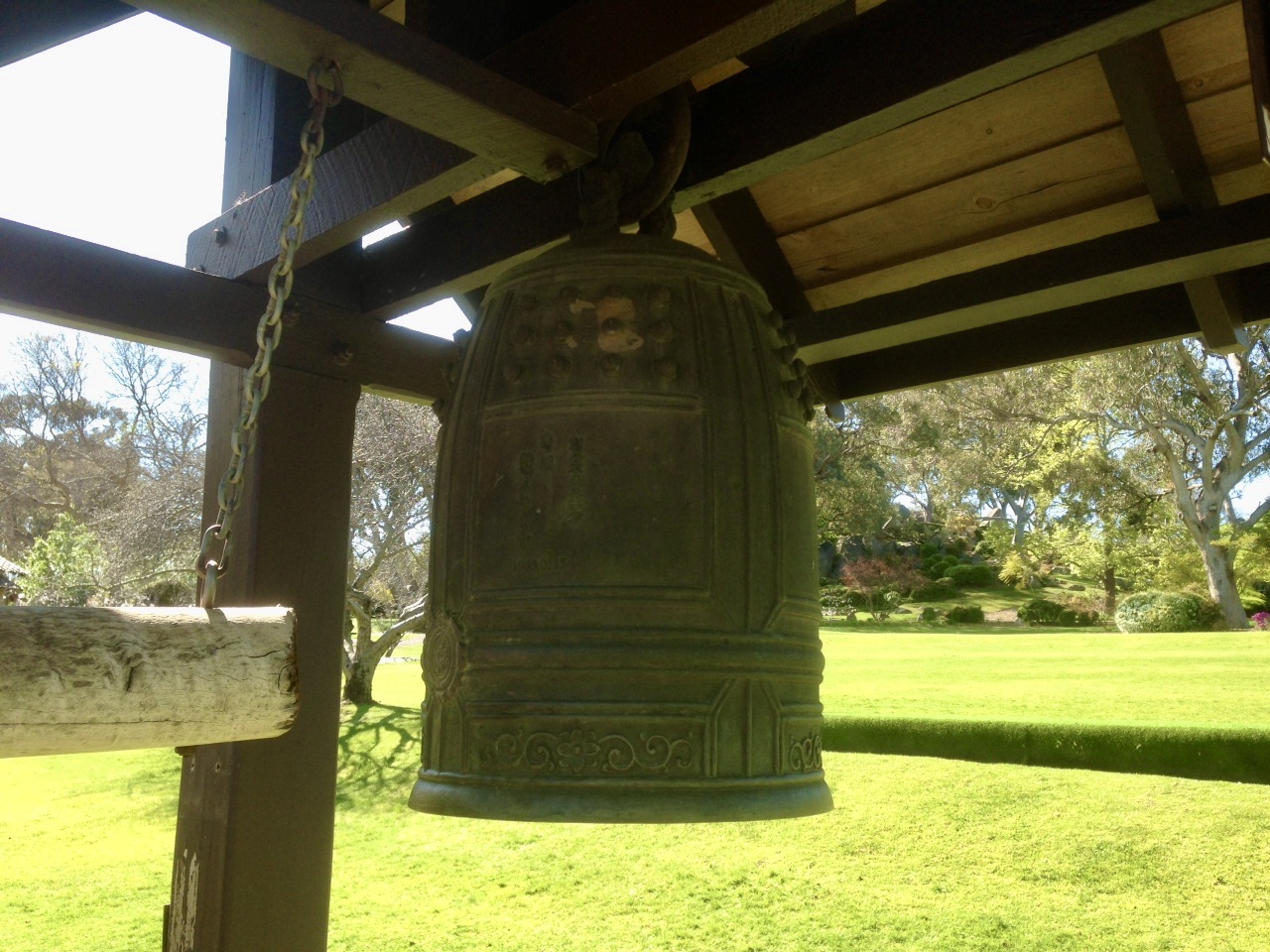
Another favourite place to visit is the Cowra Japanese Garden and Cultural Centre, where carefully raked gravel, water, and open space slow the pace of movement and attention. I have visited it a few times over the years and appreciate it a little more each time. Cowra is also home to the Australian Chapter of the World Peace Bell, made from coins donated by 106 United Nations member countries. The bell is located in the Civic Square and recognises the town’s contributions toward peace and international understanding. You can read more about Cowra’s World Peace Bell here; the photograph above was taken at the Cowra Japanese Garden and Cultural Centre.
Where the Peace Bell centres attention on a single symbolic object, Canberra’s Peace Park offers a broader landscape for contemplation.
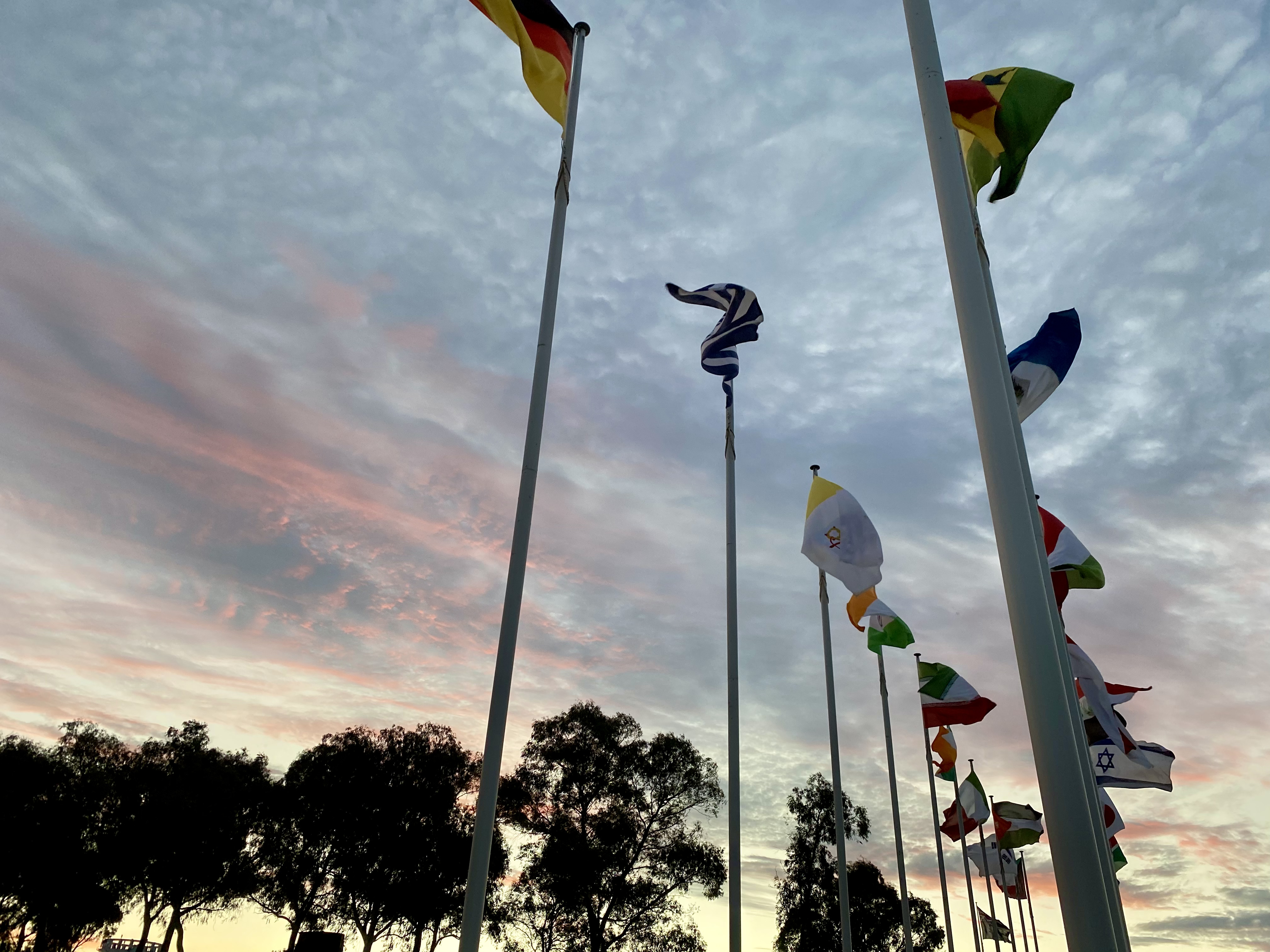
Along the banks of Lake Burley Griffin in Canberra lies the Peace Park. I came across it late one afternoon, as the low sun stretched reflections across the lake and the park gradually emptied of people. Commissioned in 1986, the park provides a space for quiet contemplation in the national capital. More information about the design and intentions behind it can be found here.
Peace is not always found in designated memorial spaces; sometimes it emerges unexpectedly within everyday urban environments.
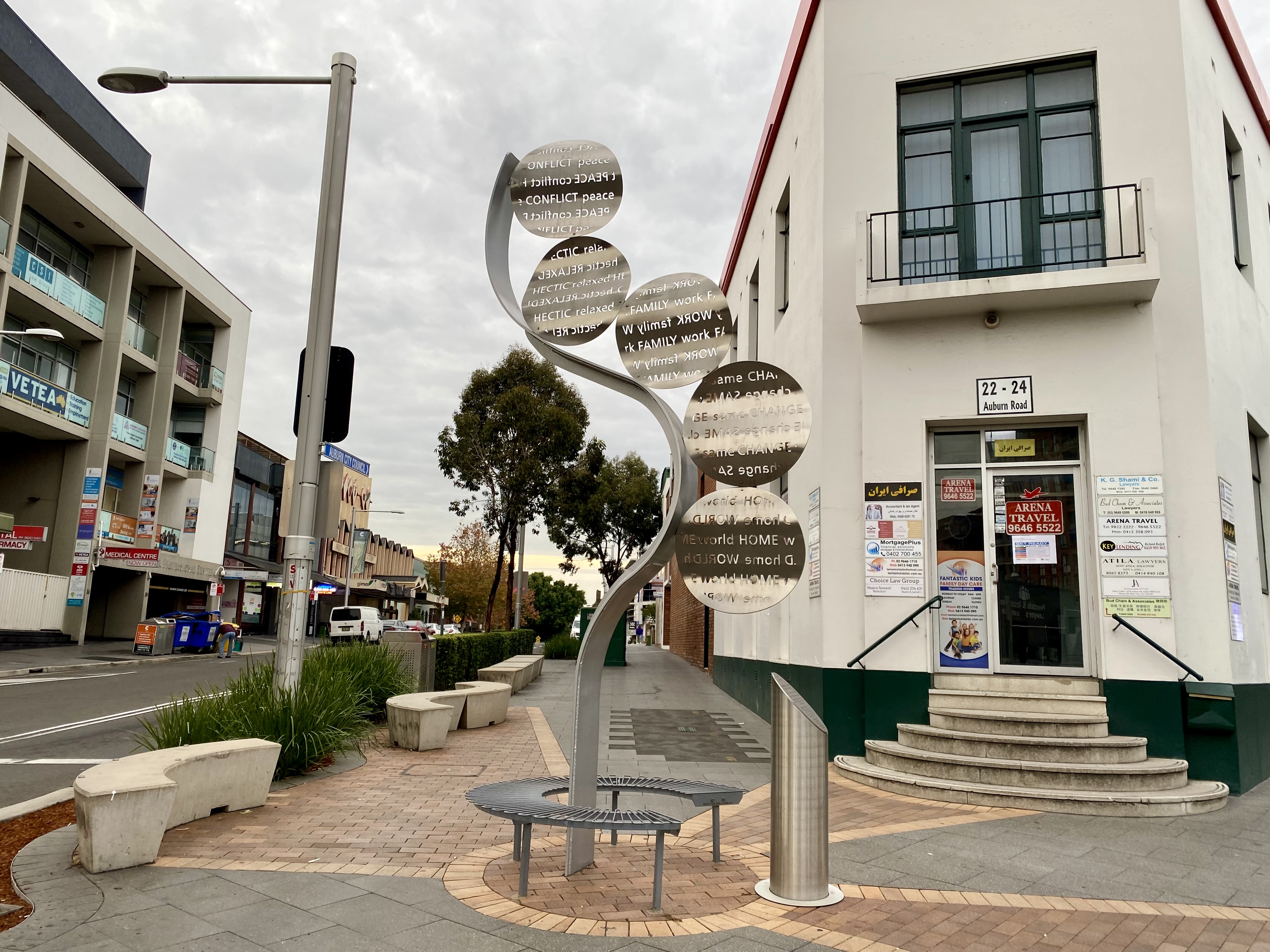
The final reference to peace is captured in the sculpture shown above, which I photographed in Auburn, a suburb in western Sydney. Set within a busy suburban environment, the work presents several dichotomies — from peace and conflict to sameness and change — inviting reflection amid the movement of everyday life.
Together, these places suggest that peace is not a single idea or form, but something encountered differently — through landscape, material, memory, and quiet moments of attention.
Do you have any similar associations that come to mind?
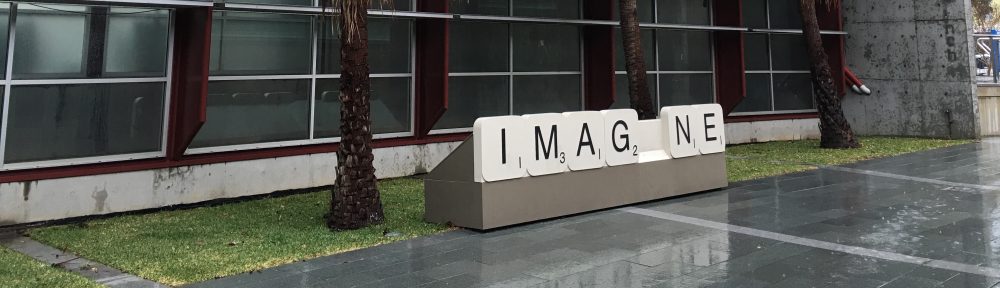
Photo: imag_ne sculpture created by Emma Anna, Mona Vale Library
 jml297
Leave a comment