
South Australia offers three botanic gardens to the visiting public: the Adelaide Botanic Garden, Mount Lofty Botanic Garden and Wittunga Botanic Garden. On a mild summer morning, I was able to stroll around part of the Adelaide Botanic Garden, which contained many delights. The Kaurna and Peramangk are the First Peoples and Traditional Custodians of the lands and waters of the Adelaide Plains. The site for the gardens was selected in 1855, and has been open to the public since 1857. This was the fifth site chosen after a couple of false starts, and it has been the main botanic gardens in South Australia since that time.

Located on 50 hectares in the heart of Adelaide, there are several different gardens and botanic landscapes to explore, including the Cactus and Succulent Garden, Dahlia Garden, Australian Native Garden and SA Water Mediterranean Garden. This features plants and garden design that work well in a water wise garden, an important consideration in the warm, dry climate of southern South Australia.

The Palm House shown above was designed by German architect Gustav Runge and imported from Germany in 1875. It is the second oldest glasshouse in Australia, and now houses a collection of plants from Madagascar. It has a number of unique architectural features which were considered advanced for its time, including hanging glass walls.

This glass sculpture, called Cascade, was created by Serbia Redegalli with precision cut glass in the shape of a cascading wave. It is one of many sculptures located throughout the gardens. Some, like the one below, are waiting to be discovered in small pockets of the garden, a delightful reward for meandering along the various pathways.

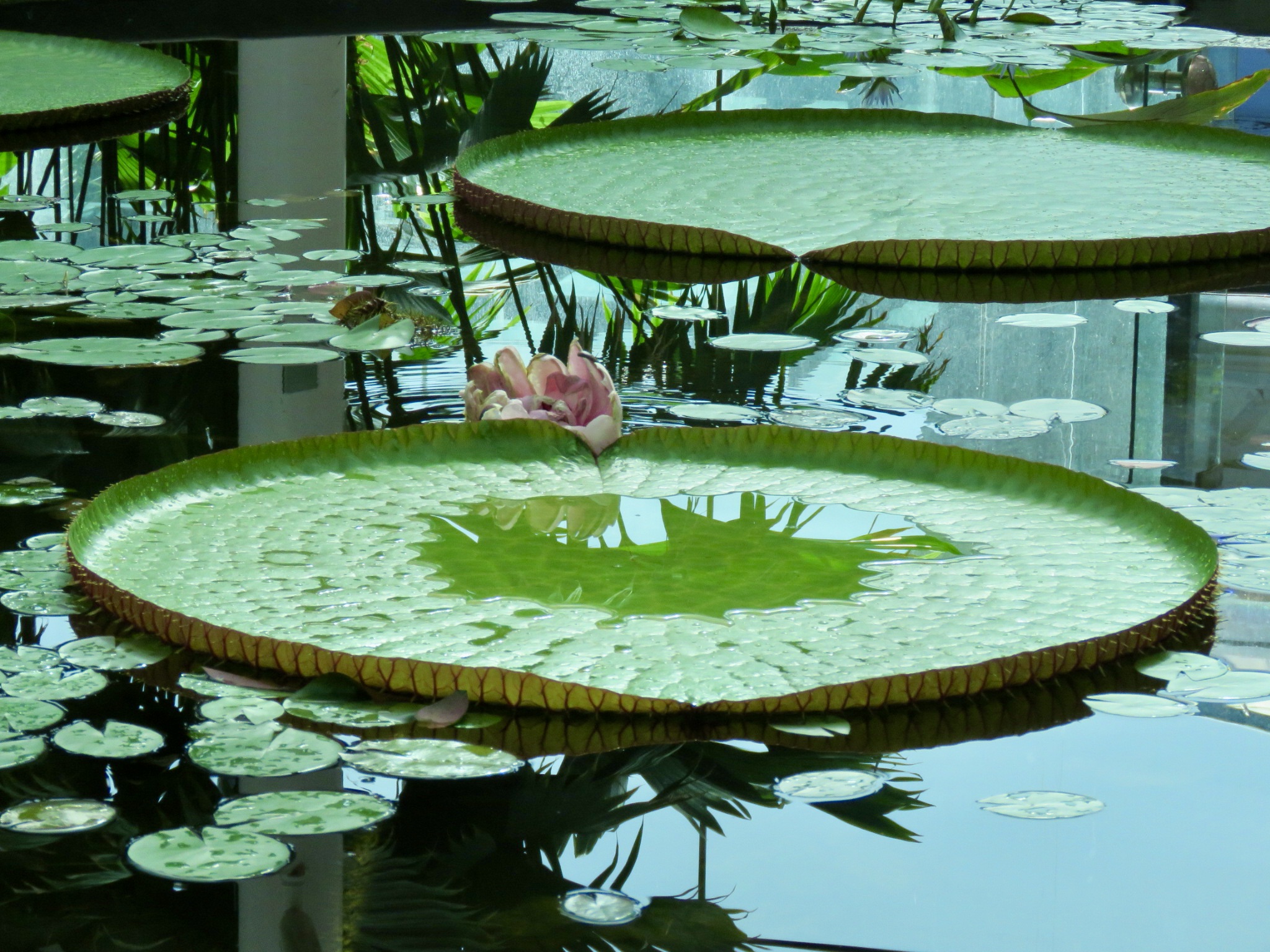
Birdlife also make good use of the garden, and pied cormorants, waterhens, white ibis and various ducks were seen enjoying the lake near the cafe, along with turtles. One of the more surprising exhibits was the Victoria amazonica , shown below. It is the national flower for Guyana, and the largest lily pad grown in the Amazon Waterlily Pavilion measured 165 cm in diameter. The waterlily flowers only last a couple of days but are spectacular.
It is part of the mission statement of the Botanic Gardens and State Herbarium of South Australia to ‘build an understanding and appreciation of the botanical world’ and to create an ‘urban oasis of peace and tranquility’. From my brief wander through part of these beautiful gardens, it certainly left an imprint of natural beauty and will be a place I’ll be sure to revisit.
Have you had a wander around a botanic garden lately?
Photo: some of the extensive cactus displays in the Adelaide Botanic Gardens


 jml297
Leave a reply to jml297 Cancel reply