
This country town located on the Yass River is 283 km south-west of Sydney, and has a population of about 6,500 people. It is a rural service centre located in the Southern Tablelands, and the district is well-known for its merino sheep studs. Yass was considered as a possible site for the Federal Capital after 1901, and is the town closest to Canberra. The Ngunnawal and Wiradjuri are the First Peoples and Traditional Custodians of the lands and waters of the area, and Yass is believed to be derived from ‘Yharr’, meaning running water.

There are many heritage buildings along the main streets in Yass, including those shown above. The town was established in 1830 near a junction where the early road from Sydney to Melbourne crossed the Yass River. A key industry in the district is fine wool production due to the climate and soil conditions. The area has a growing reputation for cool climate wines and high-quality produce.

There was much petitioning by the people of Yass in the 1870s for a railway line, but due to the topography of the area, the Yass Junction Railway Station was established just over 4 kilometres from the town. This was the connection to the Main South line, and it was built in 1876. Nearly two decades later, the railway station at Yass was built and connected to Yass Junction by a short branch line. This line operated as a tramway with various passenger stops along the way. The Yass Station was closed in 1988, and is now used as a museum.

There were postal services in Yass from 1835, but the building shown above was the first purpose-built post office in the town. Designed by Colonial Architect James Barnet, it was built in 1884 with the clock tower added in 1888. The town’s growing prosperity is emphasised in buildings such as these.

Another civic building designed by Barnet was the Yass Court House. It replaced the earlier building, which dated from 1847, and the plaque outside the entrance notes that an old convict flogging tree was removed to clear the space for the construction of this building. It cost about 15,000 pounds, and is still in use today.
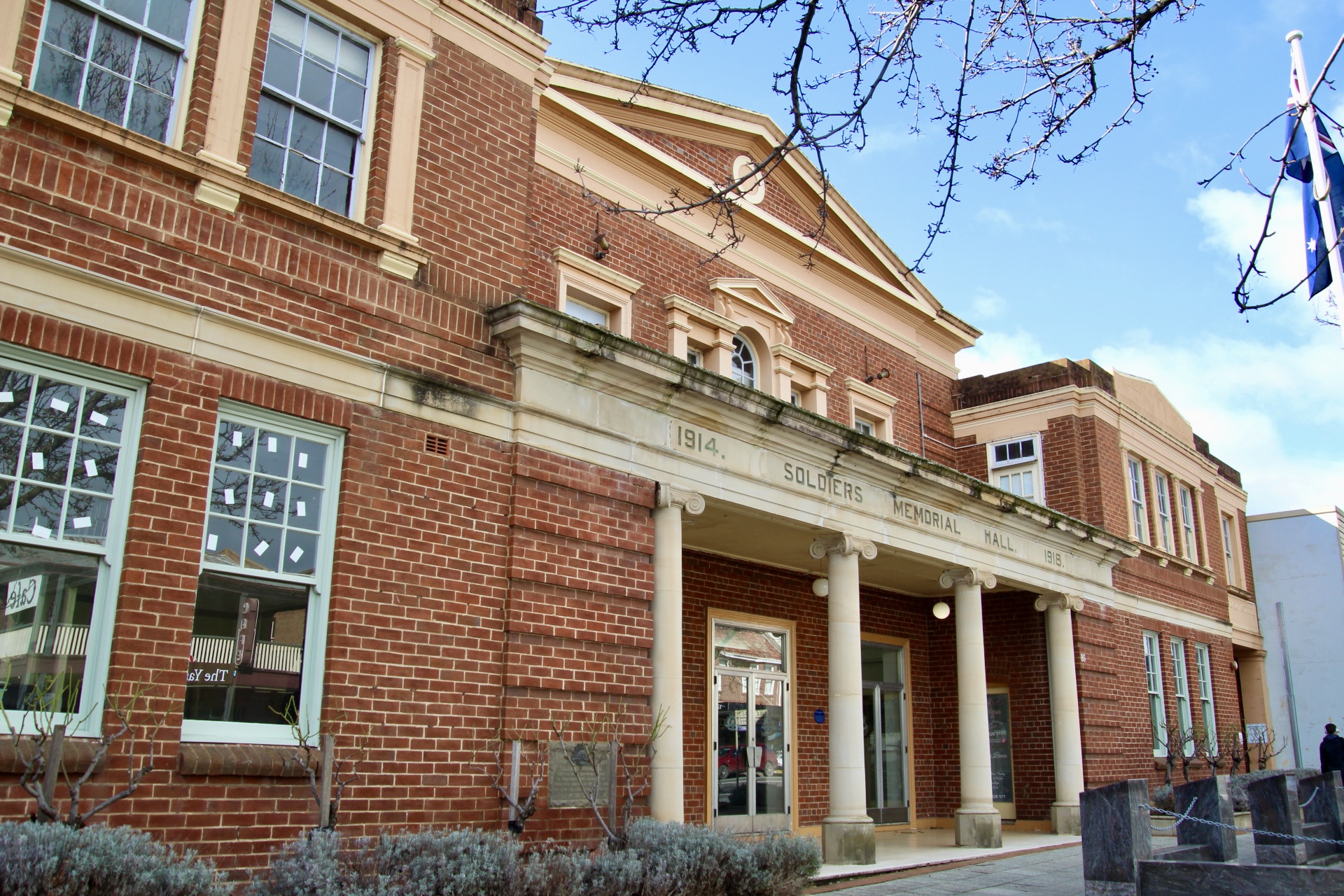
The Yass Soldiers Memorial Hall was built in 1922 to commemorate the people of Yass who served in World War I. It was designed as a war memorial and public hall, and included a club, literary institute and lecture room.
You can find an interesting history of Yass here. Have you had a chance to wander around Yass?
Photo: sheep near Yass Junction, NSW



 jml297
Leave a comment