
Albury, situated on the banks of the Murray River which forms a border between New South Wales and Victoria, is one of the largest towns in the state with a population of about 60,000. It is often linked to Wodonga, located just over the border, and the towns have been considered growth centres in recent decades. The Wiradjuri are the First Peoples and Traditional Custodians of the lands and waters of the area, and the traditional name is Bungambrawatha, meaning homeland or crossing place.
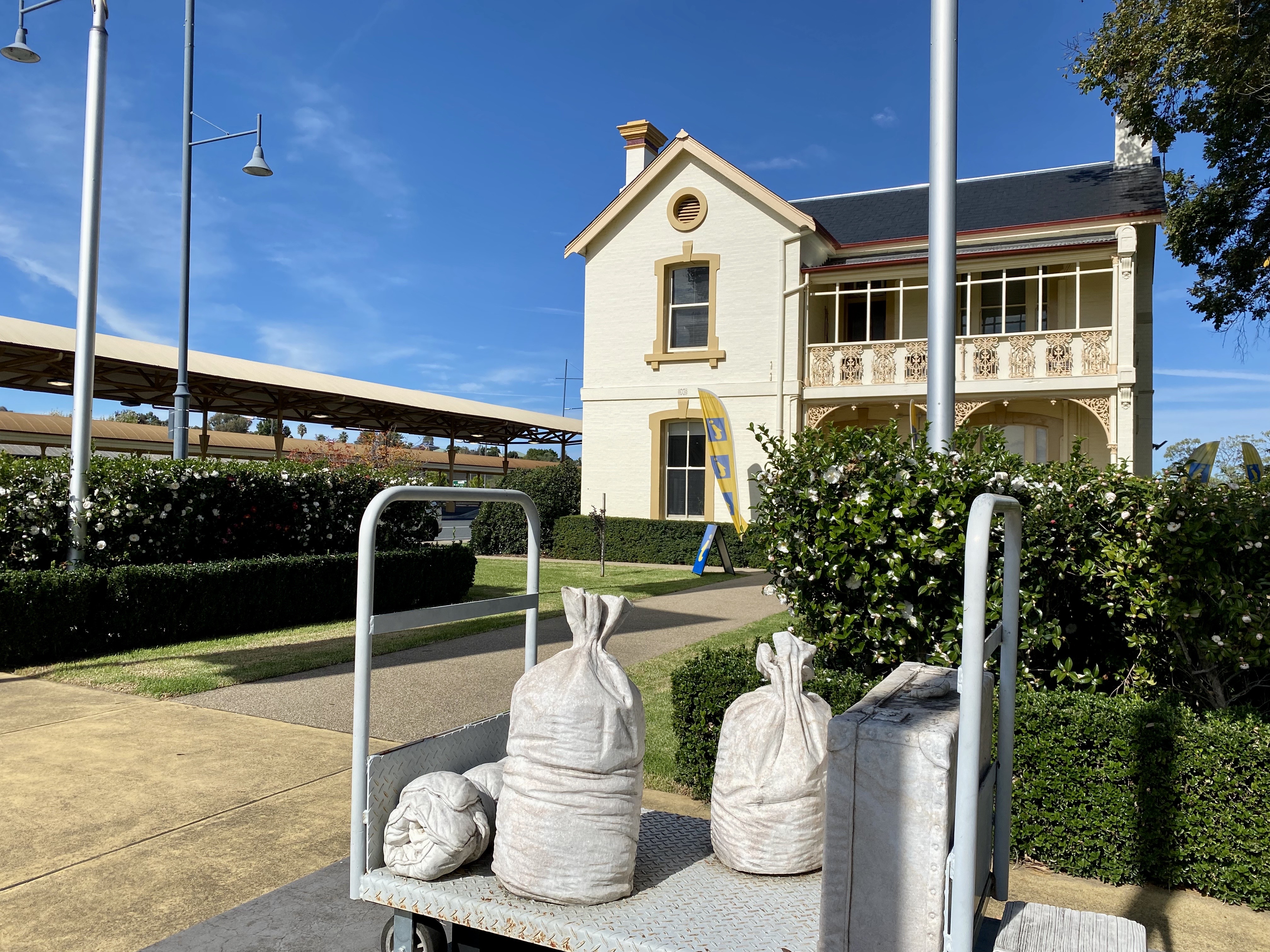
As a border town, Albury was one of the major entry points into NSW from Victoria. One of the most visible reminders of the importance of this is the Albury Railway Station. The rail connection between the two colonies (later states) took place in 1883, but as different gauge sizes were used for the train lines, all passengers and goods had to change trains at Albury. This requirement continued until 1962. The train platform at Albury is one of the longest in the state at 455 metres (1493 feet). There is a photo of the magnificently proportioned Albury Railway Station here, built in 1881. The photo above shows the Railway Station Master’s House, with sculptures in the foreground representing goods and luggage.

Albury was an important point on the Sydney to Melbourne mail route in the early days of settlement, and the first post office was in use from 1843. Around 1860, the first official building was established. The Albury Post Office, shown above, was designed by Colonial Architect James Barnet and constructed in the late 1870s, opening in January 1880. This was a year before the Sydney-Albury railway was completed. The clock tower was added in the 1920s. The scale and architectural grandeur of this building reflects the importance of the town and its location on the border.

One of my loveliest discoveries during my brief visit was the Albury Botanic Gardens. Land for the gardens had been allocated in 1864, and the gardens were opened in 1877. There are over 1,000 plants with a mix of native and exotics to explore. The gardens also feature rainforest and heritage walks, along with a children’s garden. I found it to be a restful and inviting place.
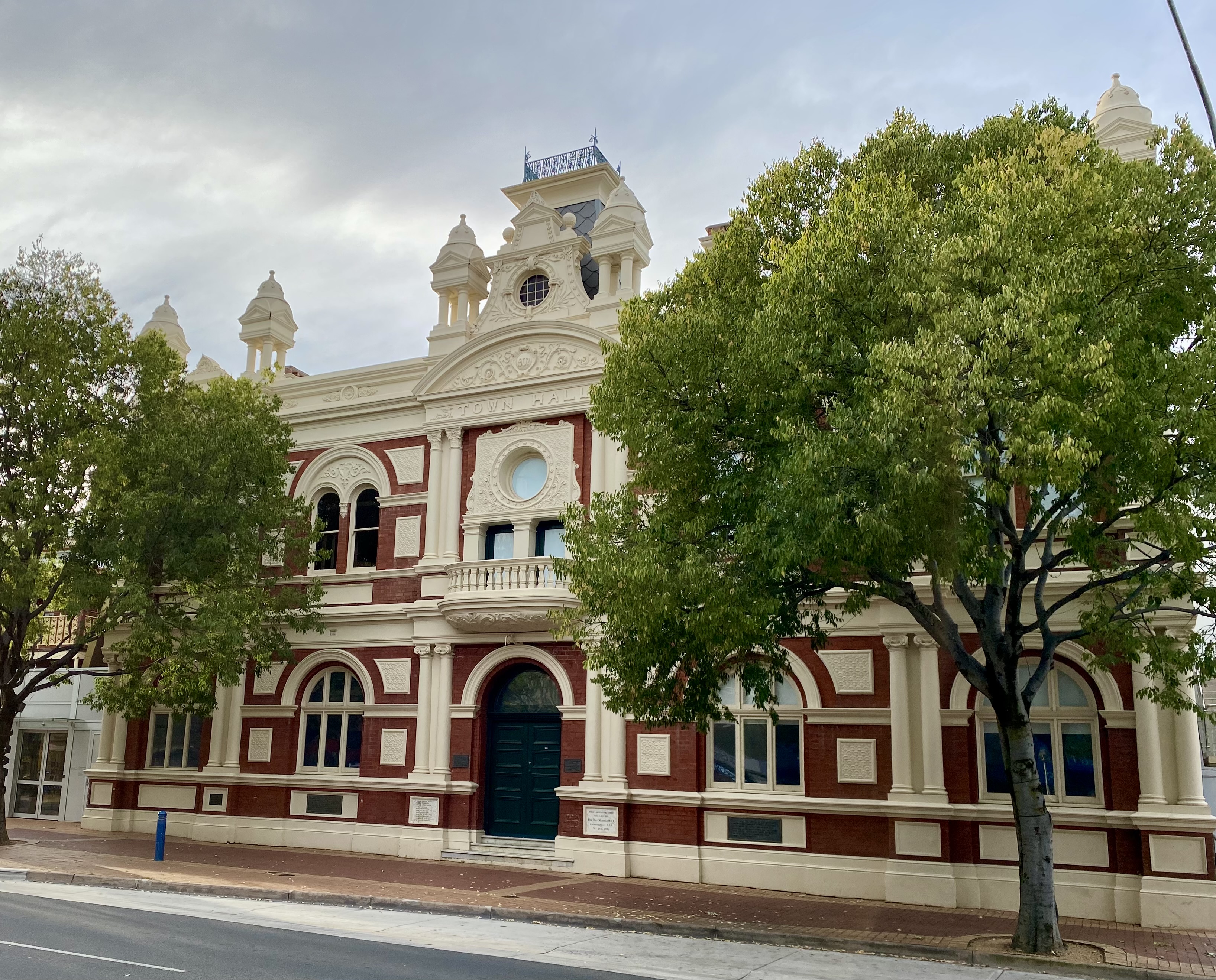
Now part of the Murray Art Museum Albury (MAMA), the Albury Town Hall was built in 1907. This was only a handful of years after the federation of Australian colonies, and it shows a confidence and style quite different to the more conservative civic buildings in the town CBD. There is an overview of the building’s history here, and the Albury and District Historical Society created a short film honouring the building’s 100th birthday. This outlines the important role this building played in the civic life of the town, and how it was repurposed to support art and culture in the area.
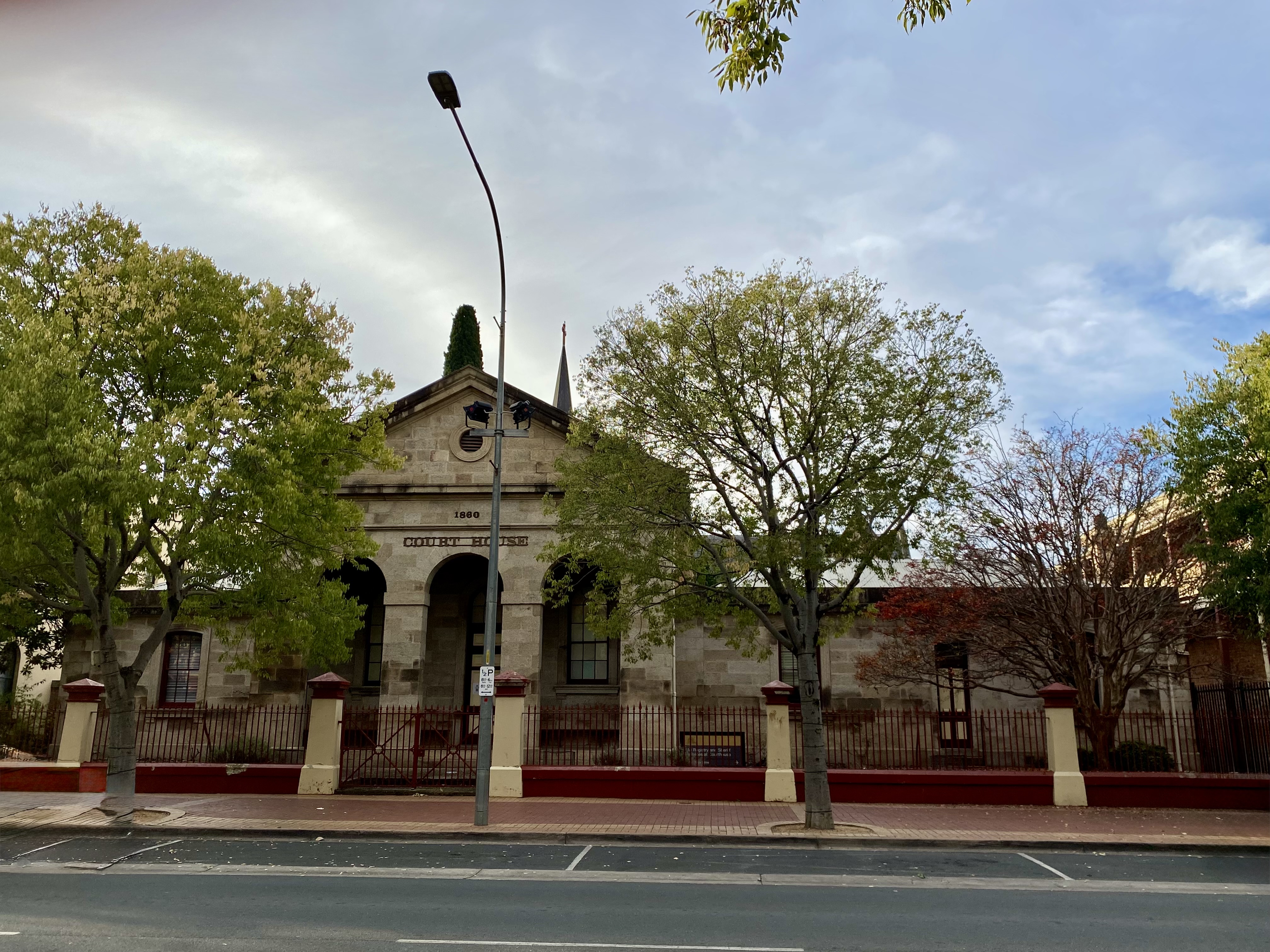
Located nearby is the Albury Courthouse, which dates from 1860. This was soon after Albury became a municipality. It was designed by Colonial Architect Alexander Dawson, and is one of the few remaining buildings designed by Dawson. The front remains relatively unchanged, though there were additions to the rear of the building over the following decades. It is still in use, along with more modern premises built in 1985.
Albury has so much to offer, and you can find out more on the Albury Wodonga tourist site. I enjoyed the heritage buildings, wandering along the lengthy railway platform and marvelling at the grandeur of the railway station, and visiting Monument Hill with its 30-metre war memorial and views along the main street of the city. Have you had an amble around Albury?
Photo: sculptures on the Albury Railway Station platform

 jml297
Leave a comment