
Moree is in the northwest of New South Wales, about 630 kilometres north of Sydney. Located at the junction of the Mehi and Gwydir rivers, it is a prosperous farming region. The rich black soil plains support wheat, wool, cotton, sunflowers, pecan nuts, and other crops. Moree is also famed for its artesian spas and proudly promotes itself as Australia’s Artesian Spa Capital.
The Gamilaroi (also spelled Kamilaroi) people are the traditional custodians of this land. The name Moree is believed to derive from a Kamilaroi word meaning either “long waterhole” or “rising sun”.
Through five photographs, this post explores how Moree’s built environment reflects its history, prosperity, and community life.
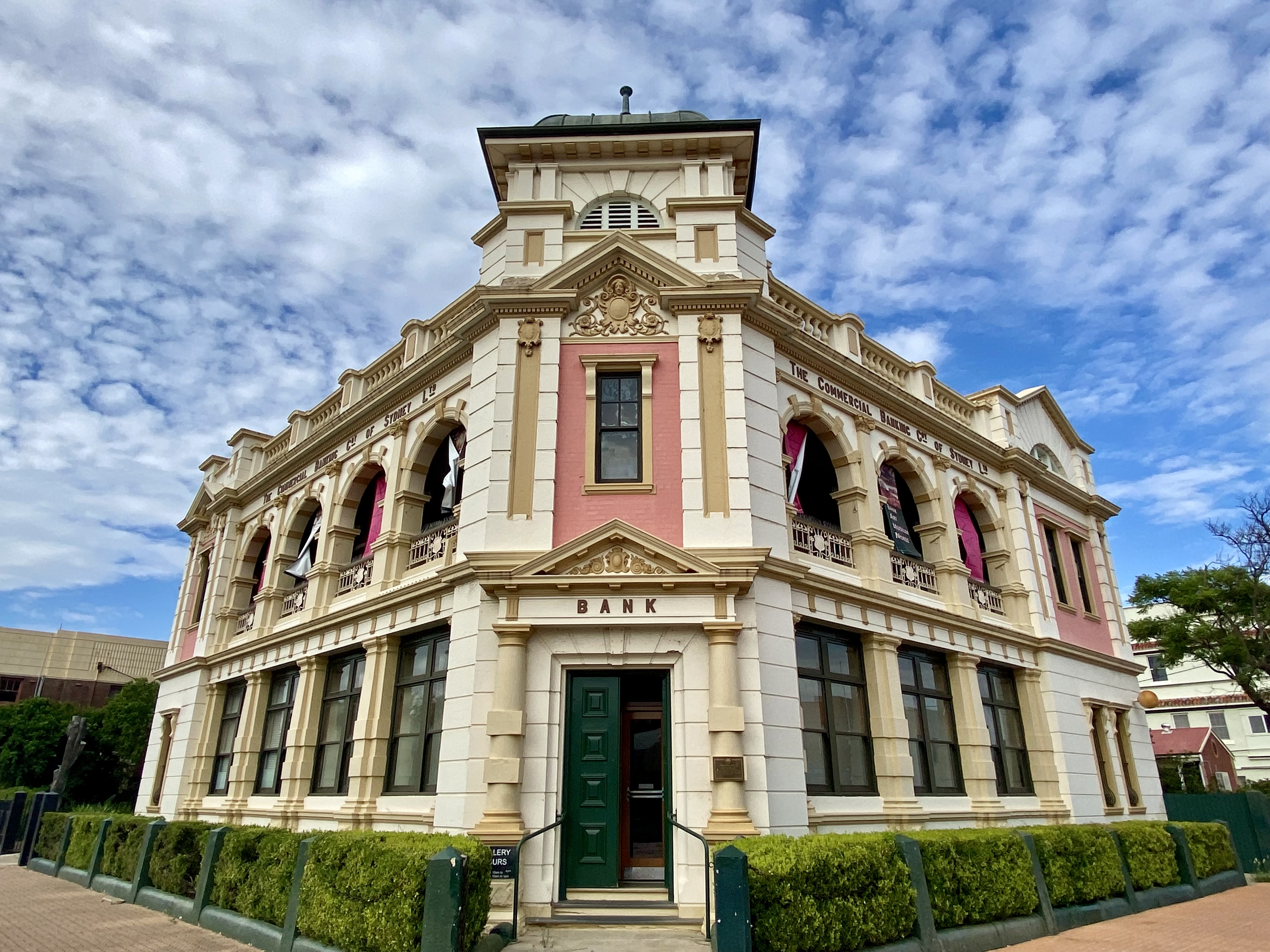
One of the pleasures of walking through Moree’s town centre is the variety of building styles, each reflecting a different period of prosperity. European knowledge of the area began when George Clarke, an escaped convict, entered the region. After his recapture, Clarke described the fertile land and its great river, prompting Surveyor General Thomas Mitchell to investigate. Squatters soon followed, and by 1852 a general store had been established.
Banking services arrived in Moree in 1876. The building pictured here is the former Commercial Banking Company of Sydney premises, built in 1910 after the original 1883 building was destroyed by fire in 1908. Several buildings in Moree share similar stories of loss and rebuilding.
Today, the building houses the Bank Art Museum Moree (BAMM). More information about the museum and its exhibitions can be found here. The grand style of the building highlights the confidence and importance of the town during this period.
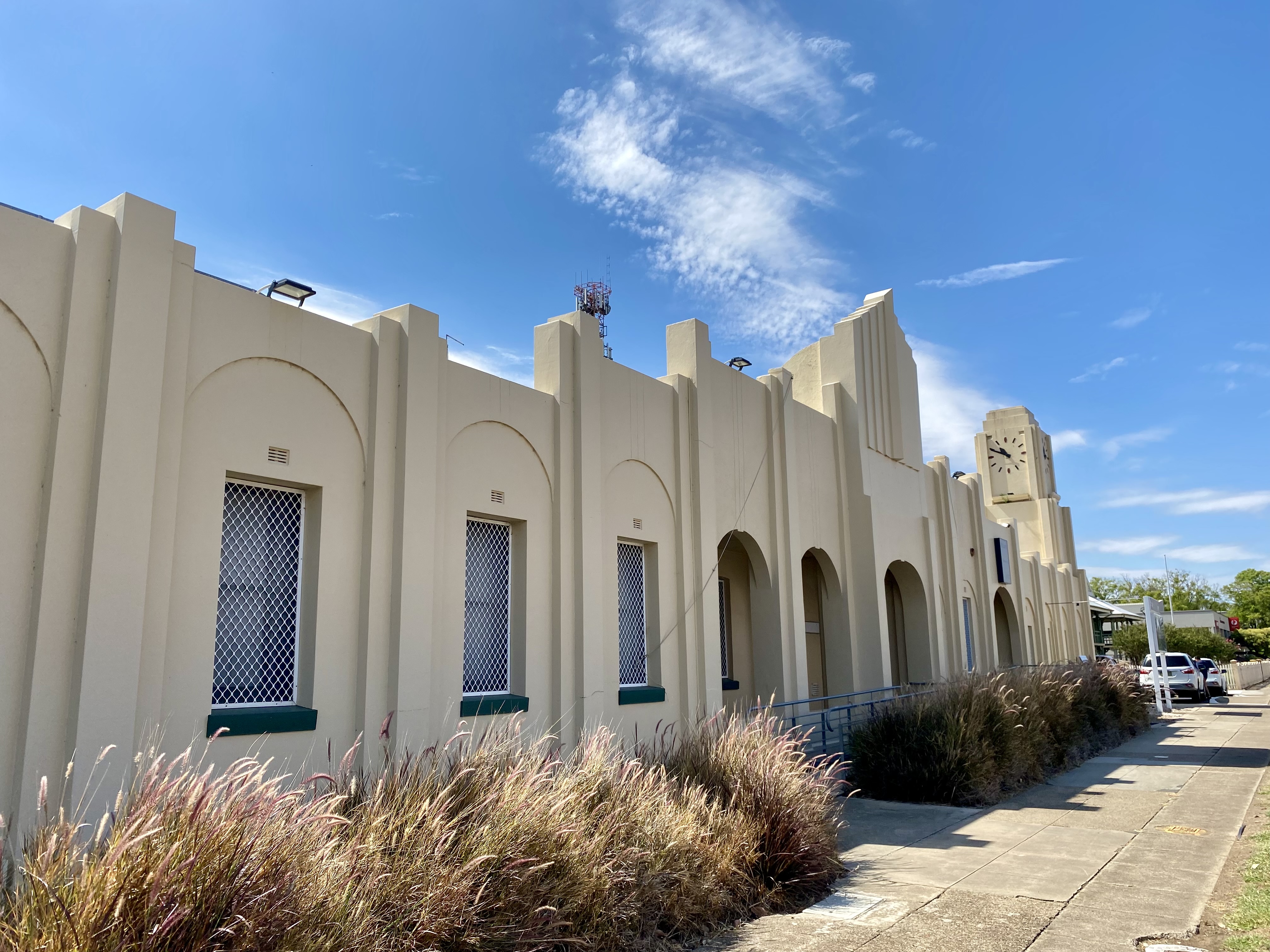
As Moree grew, many of its commercial and civic buildings were altered and repurposed. This building was originally constructed as the Moree Council Chambers in 1902. Little of the original structure remains, following significant alterations in the 1950s.
After the Second World War, the building became a services club before being sold to the Department of Education in 1969. Art Deco elements introduced during later modifications are evident, and the clock tower continues to dominate the Moree streetscape.
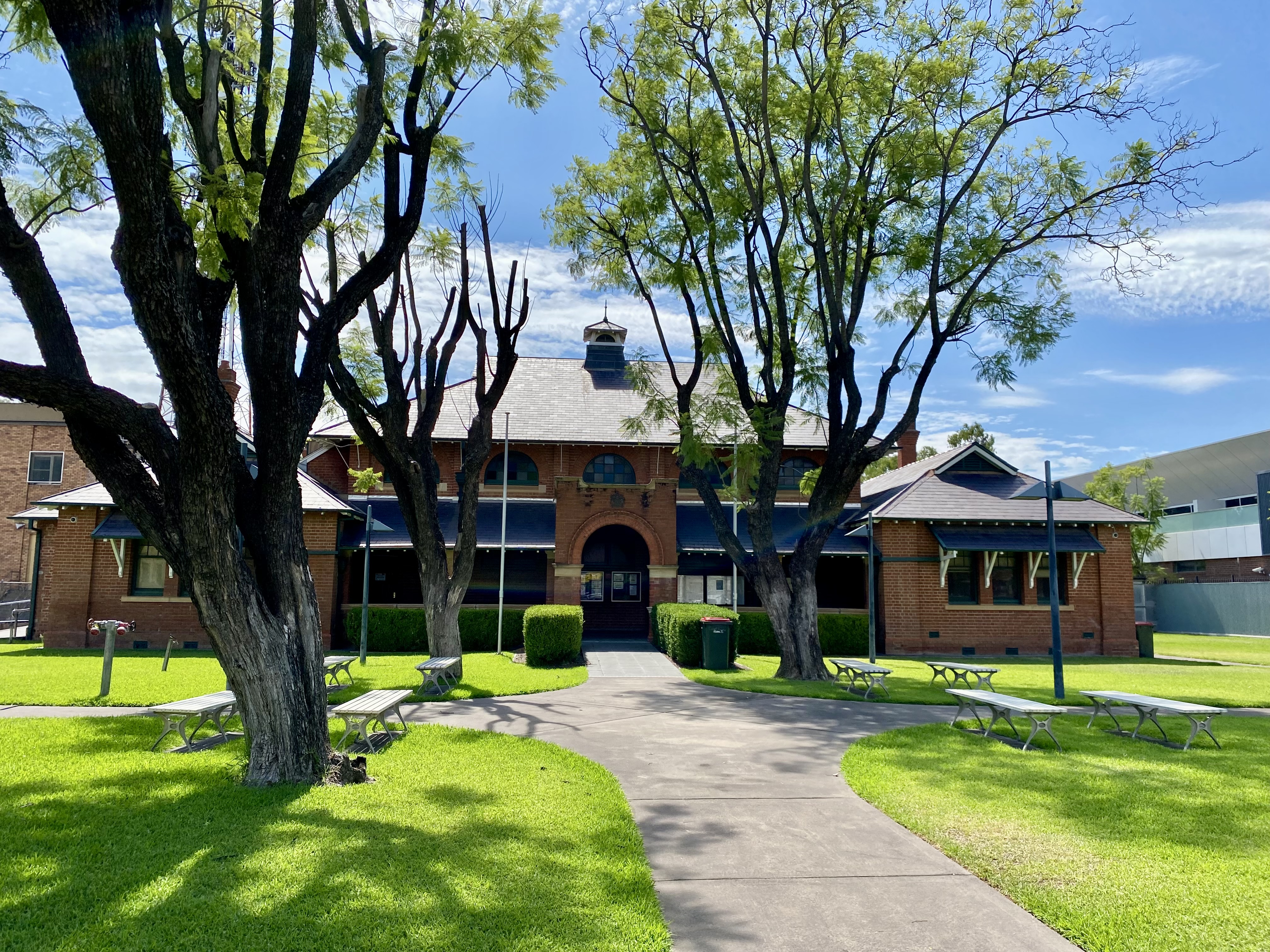
Courthouses are often among the most significant buildings in regional towns, and Moree is no exception. The Moree Courthouse was built in 1884 and designed by Colonial Architect James Barnet. Additions made between 1900 and 1903 were designed by Government Architect Walter Liberty Vernon.
A Court of Petty Sessions had operated in Moree from 1862. An earlier courthouse, built on the same site around 1875, proved inadequate, leading to the construction of the present building. The courthouse remains a tangible link to decades of law and order in the region.
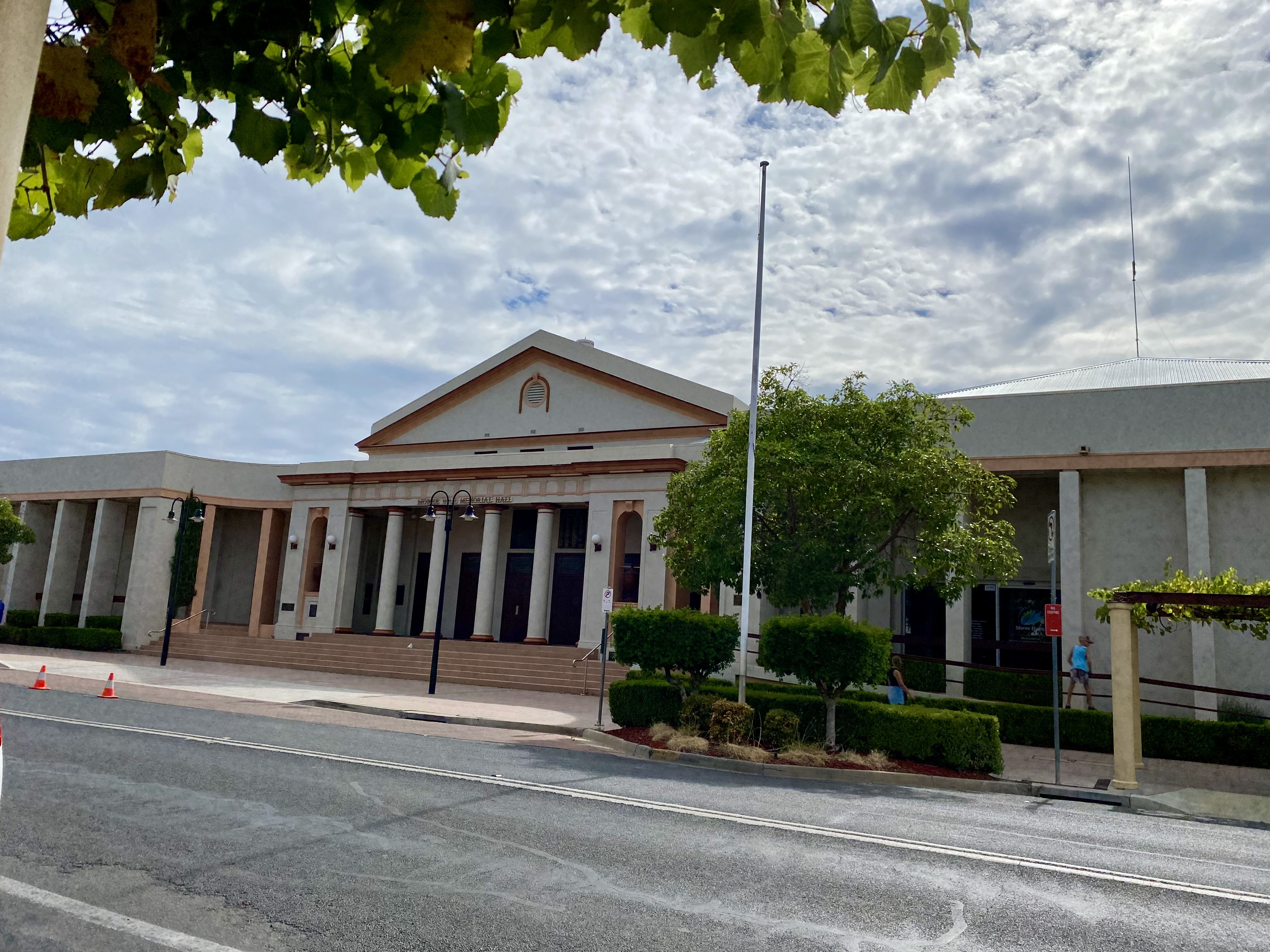
Commemorative architecture adds another layer to Moree’s built environment. The original Town Hall and School of Arts were destroyed by fire in 1917. In response, the foundation stone for the new War Memorial Hall was laid in 1921, with further additions completed in 1938–39.
More information on the history of the memorial can be found here. Across the road, a mural depicts a range of images on the theme of ANZACs. The Memorial Hall continues to play an important role in community life and remembrance.
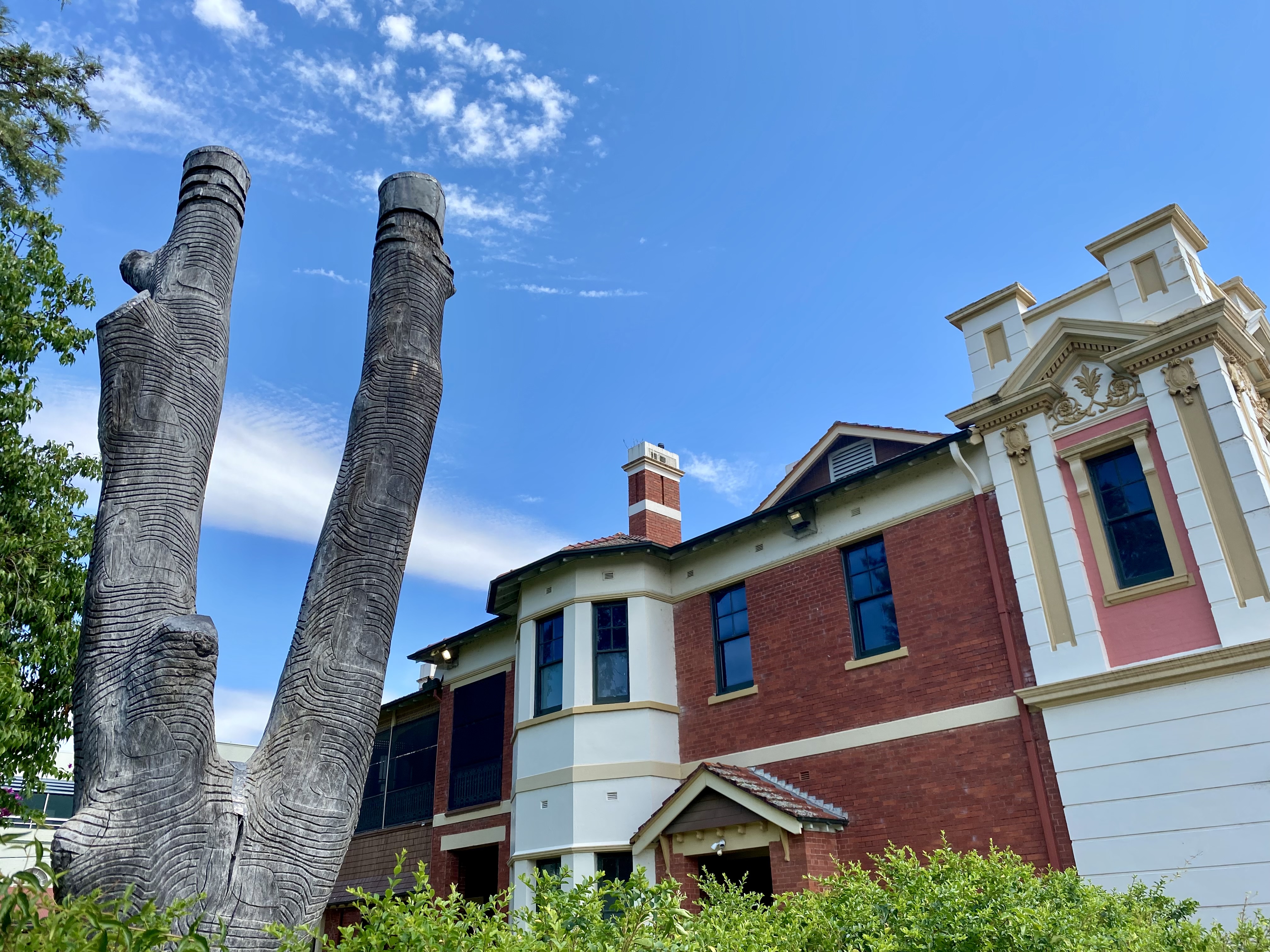
A walk around Moree offers insight into the town’s history and development. Early twentieth century prosperity is evident in the scale and style of its Art Deco buildings, while the grandeur of banks and civic structures underscores Moree’s importance as a regional farming centre.
In 1895, the Great Artesian Basin was tapped in the search for stock water, leading to the discovery of hot artesian springs. These springs remain a popular tourist attraction more than a century later.
Moree is a place with much to discover. Have you had a meander around Moree?
Photo: Detail on embroidered coat, Moree Tourist Information Centre

 jml297
Leave a comment