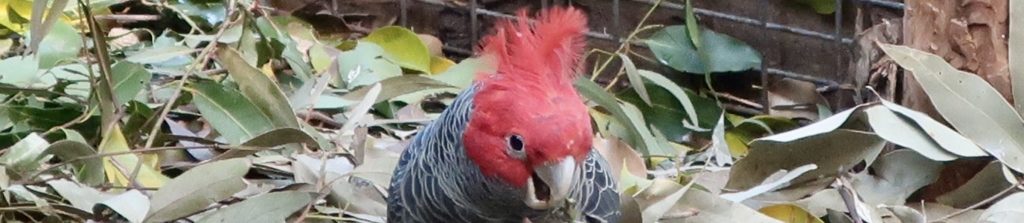
Callocephalon fimbriatum comes from Greek and Latin roots meaning “beautiful head” and “fringed”, a fitting name for a cockatoo with such a distinctive crest.
Gang-gang cockatoos are now listed as endangered in NSW, and their changing presence in the Blue Mountains is a reminder of how closely local wildlife is tied to fire, food sources and mature forest habitat. This post shares a few field notes about their appearance, behaviour and calls, alongside the pleasure of encountering them close to home.
Why I Love Seeing These Birds
These delightful birds are more often heard than seen, and during the years I’ve lived in the Blue Mountains, I’ve noticed fewer of them in the local area. After local hazard reduction burns and bushfires across part of the Greater Blue Mountains, their presence has seemed to diminish. They can still be heard, and occasionally seen, and I always pause when I hear their call.
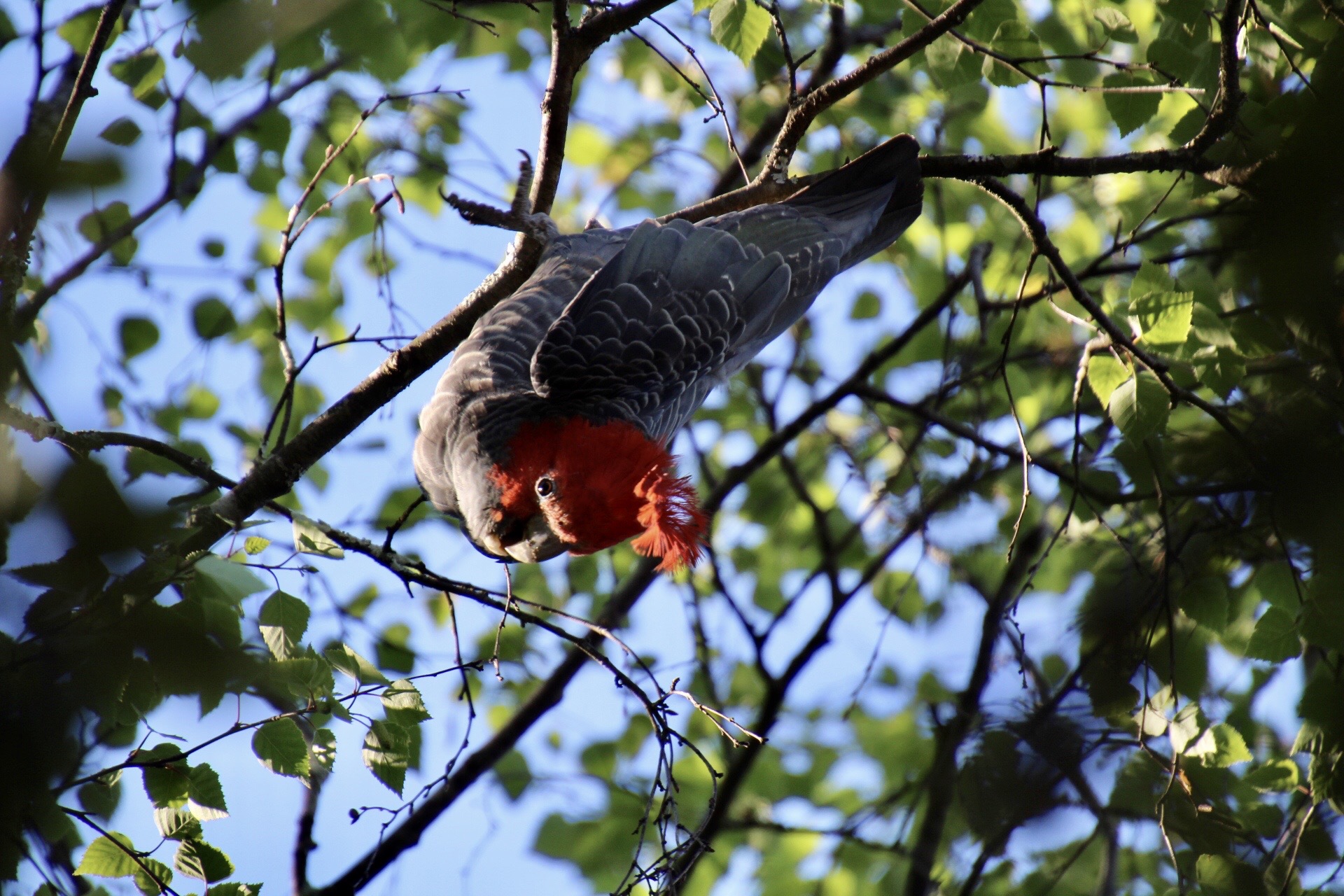
One of my favourite encounters was with a male and female pair in my garden one afternoon. They spent a lively spell in a fig tree, swinging on branches and looking wonderfully cheeky.
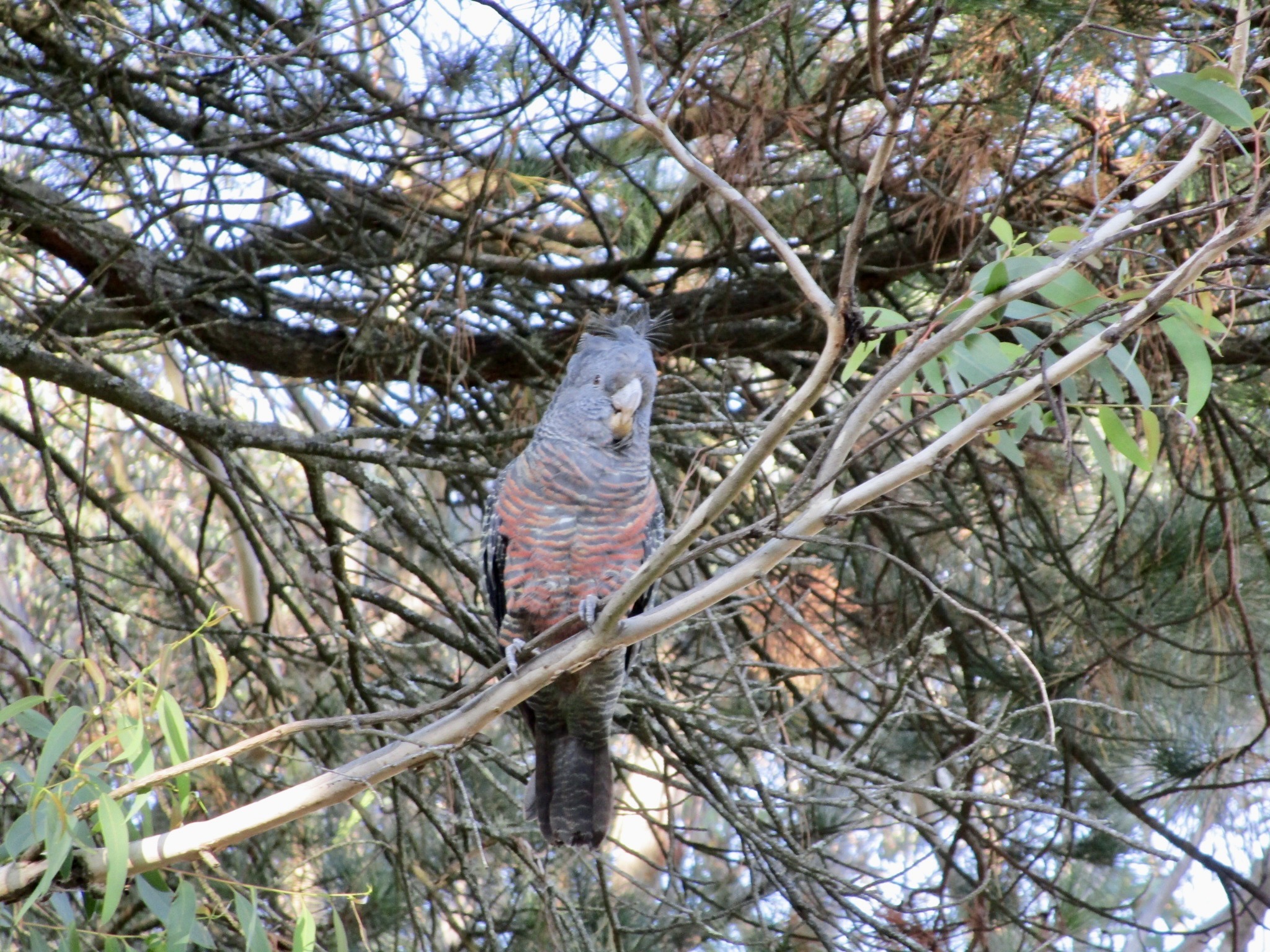
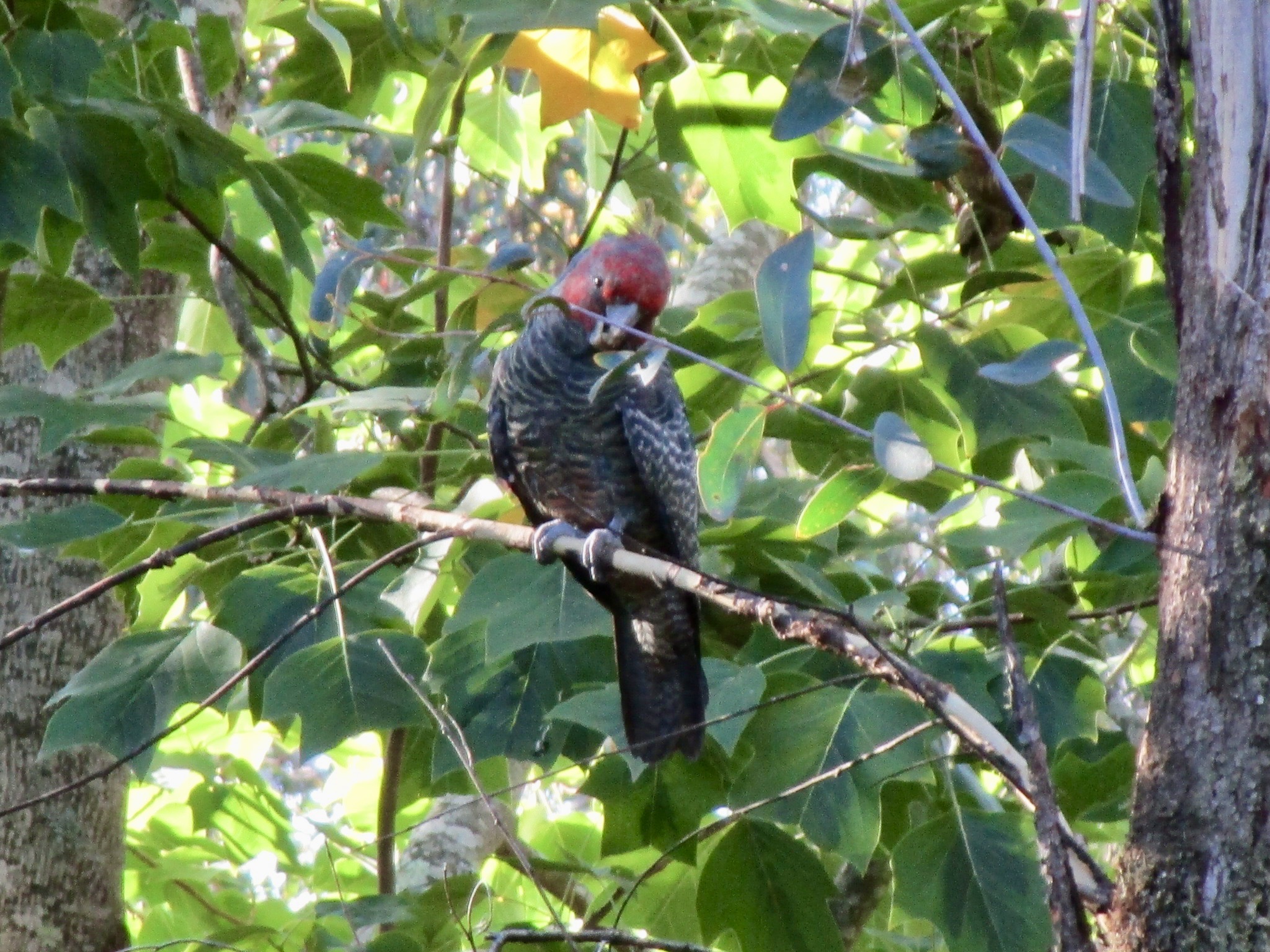
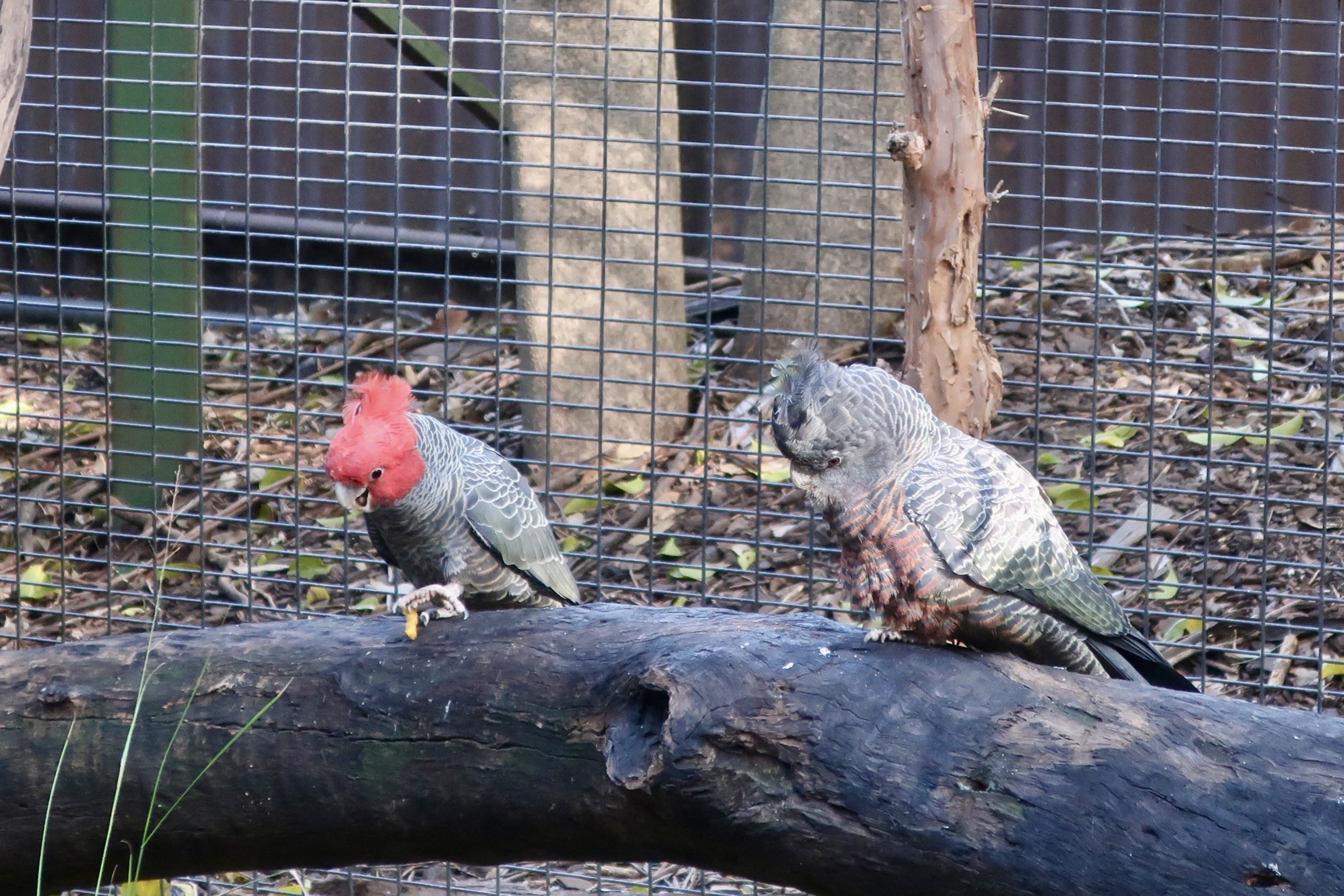
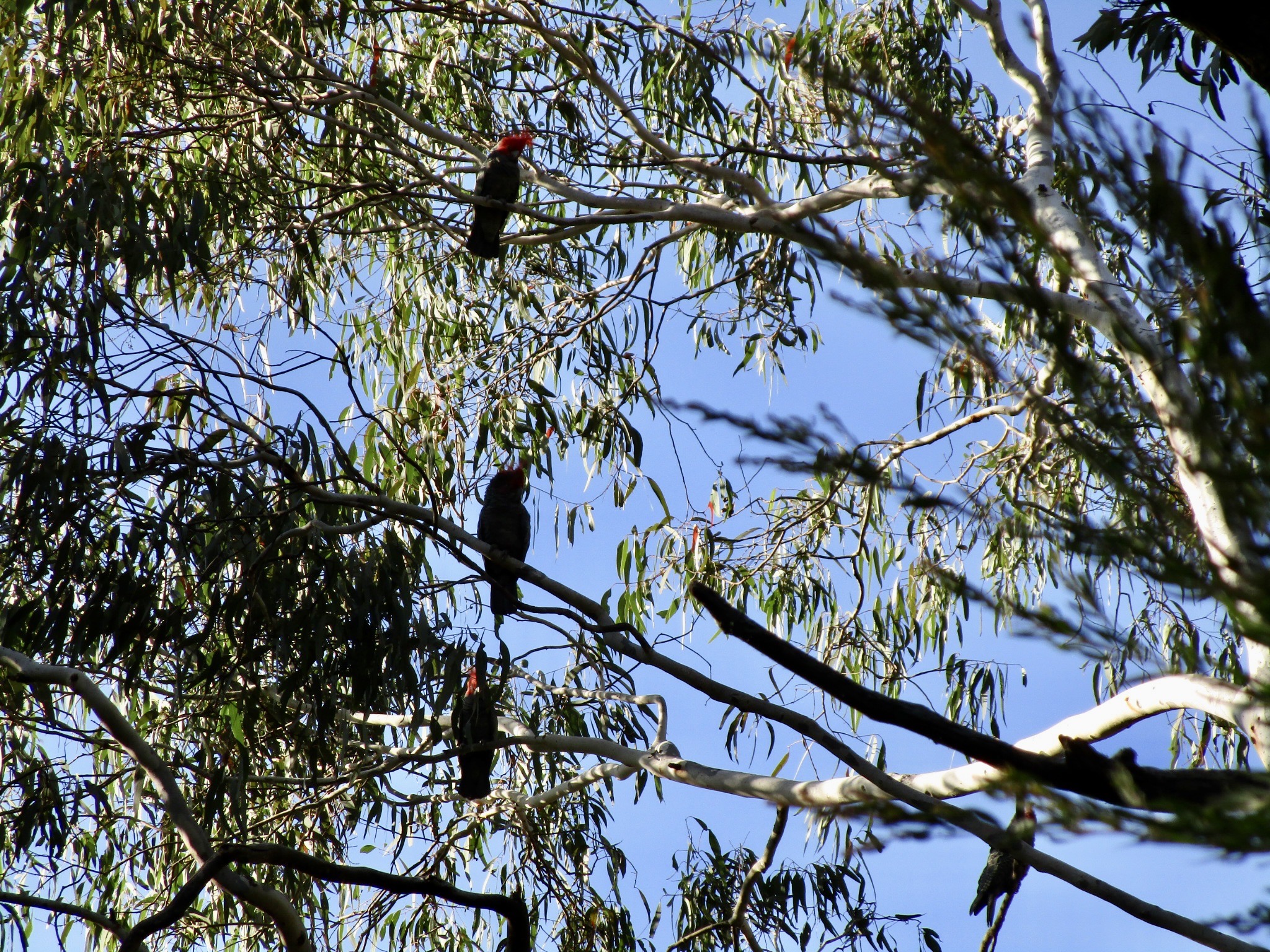
In the five photos, look for the details that make gang-gangs easier to recognise: the male’s red crest, the female’s softer grey head and barred body, their compact shape among eucalypt foliage, and the way pairs often feed close together.
What They Look Like and Where They Live
Gang-gangs are small, compact cockatoos, about 350 mm long. Their plumage is mostly ash-grey. Males have a wispy red crest, while females have a grey crest and an orange wash across the chest. Their eyes are dark brown, and their bills and legs are light grey. Immature birds resemble females, though young males may show faint red on the head and chest.
They can be found from the coast to the ranges of south-eastern Australia. In the Blue Mountains they are associated with eucalypt forests, and during autumn and winter they may also turn up in woodlands, parks and gardens as they follow available food.
What Makes Them So Memorable
The bright red, wispy crest, along with their distinctive calls, makes gang-gangs stand out. When moving from tree to tree, they often swoop low before rising steeply to land. They are often placid and tolerant of close approach. The gang-gang cockatoo is the only species in the genus Callocephalon, and it is the faunal emblem of the ACT.
Calls, Nests and Breeding
In addition to their distinctive flight call, gang-gangs can be identified by the soft, conversational murmur they make while feeding. Their grey plumage can make them difficult to spot among eucalypts, especially when the red or grey crest is hidden. They eat the seeds of native and introduced plants, including wattles, eucalypts, conesticks and hawthorn. They often hold seed pods with their left claw, noisily cracking them open with their powerful beaks.
Breeding takes place from October to January, often in a hole chewed to size in a decaying eucalypt. They form close, monogamous pairs, and both parents care for the young. Family groups are seen feeding together during the breeding season, and sometimes several pairs nest close together, with the young roosting in the same tree as parents forage.
If you hear gang-gangs in your neighbourhood, it is worth pausing to notice where they are feeding and which trees they return to. Small observations like these can deepen our sense of connection with local bushland and remind us how much these birds depend on mature, food-rich habitat.
Final Thoughts
The raucous call of the gang-gang is something I listen out for, my eyes scanning the nearby trees for the distinctive plunging flight of a grey cockatoo with a wispy crest. Small family groups can be encountered by chance on walks through treed areas, and their soft, growling chatter while feeding is often the first sign that they are nearby. They are endangered, but their charismatic presence still brings a sense of wonder and delight whenever I encounter them.
There is footage of a pair of gang-gangs here, including their distinctive calls and croaks. Have you come across these bright and beautiful birds in your backyard, or heard their creaky calls overhead on a bushwalk?
Photo: Male Gang-gang Cockatoo at Featherdale Sydney Wildlife Park




Leave a Reply