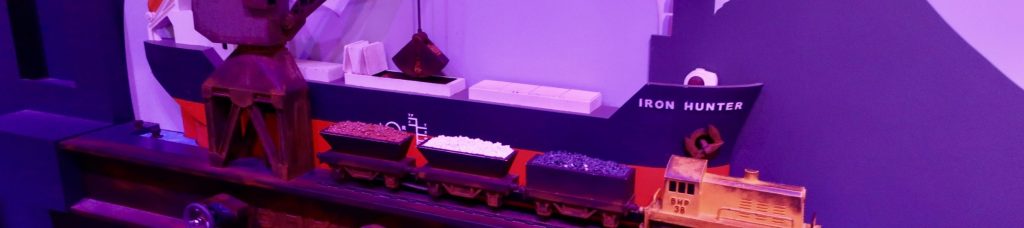
The Company of Trees by Ro Murray and Mandy Burgess spotted at the Blue Mountains Cultural Centre, Katoomba

On Writing Courses

Written by:

With so many writing courses on offer—free, paid, online, and in person—it can be difficult to know whether enrolling in one will genuinely improve your writing, or simply add another commitment to an already busy life. Much like books on the craft of writing, the type of course that will be a good fit varies from writer to writer, depending on experience, goals, and interests.

Learning Styles

Different learning styles should be factored into course selection. Do you prefer in-person sessions, or online learning? Many courses are offered on demand, allowing writers to fit the workload around existing commitments and work more flexibly with completion timeframes.

Understanding whether you are a self-starter or are more motivated by regular sessions and the shared accountability that comes with a group can help you make an informed decision about the most suitable course format.

Course Content and Content Creation

There is a considerable range of writing courses available, from beginner to advanced, and from general introductions to highly targeted skill development. Most of my experience with writing courses relates to short stories and novel writing, but there are also excellent courses focused on specific skills and genres.

Undertaking any course is a commitment of time, energy, and money. Most courses include exercises or assignments, which often leads to the creation of new work. Courses can provide a safe space in which to experiment with different forms and genres, and to test ideas without pressure.

Peer Support and Feedback

Some courses offer valuable opportunities to give and receive feedback. In my experience, this can be both challenging and one of the most effective ways to grow as a writer. Thoughtful feedback not only highlights areas for improvement but can also reinforce confidence by clarifying what is already working.

Being able to provide effective feedback to another writer is an important skill and one that can, in turn, improve your writing. Feedback goes beyond simply complimenting style or character development; it can include identifying elements that may need further refinement. The requirement to provide feedback also exposes writers to forms and genres they may be unfamiliar with, which can be a valuable part of ongoing creative education.

My Experience

Over the years, I’ve attended several one-day workshops at different writing centres, along with short courses that ran over several weeks. Learning and writing alongside others are aspects I genuinely enjoy, and receiving both immediate and considered feedback helps reinforce the strengths of my work while identifying areas for improvement.

More recently, I completed a five-week online course that included a mix of webinars and feedback opportunities, as well as a short on-demand course combining instructional content with practical activities that I could apply directly to my current project.

What I appreciate most is the flexible range of options available. The on-demand course allowed me to work through the modules at my pace, with ongoing access to the content. The short-term course was also valuable: it included substantial content and handouts, meaningful interaction with other writers, and 12 months’ access to the training material online.

There are times when I can continue writing independently, referring to notes and handouts to refresh my understanding of aspects of craft. At other times, I find myself struggling with a particular element of writing or needing an extra push to move forward. Knowing that there is a wide range of courses available to support skill development is a great comfort.

Some tips and suggestions:

  • Reflect on where you are in your writing life and where you would like to be. Once you identify the skills you want to develop, look for courses that match those goals. This can help narrow the field, as there are hundreds of options available.
  • Take the time to find a course that is the right fit for your needs, ensuring the format and delivery suit your available time and budget. Many providers offer discounted rates or sample content to help you decide.
  • Check the expected time commitment per week and make sure it is realistic for you. This will help you get the most out of the experience.
  • Refer to your course notes and exercises. They are useful reminders of key elements of writing craft and can continue to inspire your work.
  • Stay connected with course providers and writing peers where possible to extend your writing network. Many providers share information about new courses and writing competitions, which can be valuable opportunities to build your portfolio.
  • Courses can help develop skills, networks, and confidence—but what really matters is the writing. Embed the techniques and keep getting the words on the page.

Have you completed any writing courses? What worked for you—and what didn’t—in your development as a writer?

Writing resources:

  1. Savannah Gilbo offers a comprehensive article Are Writing Courses Really Worth It for Beginners? which explores skill development, reader engagement, and the importance of building networks with other writers and mentors. Her emphasis on learning one skill at a time and practising it before moving on resonates strongly; without this reinforcement, course material can feel like a data dump rather than a meaningful addition to a writer’s toolkit.
  2. While focused on online offerings, 4 Reasons Online Courses are Totally Worth the Money includes useful considerations that can be applied to writing courses in any format.
  3. Bre King outlines the value of skill development, collaboration and learning from others in Benefits of Taking a Writing Class.

7 responses to “On Writing Courses”

  1. Lisa Hill Avatar
    Lisa Hill

    I did a Professional Writing and Editing course some years ago and enjoyed most of it. But I think a lot depends on ‘the company you keep’ in f2f courses. I did a unit of work on writing short stories at the same time as the government had brought in new rules pitched at the young jobless: work, study or do voluntary work or they didn’t get any welfare benefits. So there were young people at TAFE (technical and further education) courses who didn’t really want to be there and some of those were doing Short Story when I was. I don’t remember anything worthwhile from that course, except that I enjoyed reading The Brick that had interesting variations on the short story to read, and writing my own which was fun.

    But the format of the class was that participants read their own stories aloud and other participants offered feedback. Perhaps they didn’t have dull lives but their stories were unimaginative and dull, and their feedback was inane. Writing History was sometimes tedious too: most of the participants interpreted ‘writing history’ as writing their family histories and maybe their families weren’t dull but listening to their writing certainly was. (LOL Teaching them interview techniques was lost on them because everyone they were writing about was dead!)

    OTOH I went to a seminar about travel writing (just for fun, I’m not interested in being a travel writer) and everyone there was well-travelled and they all had great tales to tell. More importantly, they were really interested in the craft of travel writing, and keen to try out the tips we were given about having a hook at the beginning and so on.

    From my experience, building networks is harder than it looks.

    Liked by 1 person

    1. jml297 Avatar
      jml297

      Thanks, Lisa, for sharing your history with writing courses. And what a range of engagement across the f2f courses! I can only imagine how much more challenging it would have been for both the students and teacher/s if there were people attending who didn’t want to be there.

      Being able to provide constructive feedback is a skill that takes time to develop, and dull stories and inane feedback sounds like quite the challenge. Family histories are rarely that interesting to people who aren’t related, and even that captive audience may not enjoy them!

      The travel course sounds great, and what a difference it would have been to have such an enthusiastic group.

      I agree too regarding networks, though sometimes that chance encounter with someone on your wavelength, or writing in a similar field who wants to maintain contact after the course, can be sparked through a course or writing group.

      Thanks as always for your insights, and for sharing where your curiosity with writing courses has taken you.

      Like

      1. Lisa Hill Avatar
        Lisa Hill

        I guess the thing to do is to try out different groups. We so often see in author acknowledgements that they’ve had a supportive network offering constructive feedback, and that’s proof of how good it can be.

        Near me, a century-old public (i.e. subscription) library which has finally faced up to the fact that its role has been supplanted by municipal libraries, is just in the process of morphing into a writers’ centre, and it’s going to be interesting to see what the offerings are. They’ve had a few author talks so far which are interesting to me if the author writes the kind of book I like to read, and I’m hoping they’ll have craft-based workshops that are useful to go to (like the travel-writing one) because they develop my skill as a book reviewer when I know what to look for, especially if I’m venturing into a genre that I rarely read. Ages ago I went to one pitched at wannabe crime writers and it was all about the pacing (i.e. drip-feeding) of plots, which I found really fascinating because it showed that although I dislike the predictability of that type of writing, that is exactly what readers actually want.

        But the other thing that might be fun is just to meet other writers in my local area. We shall see!

        Liked by 1 person

      2. jml297 Avatar
        jml297

        That sounds great, Lisa. May there be more moments of inspiration, through writer talks and craft workshops, in your local area.

        I really admire your curiosity, especially in relation to picking up techniques from genres or fields outside your writing preferences – this is a great reminder that some of these can be transferred into our own areas of interest, and that they can have scope beyond a target audience. May we never stop learning 😊

        Like

      3. Lisa Hill Avatar
        Lisa Hill

        There’s a particular book which has informed my practice. It’s called Creme de la Phlegm Unforgettable Australian Reviews by Angela Bennie. (I reviewed it on my blog if you are interested.)

        One of the points she makes is that one ought to have expertise in the type of book you review. She was writing about professional critics who have gone down in history for criticising modernist and post modernist texts by brilliant authors like Patrick White when they hadn’t kept up with what these literary movements are. But I think it also applies to critics like me who read outside our comfort zone sometimes, and ought to be careful not to criticise a book for not doing something the author wasn’t trying to do.

        I don’t entirely agree with her about expertise. In The Australian, they get experts in art, science, whatever, to review NF books because they have expertise in the subject matter. But I read those books as a non-expert, and I review them for other people like me who are also not experts to see how they work for us. If there’s too much jargon or the author makes assumptions about what we already know, it’s not a book for the interested amateur. (This can be true of cookbooks too!)

        I think it’s unfortunate that the professional review is in decline because there’s less space for in in newspapers and it’s no longer a viable career path for people to follow. It can be really hard for people to get their work reviewed at all. What’s happened is that the literary community is relying more and more on people like me who started writing about the books we read and never intended to be a substitute for professional reviews.

        Liked by 1 person

      4. jml297 Avatar
        jml297

        Thanks, Lisa, and I’ll check out the book review – what a great title!

        It is a challenging situation when there are less book reviews in the traditional formats, but thankfully there are well-read, articulate and thoughtful reviewers such as yourself out there. This helps to bring new – and old – works to interested readers.

        Reviewing books where you may not be a subject-matter expert is important too. Your insights on the readability and accessibility of the content has swayed me more than once to read a book I might have otherwise put aside.

        Like

      5. Lisa Hill Avatar
        Lisa Hill

        Thanks, that’s nice of you to say so, but I do worry about the situation. We need competent reviewers more than ever now that AI is in the mix, and while I think I can identify it, the better it gets, the harder it’s going to be.

        Liked by 1 person

Leave a comment