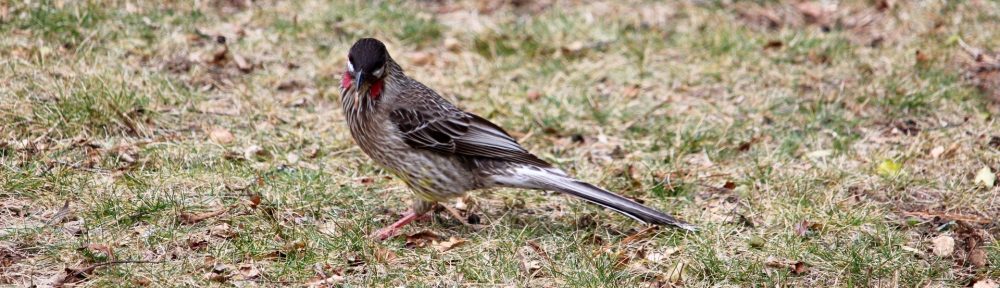
Anthochaera carunculata (“flower-enjoyer”; carunculata = “with caruncles”, referring to the fleshy wattles)
It is rare not to see or hear a Red Wattlebird in the garden or on a walk around the neighbourhood. These birds can usually be spotted in the upper branches, looking out for feeding opportunities or chasing away other birds. Their call sounds like a throaty cough, and they show classic honeyeater territorial behaviour.
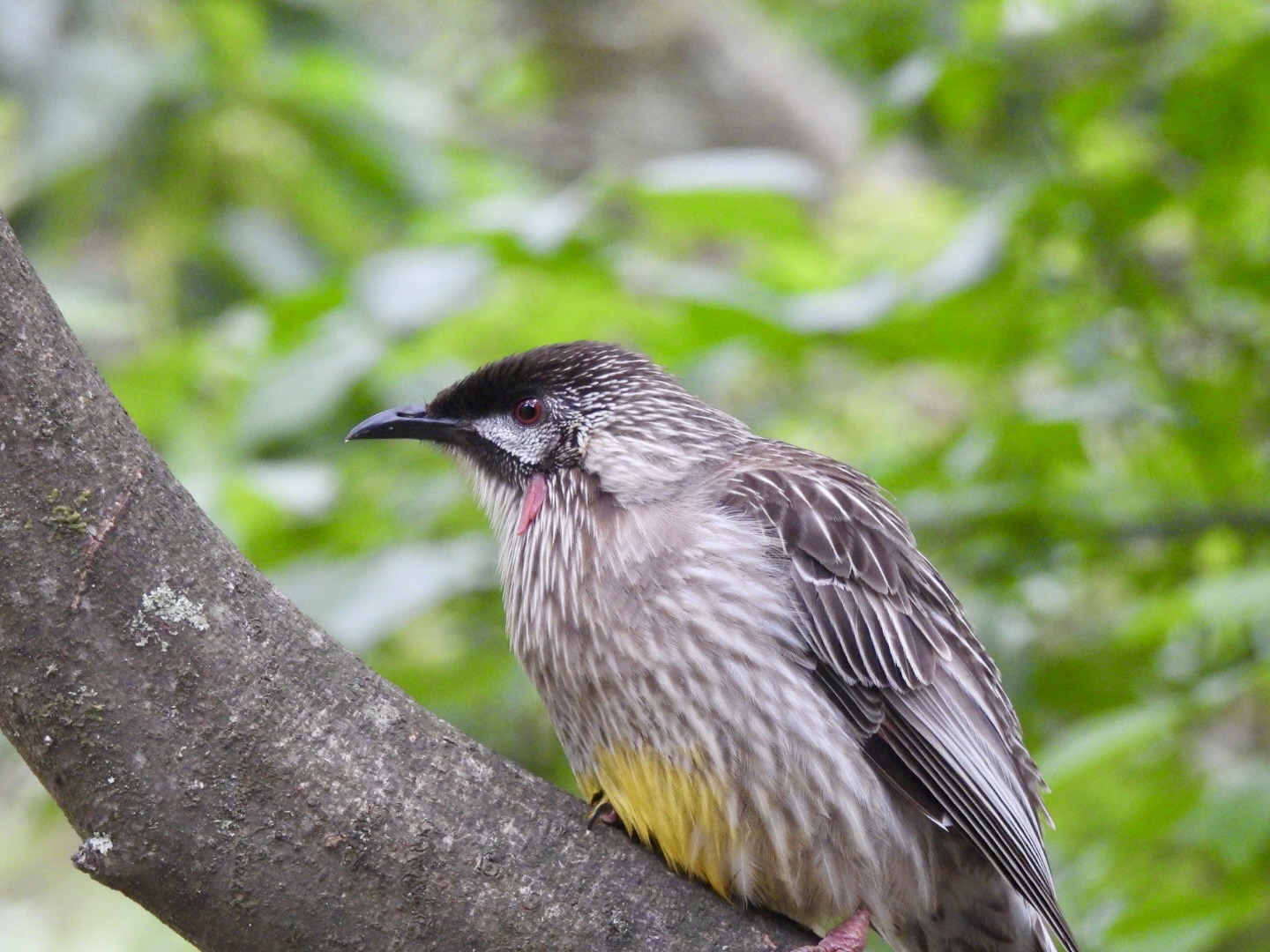
There are five kinds of wattlebirds in Australia. Despite the name, only two of them have wattles. Wattles are pinkish-red pendants of skin on the side of the neck, found on Red and Yellow Wattlebirds.
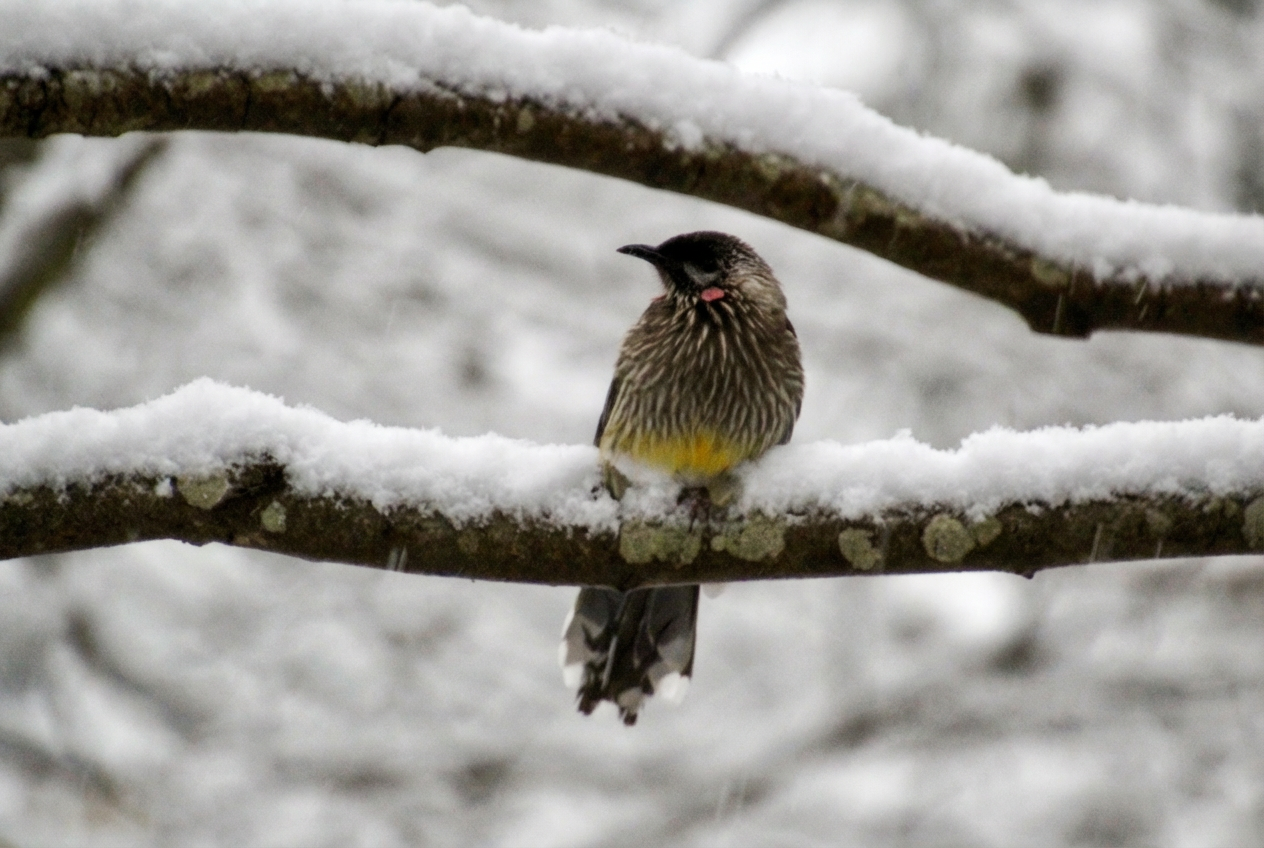
Red Wattlebirds are large and slender with buff-grey streaked feathers and a patch of yellow on the belly. Mature birds have a red-brown iris and a silvery-white triangular patch on their face. Their bill is thin and curved, adapted for feeding on nectar. They are 32–36 cm in length, and males and females are similar in appearance. Juvenile birds are duller, with less yellow on the belly and a brown iris. Red Wattlebirds range from south-east Queensland to southern Western Australia, with three subspecies across this area. They can be found in forests and woodlands, and they are common breeding residents of the Blue Mountains, where they follow the nectar flow.
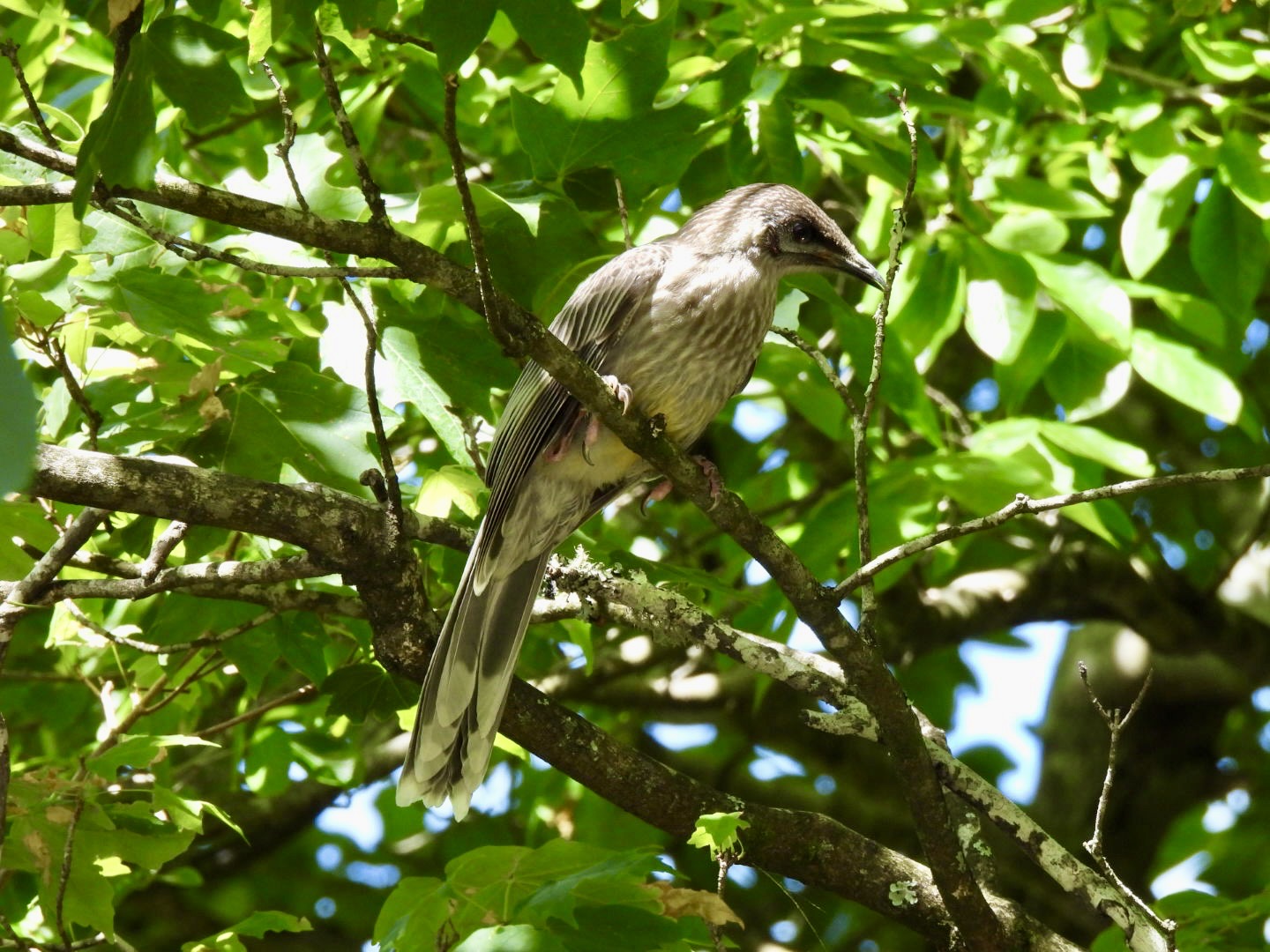
Red Wattlebirds eat nectar from a range of native and exotic species. They also eat spiders, insects and soft fruit. They can be spotted hopping after insects on the ground or performing aerial acrobatics as they chase them in flight. As with other honeyeaters and parrots, Red Wattlebirds have bristles on their tongue to help gather nectar. Along with lorikeets and flying foxes, they spread pollen widely.
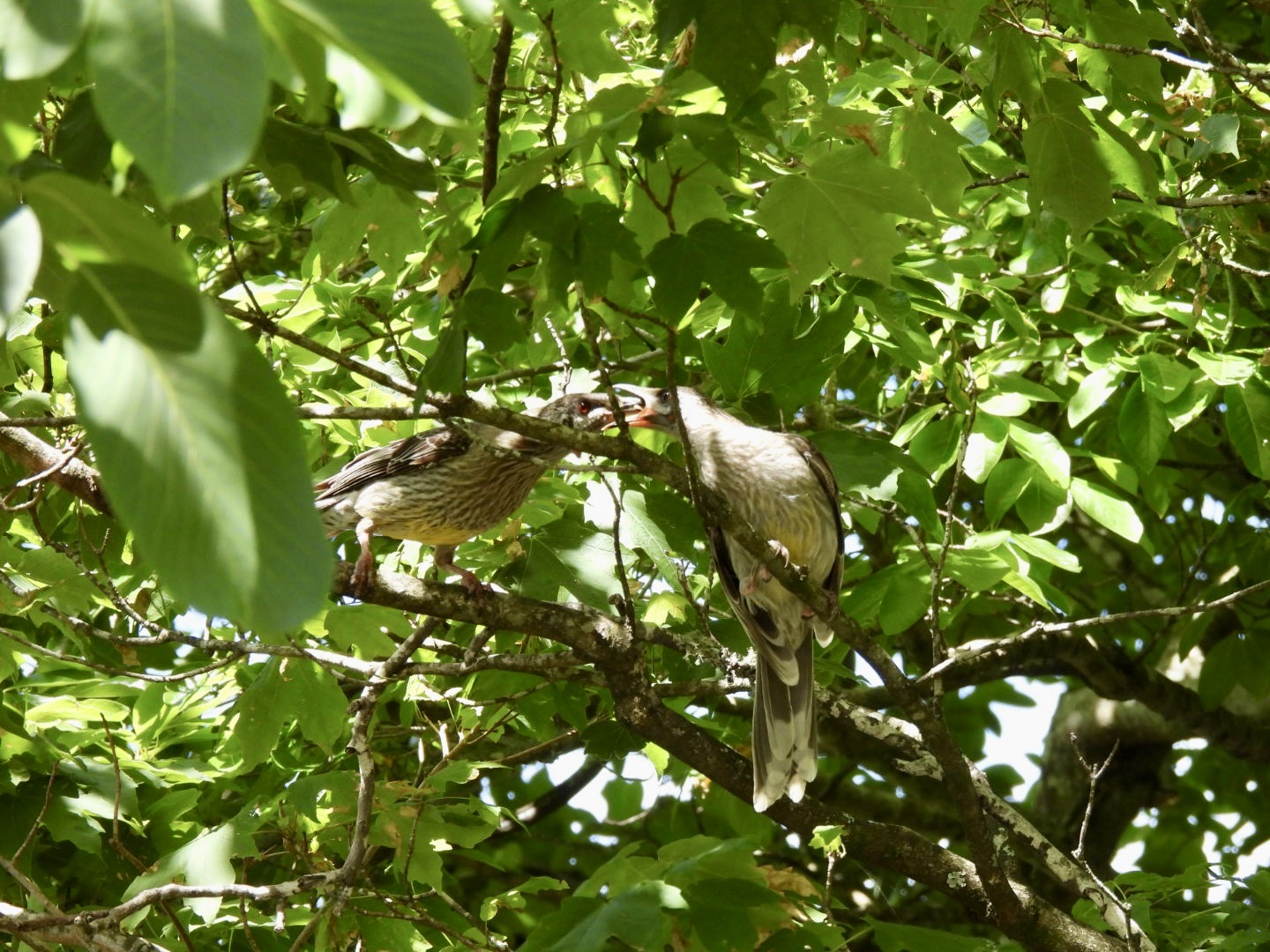
Apart from the red wattles and yellow belly, another key identifier of these birds is their harsh call. This loud, guttural call marks their territory, and they swoop and bill-clap when warning off other birds from potential food sources. Their call is a regular, loud kwock and yack-a-yack. A recording of their call-and-response can be seen and heard here. Female birds have a slightly softer call. They breed from July to December, with a saucer-shaped nest high off the ground.
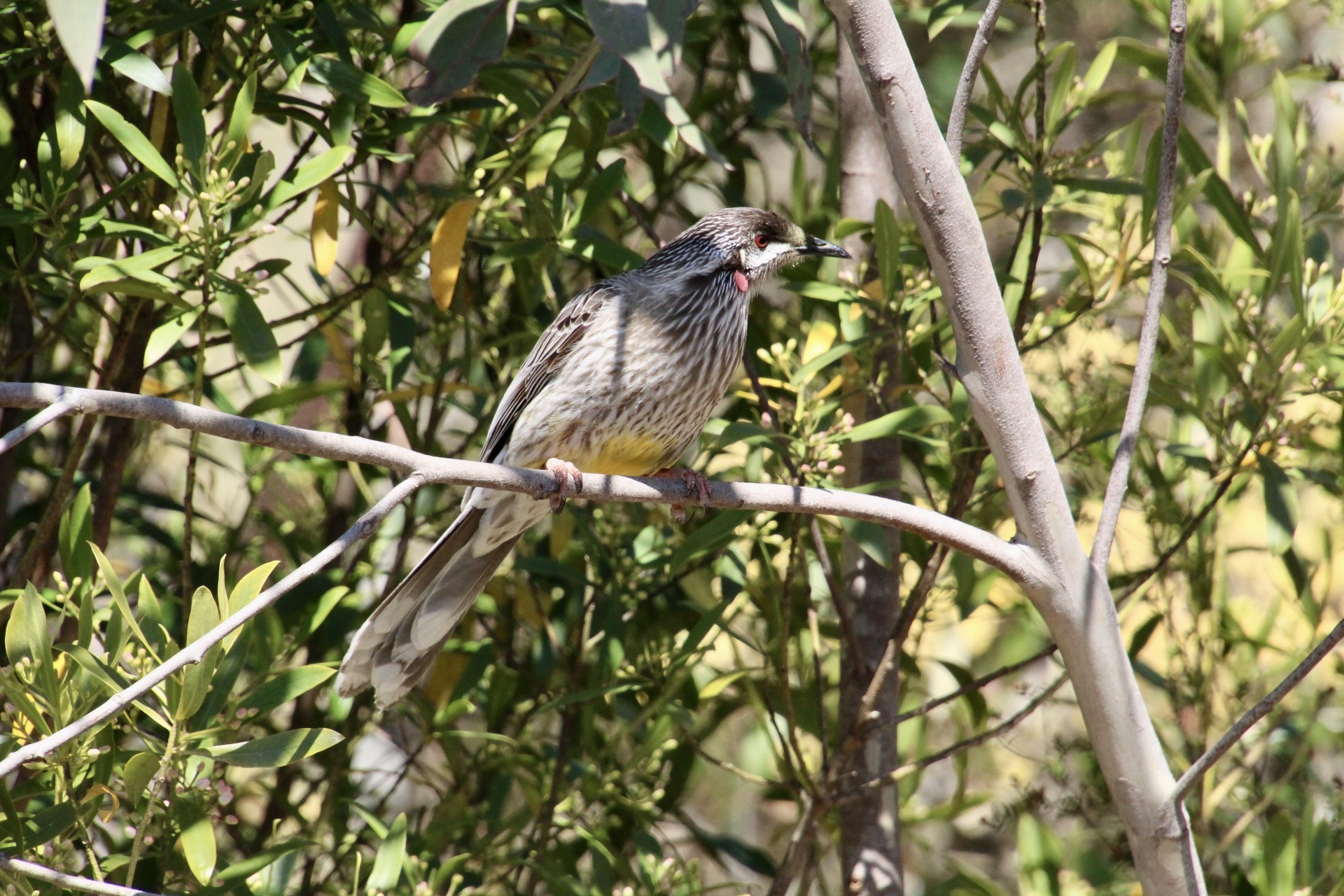
Red Wattlebirds are hard to miss, known for their loud call and territorial skirmishes. In the garden, their antics are both easy to spot and entertaining to watch.
Have you encountered a wattlebird?
Photo: Red Wattlebird



Leave a Reply