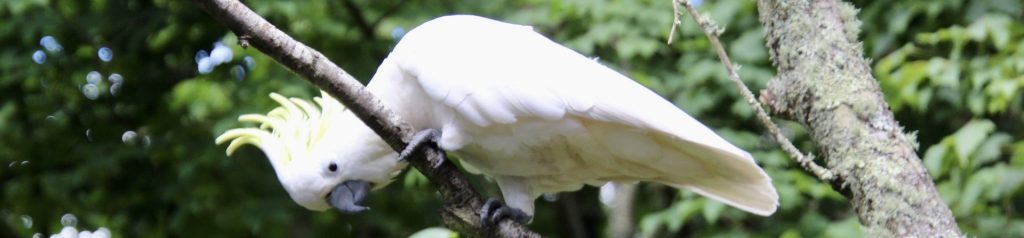
Cacatua galerita (from kakatua, “cockatoo”, and galeritus, “wearing a hood” or “a pointed cap like a helmet”)
Why I Love Seeing These Birds
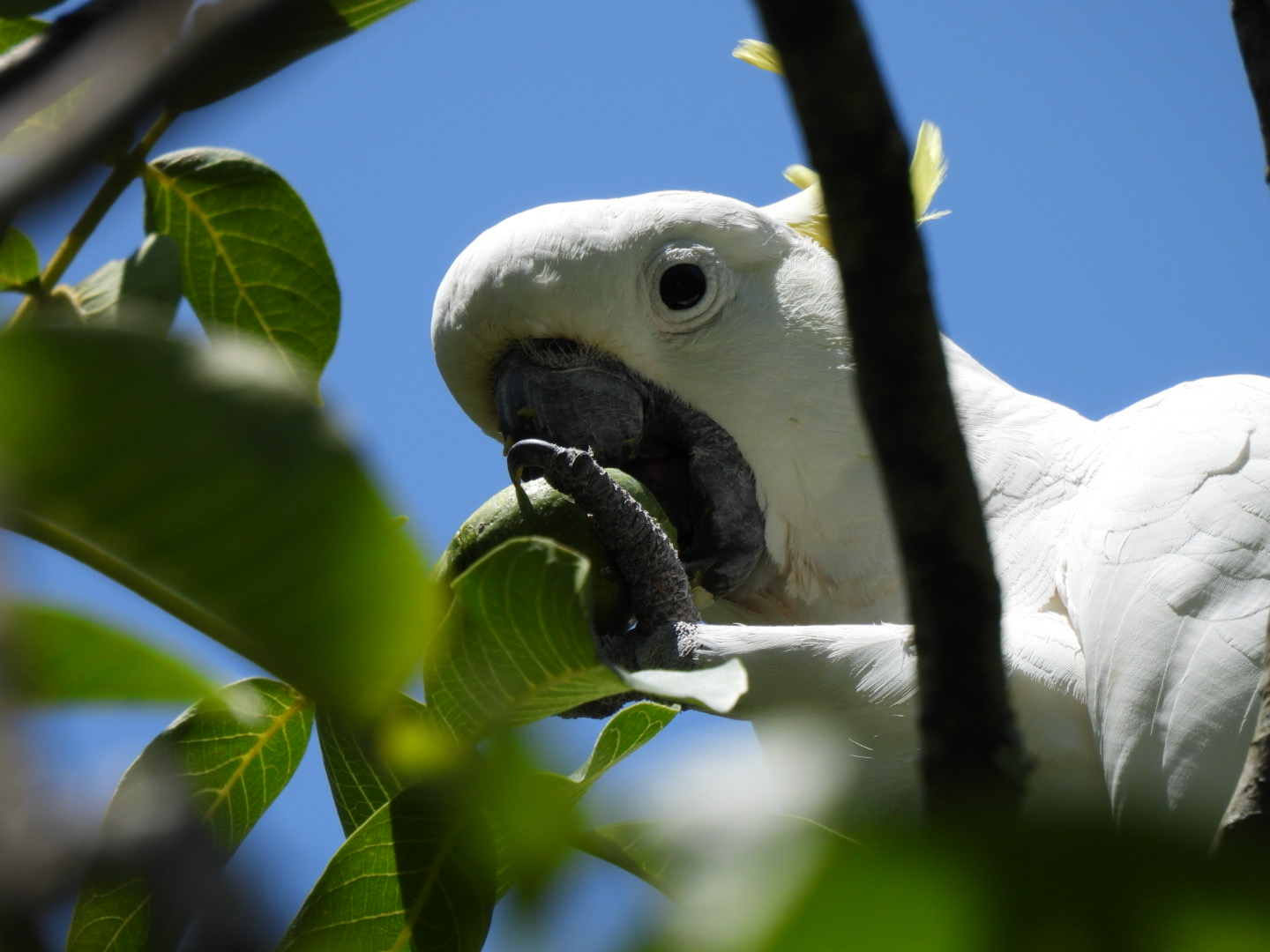
Sulphur-crested cockatoos are one of the most recognisable birds in Australia. I’ve seen them in both city and country settings, and they are always a sight to behold. These lively birds are noisy, boisterous, and impossible to ignore. They often turn up in my local area, munching on flowers, bark, and fruit when it’s in season. Far from shy, they’ll even make eye contact as they rip fruit from trees.
Feeding them isn’t recommended, though. When bored, they’ve been known to turn their sharp beaks on just about anything wooden, including outdoor furniture. In Katoomba, you’ll often spot them outside bakeries and cafés, searching for something tasty — and a bit of attention.
What They Look Like and Where They Live
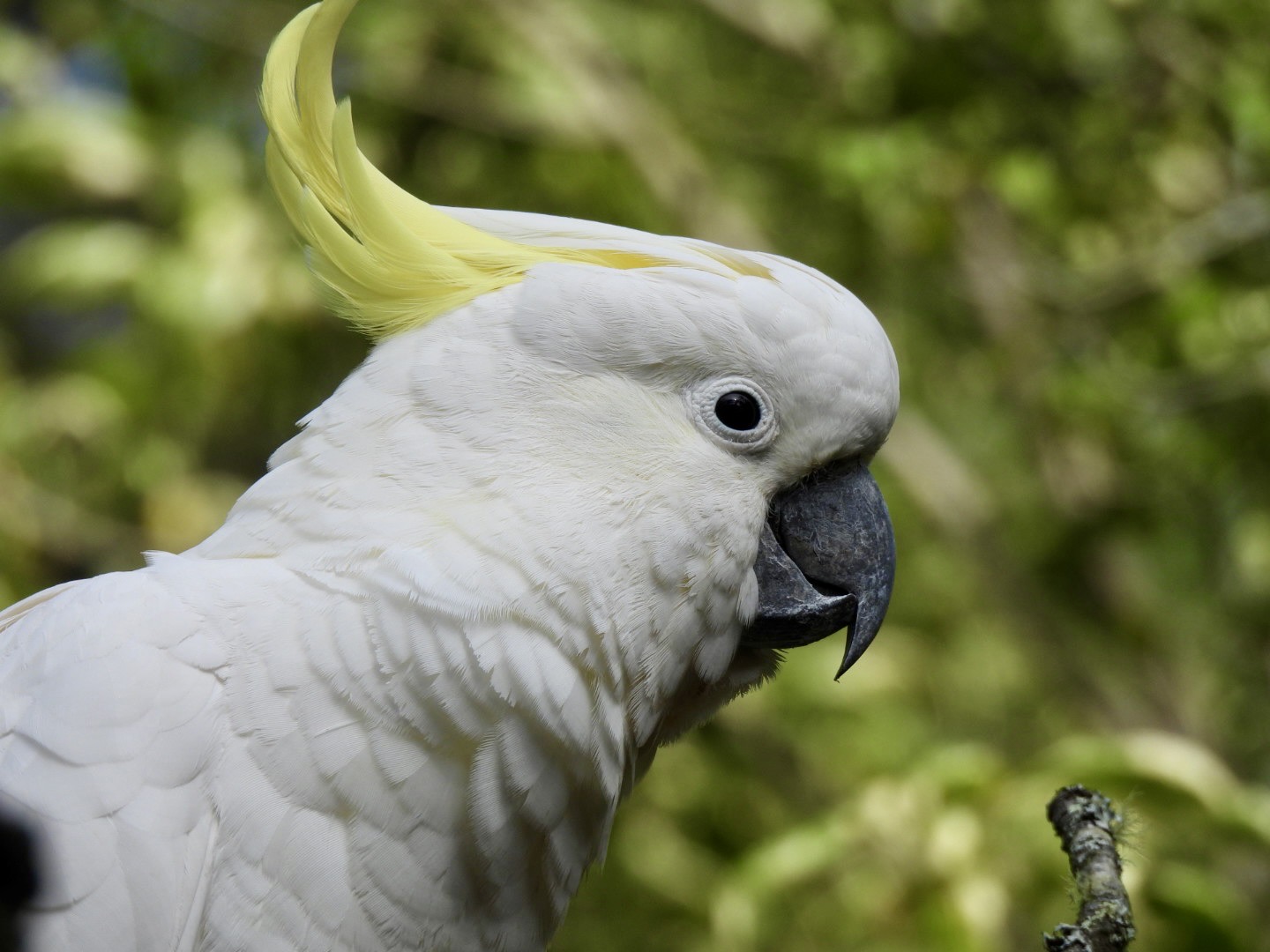
Sulphur-crested cockatoos are large birds, measuring 45–50 cm in length and weighing between 600 grams and 1 kilogram. Their plumage is mostly white, with a yellow wash under the wings and tail. Their dark brown eyes are surrounded by a fleshy white eye-ring, while females have red-brown eyes that darken with age. A bright yellow crest lies almost flat in flight, and their powerful black beak is strong enough to chew branches and other tough material. Juveniles have a paler crest, and some feathers may be edged in grey.
These birds are widely distributed across northern, eastern, and south-eastern mainland Australia, as well as Tasmania. They live in a range of habitats, including timbered country, cultivated land, gardens, and parks. In the Blue Mountains, they often feed in towns and farmland, then roost and nest in wet sclerophyll forest, sometimes quite a distance away. They remain in the same area year-round.
What Makes Them So Memorable
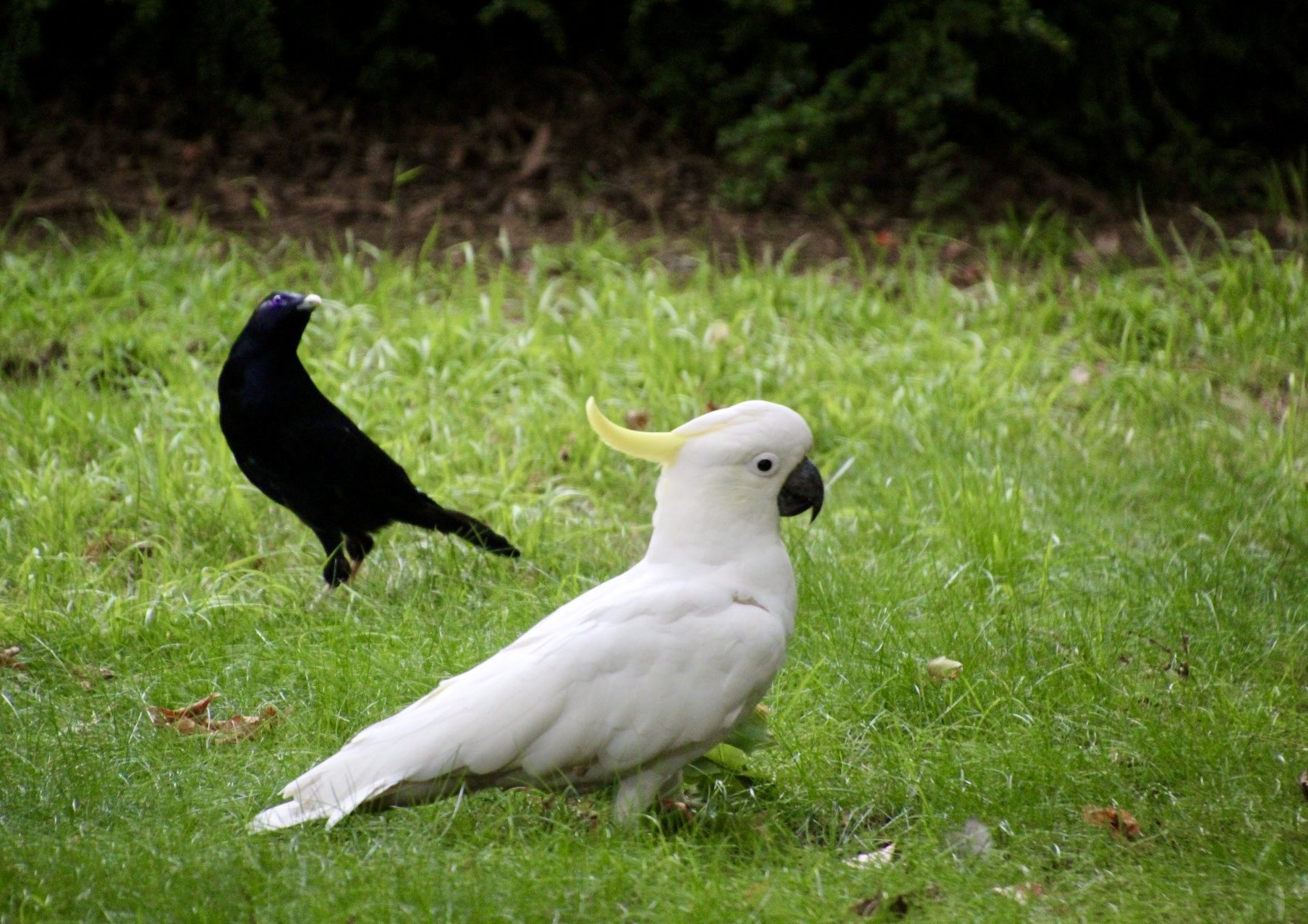
Sulphur-crested cockatoos have plenty of personality. Their bright yellow crest is a standout feature, raised when a bird is excited, landing on a perch, or playing with others. Their adaptability is another reason they are so successful, whether in bushland or suburban streets.
They are also remarkably intelligent. In Sydney, sulphur-crested cockatoos learned how to open the lids of wheeled garbage bins, a behaviour that quickly spread to other flocks across the city and beyond. When feeding or sleeping in large groups, a few birds typically act as sentinels, watching from a nearby perch and screeching a warning if anything approaches. In Australian slang, a “cockatoo” can even mean a lookout.
These playful birds are also capable of mimicry. Like galahs, they may open their beaks and hiss as a warning when threatened. They are long-lived too, averaging 20 to 40 years in the wild and 65 years or more in captivity.
Calls, Nests and Breeding
The screech of a lone sulphur-crested cockatoo is striking enough, but the sound of a flock — or crackle — overhead can be almost deafening. Their loud, harsh screech often ends with a rising inflection and is frequently heard in flight. When feeding or preening, they make softer chattering sounds.
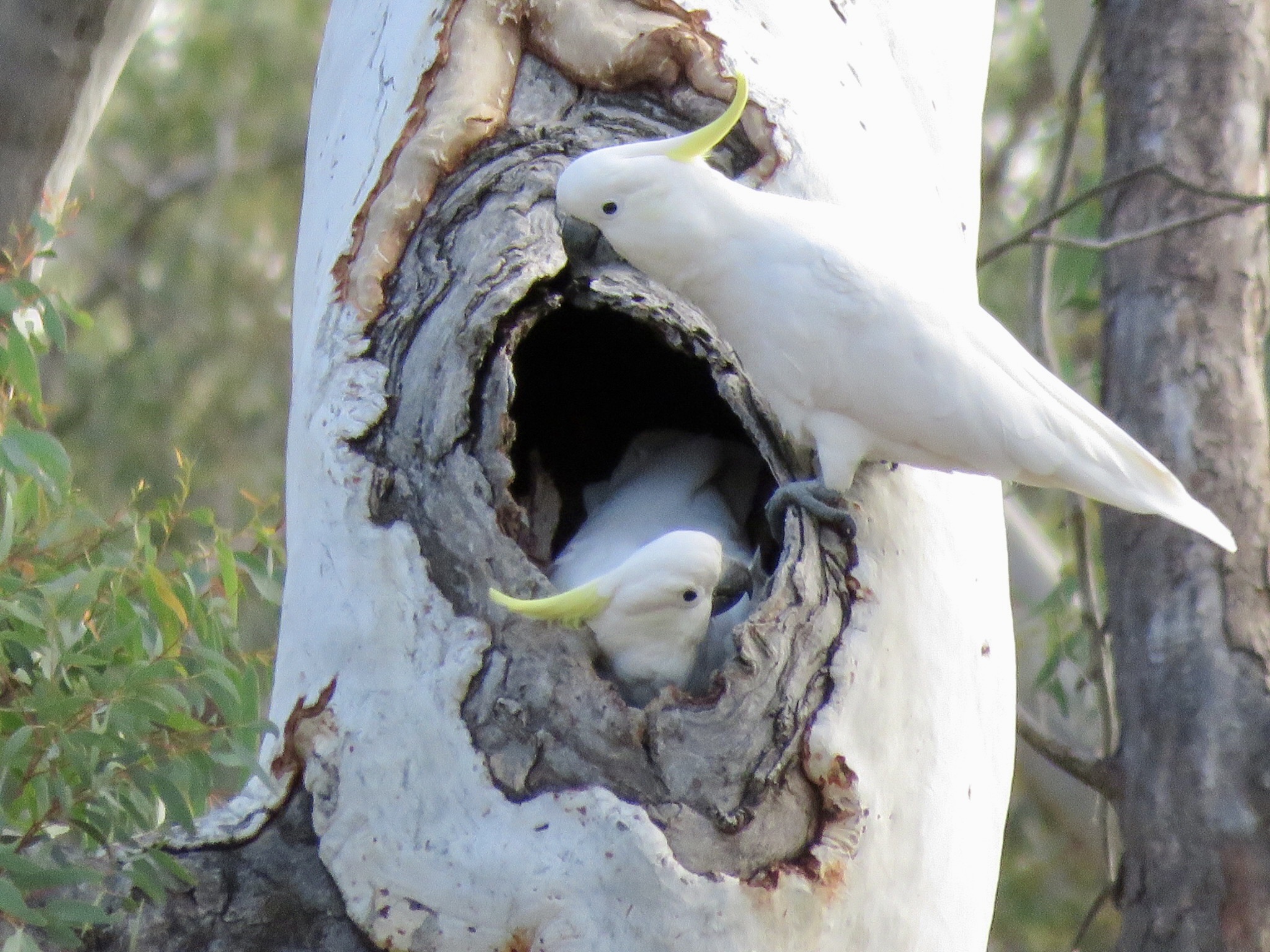
Breeding occurs from August to January in southern Australia, and from May to September in northern parts of the country. They nest high in tree hollows, preferably in a eucalyptus near water, and usually lay two eggs. Some nesting hollows are reused for decades. The photo below shows two birds at a nesting hollow.
Final Thoughts
Sulphur-crested cockatoos are perhaps best appreciated from a distance. There is something unforgettable about seeing a large flock sweep down towards a riverbed or playing field. Their presence is usually announced before they are seen, thanks to their raucous calls. There is a short clip here showing a large flock on the move.
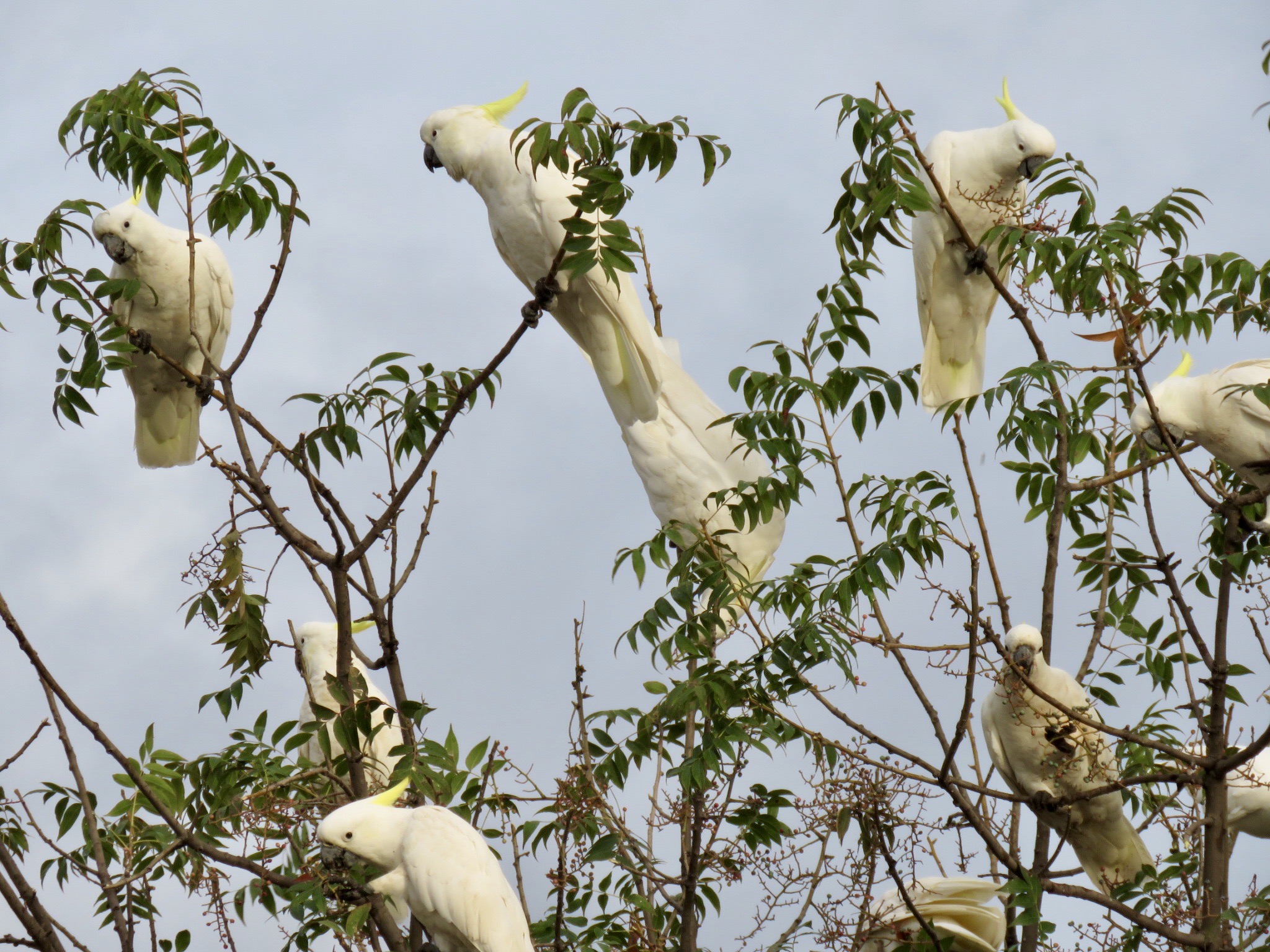
They are bold, intelligent, charismatic birds — but they can also be destructive and demanding. That combination is part of what makes them so fascinating. Beautiful one moment, chaotic the next, they are never easy to ignore.
Have you had a recent encounter with a bold, intelligent, charismatic — and sometimes destructive — sulphur-crested cockatoo?
Photo: cheeky sulphur-crested cockatoo in the garden





Leave a Reply