
Situated on the banks of the Macintyre River, which forms the part of the border between New South Wales and Queensland, Goondiwindi is a town with more history and character than I had expected. About 750 kilometres from Sydney via Narrabri and Moree, and roughly 350 kilometres west of Brisbane, Goondiwindi is home to around 5,500 people. The traditional custodians of the region and its waterways are the Bigambul people. An early settler in the 1830s named a property “Gundawina” after a Bigambul term for a resting place for birds.
During a brief visit, I found a lovely mix of heritage, flood history and local legend. For a small river town, Goondiwindi tells its stories generously, and it did not take long for the place to leave an impression.
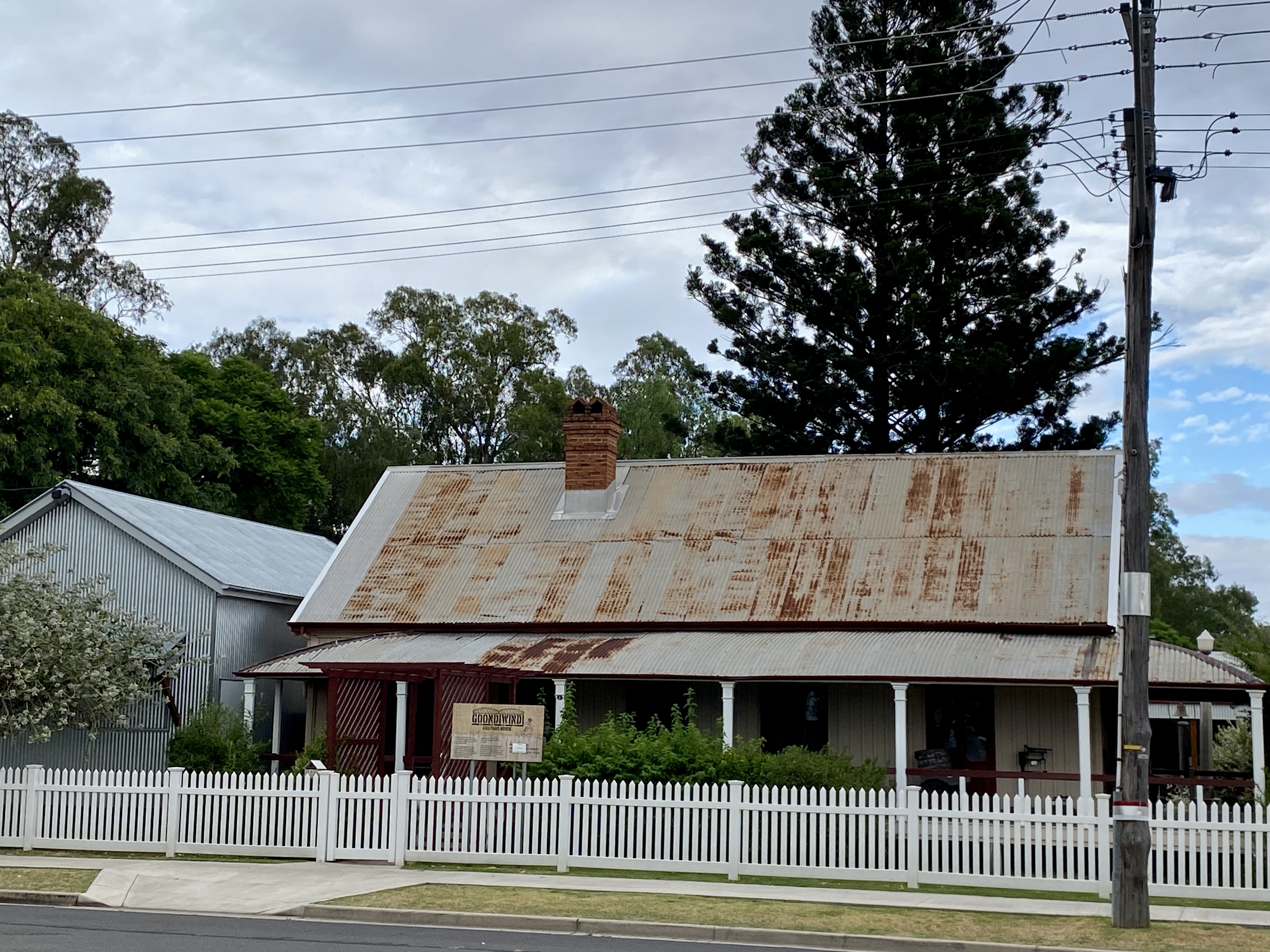
The old Customs House Museum was one of the first buildings that drew me in. Standing near the river, it is easy to imagine how important this crossing once was. Goondiwindi’s position became even more significant after Queensland separated from New South Wales in 1859, with the Macintyre River forming a section of the border between the two colonies. Pastoral settlement had already been established in the district, and by then a police station and post office were operating from a nearby pastoral property. In 1871 customs offices were set up along the border to collect duties, and this building served as one of 14 such posts. After Federation in 1901, it became a residence and later an antique shop. The Goondiwindi Town Council purchased it in 1975, and after renovation by the Goondiwindi Historical Society it opened as a museum later that year. Nearby is a memorial marking the history of flooding in Goondiwindi.
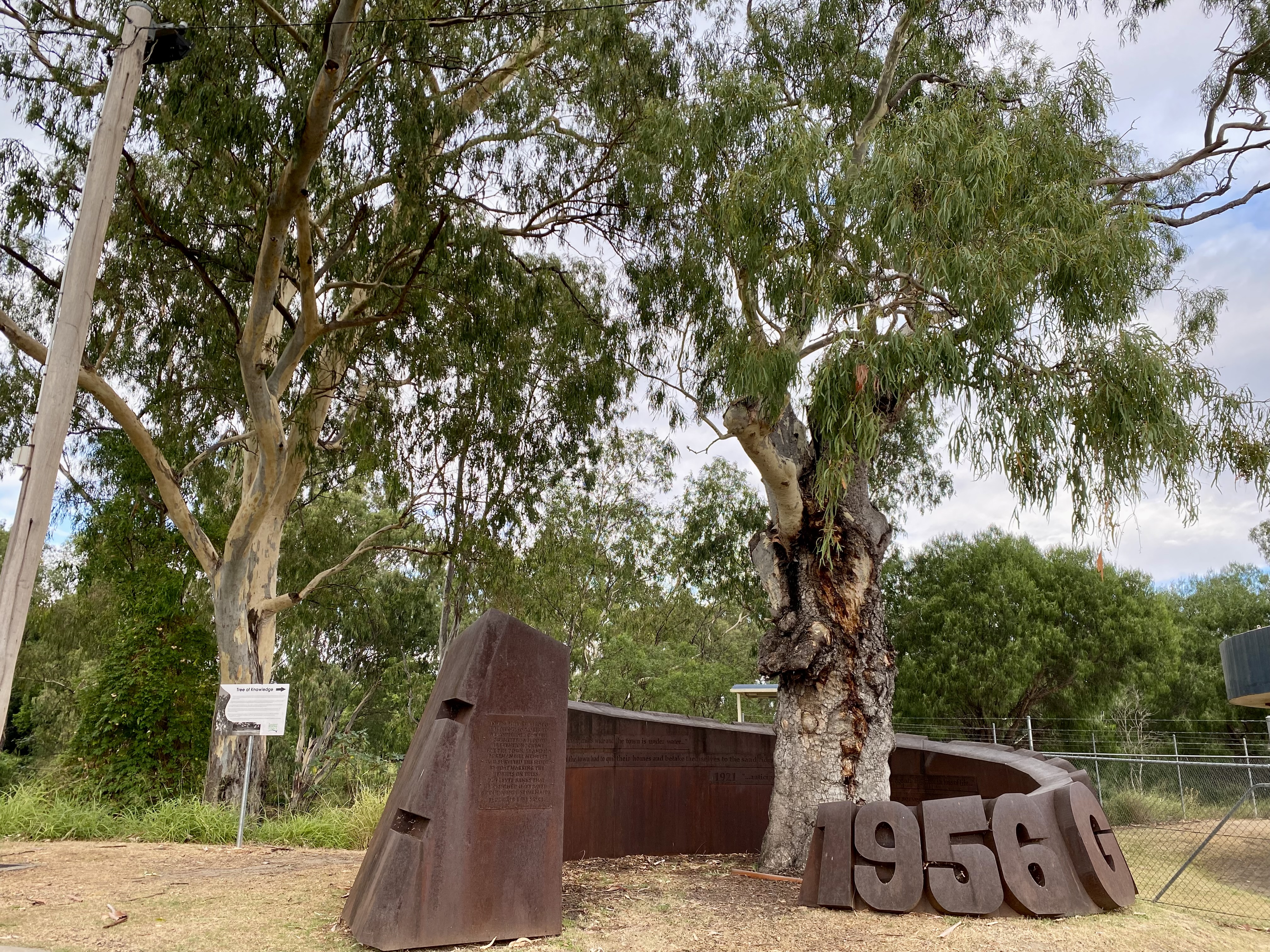
Flooding shaped life in Goondiwindi for decades, and the Tree of Knowledge became a familiar place for locals to judge the river’s height and severity. After the devastating 1955 flood, engineer Edward Vernon Redmond proposed a flood mitigation scheme based on survey work carried out with his foreman Bill McNulty during the flood itself. They marked peak river levels on trees, and in 1956 an eight-mile levee bank was built. That levee has since protected the town from later floods. The monument around the tree was erected after the record-breaking flood of 2011 and stands as a quiet reminder of how central the river has always been to the town’s story.
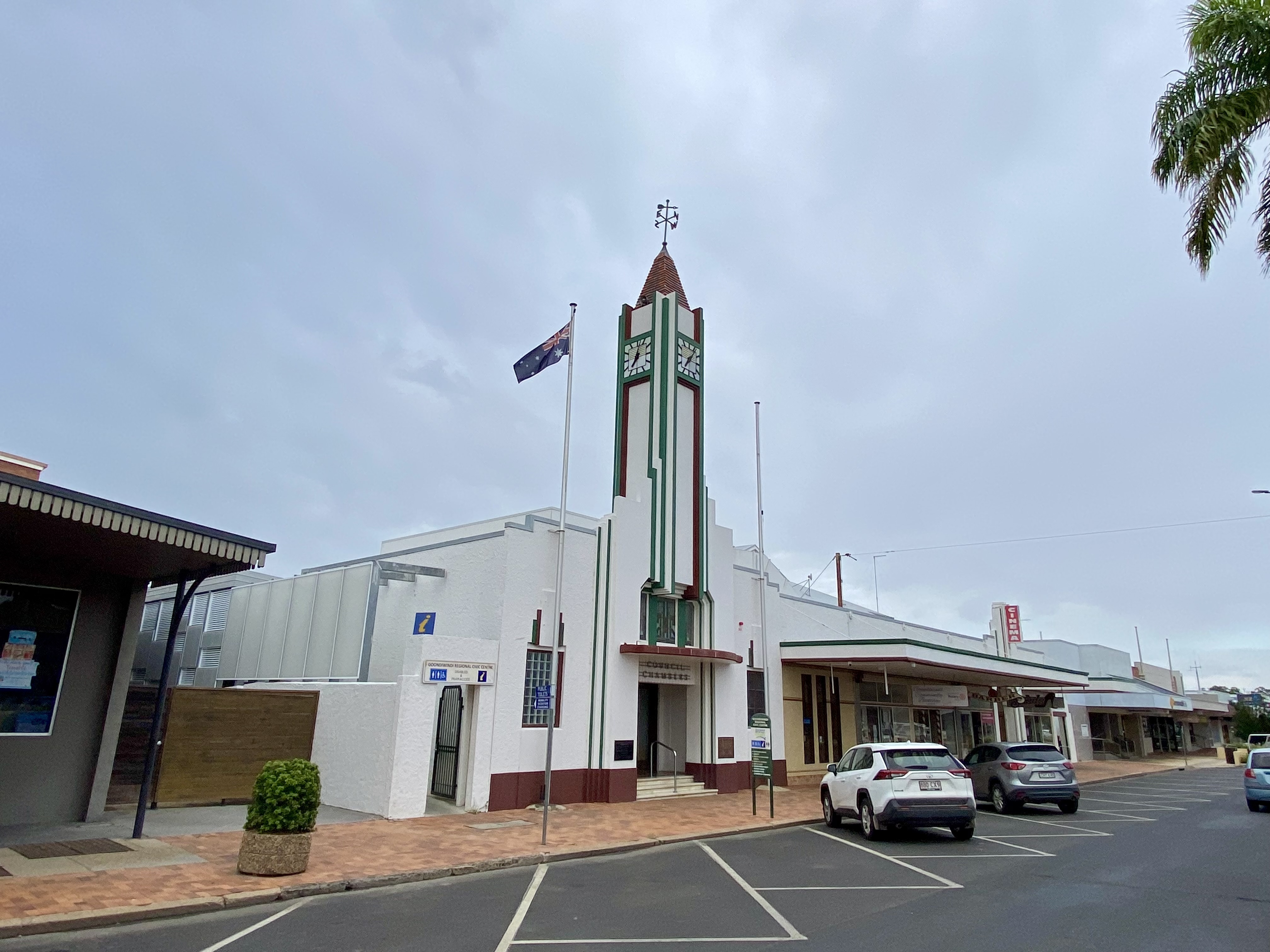
The Goondiwindi Regional Civic Centre is hard to miss. Its Art Deco design, topped by a prominent clocktower, gives it a real presence in the main streetscape. Originally built as the council chambers and town hall, it now contains council offices, shops and a cinema. Designed in 1937 and completed in 1938, the building’s façade has remained largely unchanged, which helps it retain both its charm and its place as one of the town’s most distinctive heritage features.
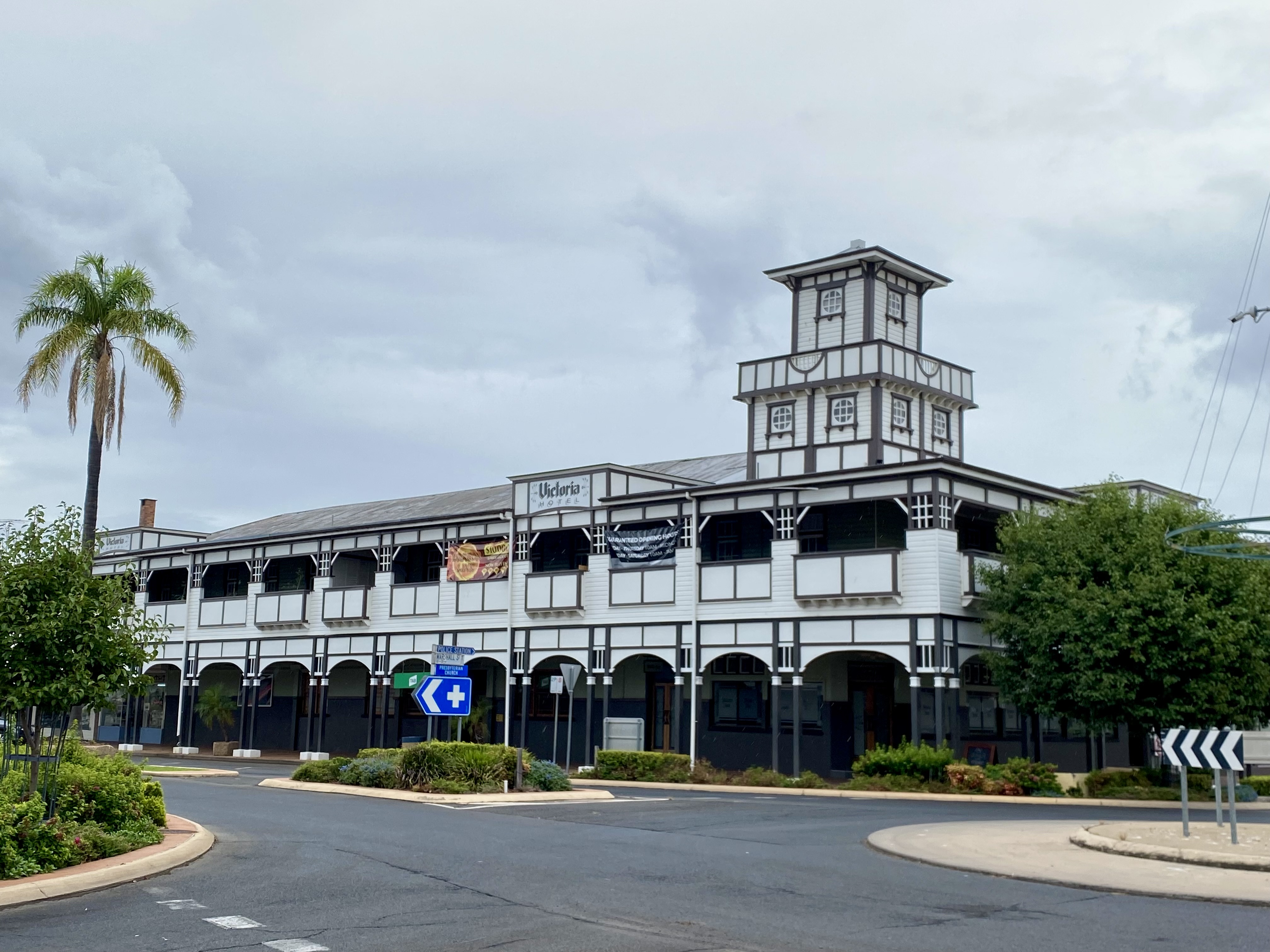
The Victoria Hotel is another building that stands out straight away. Built in 1898, it has operated as a pub since the 1920s and remained in the Pendock family for three generations. Over time it was expanded, including the addition of its tower. The hotel also holds a collection of equine memorabilia, linking it to the story of the famous racehorse Gunsynd. Gunsynd’s syndicate included George Pippos, then owner of the Victoria Hotel, and that local connection helped bring Goondiwindi to national attention.
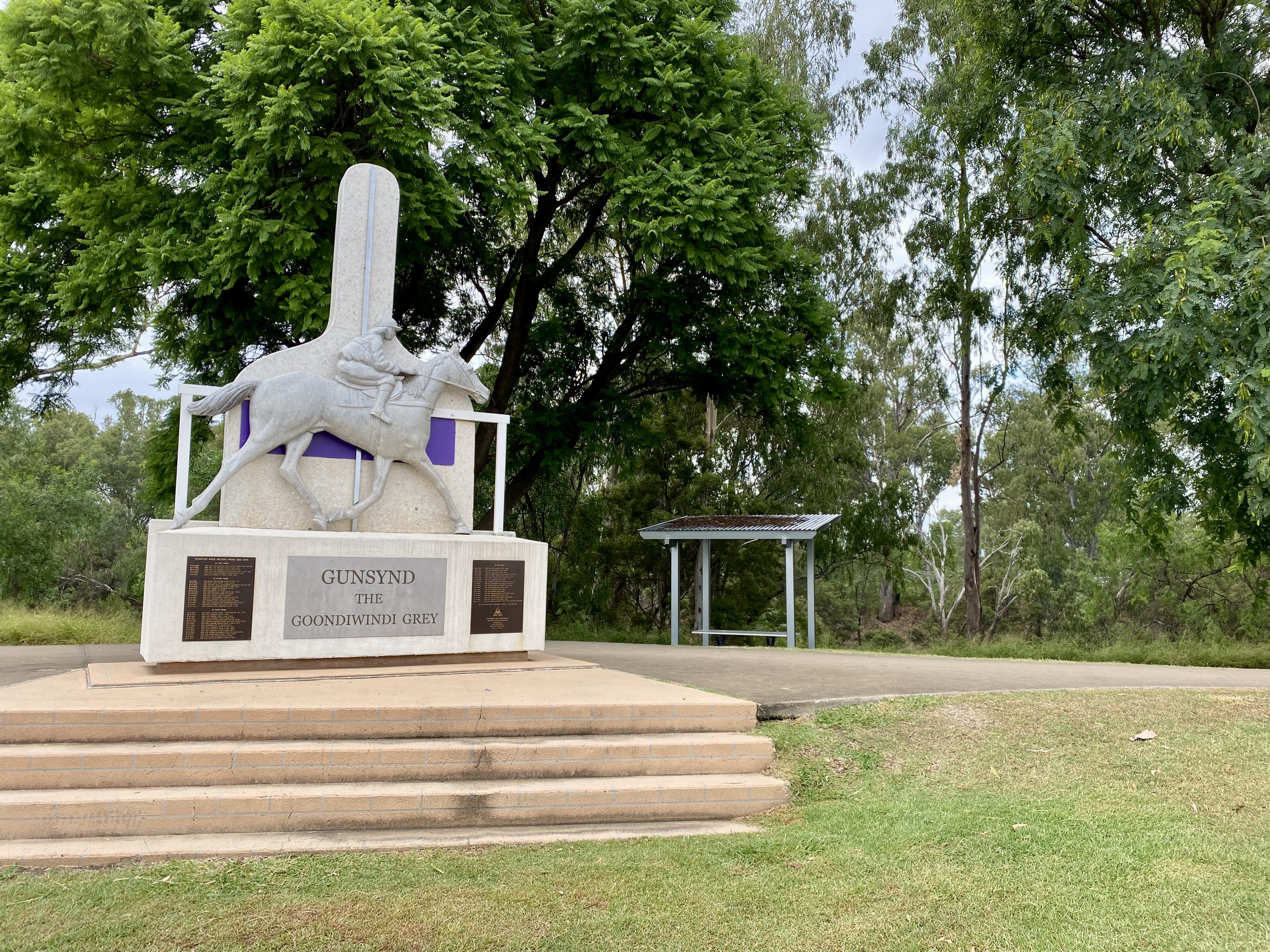
Gunsynd, known as the Goondiwindi Grey, was one of Australia’s most memorable racehorses of the early 1970s. Bought for $1,300 by four partners in the Goondiwindi Syndicate, he was originally intended to win a bush race, but he went on to do far more than that. Between 1969 and 1973, Gunsynd recorded 29 wins, including the 1971 Epsom Handicap and the 1972 Cox Plate. Beyond the results, he seems to have captured people’s imagination through his determination, personality and striking grey coat. It is easy to understand why he became such a beloved part of the town’s identity. There is even a tribute song recorded by Tex Morton for The Goondiwindi Grey.
My brief stop in Goondiwindi turned out to be far more rewarding than I had expected. Between the border-town history, the flood stories and the legend of Gunsynd, the town revealed plenty of character in a short visit. These first five photos capture some of that charm, and the next five will feature murals and public art around Goondiwindi.
Have you explored Goondiwindi?
Photo: Goondiwindi Border Bridge, over Macintyre River





Leave a Reply