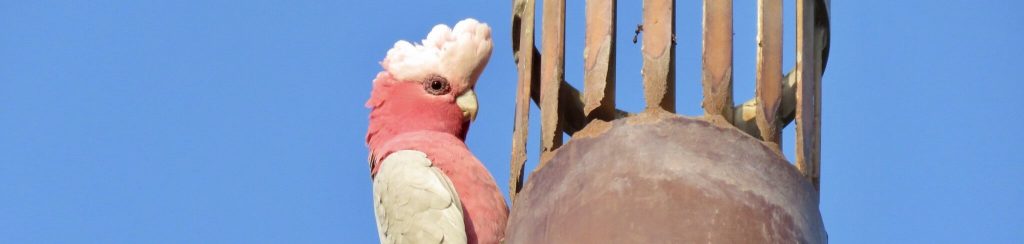
Eolophus roseicapilla comes from Greek and Latin roots meaning “dawn crest” and “rose-coloured”, an apt description for the pink feathers of this cockatoo.
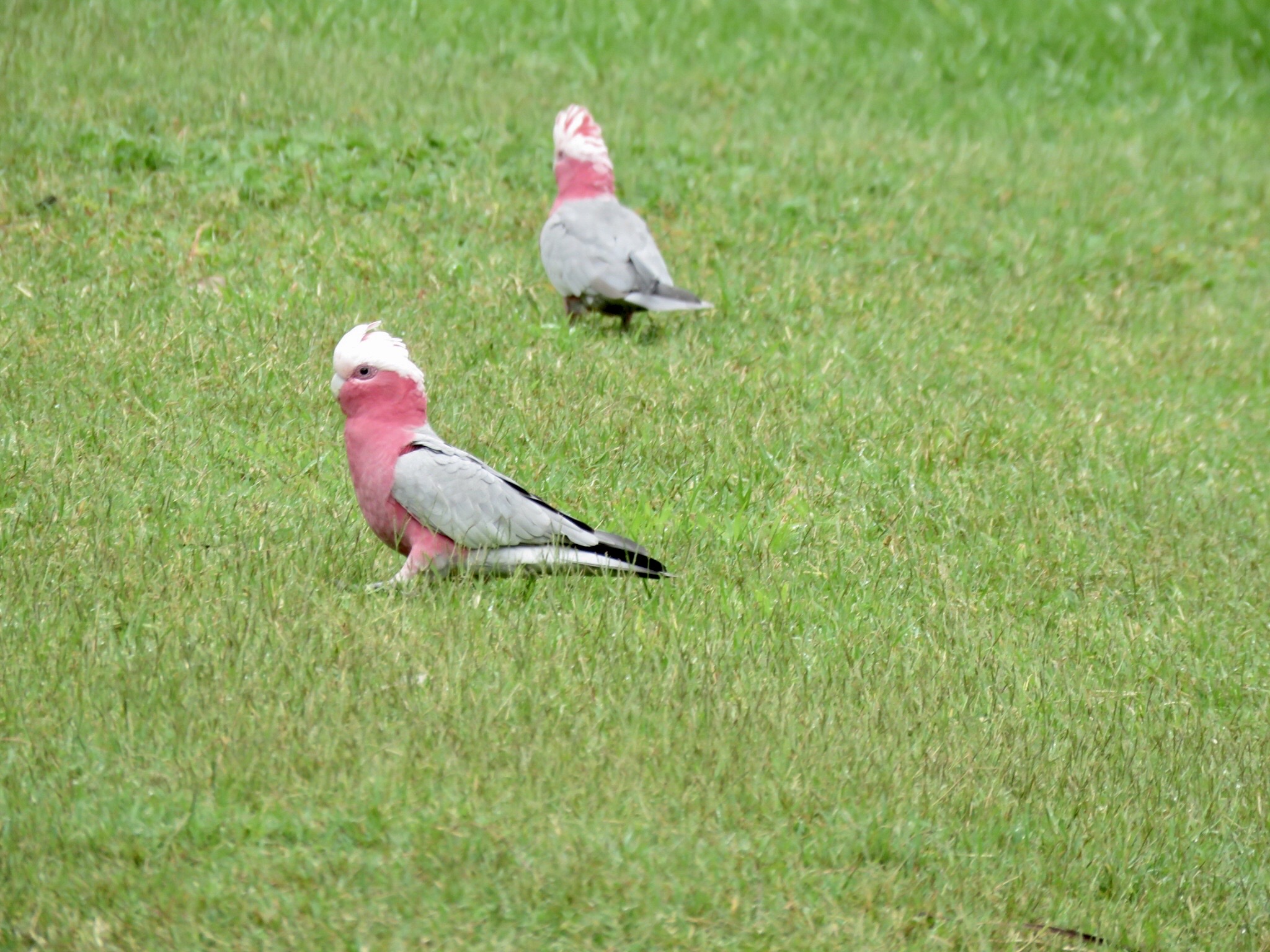
I love galahs, and much of their appeal lies in their gorgeous colouring: lavender grey mixed with the soft pink of a sunrise. Years ago, they were more common in regional areas, and one of my strongest childhood memories is of hundreds feeding on grass and seeds on a sports field beside a river in a country town. Something startled the flock, and the birds took flight together, wheeling overhead in a synchronised two-tone wave. It was a stunning moment.

Why I Love Seeing These Birds
Galahs are unmistakable, with their pink-and-grey colouring and shrill contact calls. Usually seen in groups, they can gather in flocks numbering hundreds. They are now found across most of Australia, apart from arid deserts and wet rainforest areas, and are often spotted along highways and in suburban parks and fields. Their familiarity makes them easy to take for granted, but these birds are full of personality. Watch them for a while and you may see them larking about, swinging upside down from powerlines, and screeching to one another.

What They Look Like and Where They Live
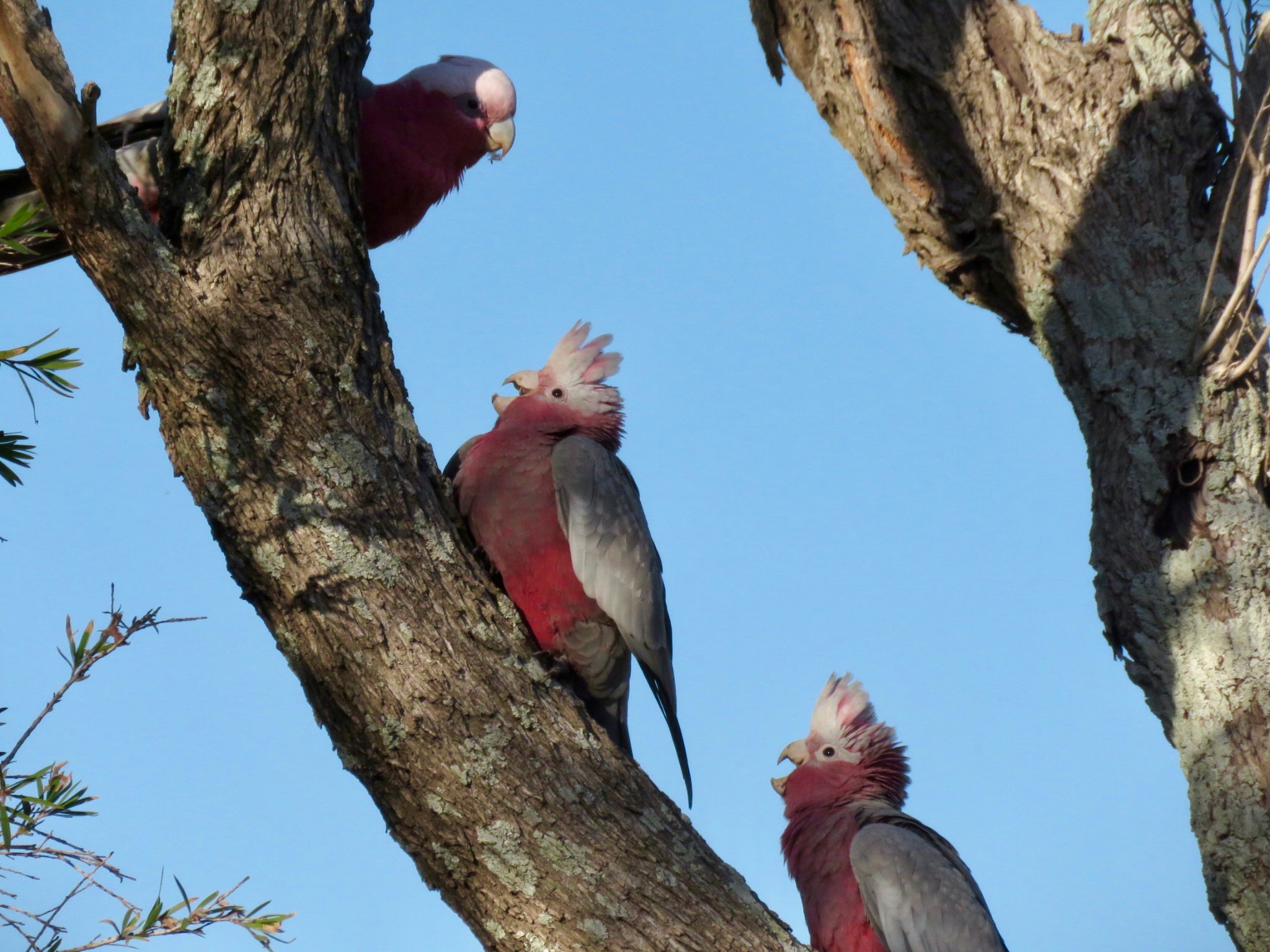
Male and female galahs look similar from a distance. Their neck and underparts are a deep pink, the crown and back of the head are pale pink, and the wings and tail are light grey. They have a short, pale crest, with some variations across the three subspecies. Males have dark brown irises; these are pinkish red for females. They are about 360 mm in length and weigh approximately 300 grams.
Galahs have effectively colonised most of Australia and can often be seen in small flocks alongside Blue Mountains highways. In the upper Blue Mountains, smaller groups gather near town centres, and in the last couple of years a pair has settled in a tall gum tree in my neighbourhood. They eat ripe seeds gathered from the ground and grasses, along with fruits, berries, roots, and grubs.
What Makes Them So Memorable
Their gorgeous colours and engaging personalities are only part of what makes galahs memorable. They mate for life and can be seen preening, scratching, and caressing each other before sleeping close together. Galahs also have life expectancies that, like those of sulphur-crested cockatoos, are among the longest in the bird world. They live for 20–25 years in the wild and, with proper care, can reach 70 or 80 years in captivity.
Calls, Nests and Breeding
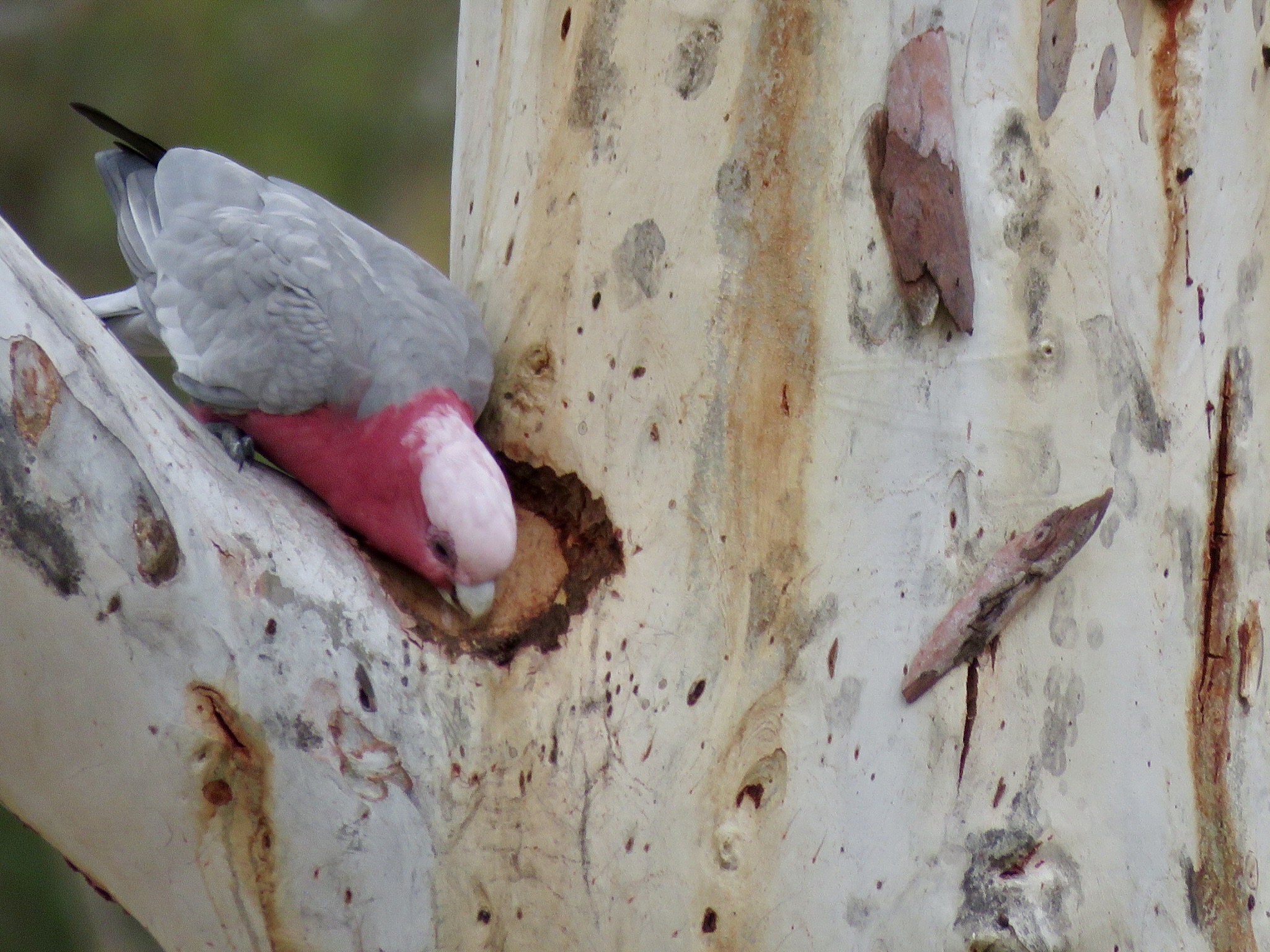
Galahs nest in tree hollows high above the ground and fiercely defend the surrounding area from other birds. They line the hollow with bark or green leafy twigs, and the female lays two to six eggs. After the chicks fledge, a few adults remain with them while the rest of the flock goes to feed. When the adults return, noisy voice checks help ensure that each chick is collected by the right bird.
Final Thoughts
I have lived in the Blue Mountains for more than a decade, yet only in the last couple of years have galahs become backyard birds for me. Their distinctive colouring and cries make them easy to identify, but it is their playfulness that makes them worth watching. A familiar flash of pink and grey can still bring the same sense of delight as that childhood flock wheeling above a country sports field.
Do galahs visit your neighbourhood? What have you noticed them doing?
Photo: A galah perched on an old metal pipe at the Pinnaroo wetlands, South Australia




Leave a Reply